Businesses on Alert

Businesses on Alert

Proposed parking rules called a ‘slippery slope’
By
Christopher Walsh

Concerned that the formula by which parking requirements are determined may not adequately address actual needs for some businesses, the East Hampton Town Board is proposing a zoning code amendment that would change that formula for bars, taverns, or restaurants that are accessories to resorts or motels. 

Business owners are taking notice, particularly in Montauk. 

An email from the Montauk Chamber of Commerce on Monday implored its membership to attend a hearing on the code amendment tonight at 6:30 at Town Hall. “The businesses need to attend and speak up,” it reads, “because this code change may very well, at some point, negatively affect your business.” 

The impetus for the proposed code amendment, Supervisor Peter Van Scoyoc said Tuesday, was the board’s recognition that “if existing businesses, which may not even meet their parking under code now, wish to add additional amenities and create additional traffic to their place of business, that there be a provision that they meet those requirements for parking to not further burden the community with overcrowding.”

Included in the proposal would be a statute limiting the area of certain uses. “A resort, transient motel, semipublic facility, or club may have an accessory use for incidental service, such as restaurants, bars, retail shops, etc.,” a legal notice reads. The total aggregate area devoted to such accessory use is not to exceed an area equal to one-third of the aggregate floor area. 

The amendment should not have been considered “without significant input from the business community,” Paul Monte, the Montauk chamber’s president, wrote in the email on Monday. “This type of change to the code can easily become a slippery slope resulting in the loss of significant grandfathered rights to all types of businesses and a great loss in property values to many commercial properties.”

“There have been comments made around town that this is targeted at one specific business,” Mr. Monte said, an apparent reference to Hero Beach Club, formerly the Oceanside motel, which seeks to add a restaurant and bar. “However,” Mr. Monte added, “it can and will have a significant impact on many businesses in Montauk. If you are currently pre-existing, nonconforming in any respect and have grandfathered rights on your property, this proposal should concern you.” 

An anonymous letter to the town board, however, supports the proposal, detailing a litany of concerns about Hero Beach Club, located at the west end of Montauk’s downtown and the entrance to the village. “We were pleased to learn that the East Hampton Town Board is attempting to be proactive in its efforts to control chaos and prevent further destruction to the quality of life in Montauk,” it reads. “How long before the roadway in and out of town becomes as treacherous as the roadway from the Montauk Railroad Station to Surf Lodge during July and August?” 

The proposed code change, Supervisor Van Scoyoc said on Tuesday, is “definitely not” specific to Hero Beach Club. Rather, he said, “It’s targeted to a whole class of businesses.” 

The areas of concern may be concentrated in Montauk due to the number of motels there, the supervisor said, but the issue applies to “any business that might add some other use or amenity.” 

The hearing is expected to draw a crowd.

On a separate matter, another group, OLA (Organizacion Latino-Americana) of Eastern Long Island, a nonprofit organization that promotes social, economic, cultural, and educational development for the region’s Latino communities, is urging people to attend tonight’s meeting. 

OLA is asking for public testimony related to “the treatment and protection of vulnerable and nonviolent, contributing members of our East End communities,” according to a flier it is distributing. 

The group is advocating legislation establishing a barrier between the East Hampton Town Police Department and the federal Immigration and Customs Enforcement agency, as well as requiring every police car to have a dedicated cellphone for live interpretation. It also wants the board to ensure that the Police Department has clear policies about traffic stops and checkpoints so that residents are not targeted based on race, ethnicity, or assumptions about immigration status. OLA is asking that people sign up to speak at tonight’s meeting. 

“Families are being separated right here in our towns as a result of inconsistent policies, unnecessary cooperation with ICE on nonviolent offenses, a criminalizing code that serves as a harassment tool for anti-immigrant groups, and increased enforcement on traffic violations that are landing people in Suffolk County jail and then in deportation proceedings,” the flier reads. 

OLA organized public testimony at the Southampton Town Board’s meeting on Sept. 25. The political leadership of that town and East Hampton, the flier reads, “promised they would not enact the worst of all policies — deputizing local police as ICE agents,” however “they have not taken the necessary steps to protect the peaceful and good members of our amazing community.” 

Also on the agenda tonight is a public hearing on the Wainscott hamlet study, which is covered elsewhere in this issue.

$9.7 Million for Water Main Project

$9.7 Million for Water Main Project

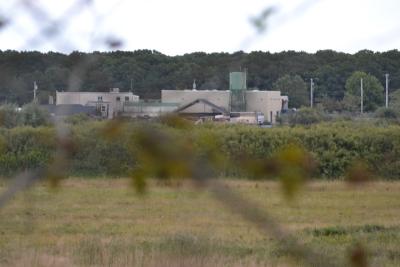
A former film studio and special effects lab on Industrial Road in Wainscott, now used for training by several South Fork fire departments, is among the possible sources of chemical groundwater contamination in the area.
David E. Rattray
State grant eases burden of installation after wells are found to be tainted
By
Christopher Walsh

In a hoped-for development in the ongoing effort to install approximately 45,000 feet of water main in Wainscott, a project with an estimated price tag of $24 million that will allow property owners access to public water, Gov. Andrew M. Cuomo has announced a $9.7 million water infrastructure grant for the Town of East Hampton and the Suffolk County Water Authority.

The grant is allocated to the water main installation in the Wainscott water supply district, lying south of East Hampton Airport and stretching to the Atlantic Ocean. The district was created this year following the 2017 discovery of perfluorinated chemicals in many residential wells in the hamlet. 

To date, almost 500 private wells have been tested, Supervisor Peter Van Scoyoc said on Tuesday, with more than 200 testing positive for perfluorooctane sulfonate, or PFOS, and perfluorooctanoic acid, or PFOA, both used in products including firefighting foam, carpets, furniture fabrics, and clothing, and both of which have been linked to cancers, thyroid problems, and serious complications to pregnancy. 

The federal Environmental Protection Agency has established a health advisory level of 70 parts per trillion. Sixteen wells in Wainscott tested above the health advisory level, Mr. Van Scoyoc said on Tuesday, and another 214 were found to have levels between 20 and 60 parts per trillion. 

The town board declared a state of emergency following detection of the perfluorinated chemicals, and then established a water supply district. In July, the board voted to enter into an intermunicipal agreement with the water authority, paving the way for a grant application. The town is funding the project through the issuance of bonds, and the grant money is to be used for reimbursement. 

  As of Tuesday, 21,380 feet of water main had been installed, Mr. Van Scoyoc said, or 48 percent of the approximately 45,000-foot total. “It has proceeded quite rapidly,” he said. 

The grant is part of $200 million in state funding announced on Tuesday for various efforts to address contaminants in drinking water supplies. It includes $185 million for water treatment system upgrades to combat emerging chemical contaminants such as perfluorinated chemicals. 

The grant to the town and the water authority represents the largest award out of $15 million earmarked for ongoing community projects. All of the funding flows from the governor’s $2.5 billion Clean Water Infrastructure Act. 

Wainscott residents who connect to the water mains must bear the costs of hookup to their houses by hiring private plumbers or using the water authority’s contractor, Asplundh Construction. Homeowners will have to pay upfront for the former option; the latter choice costs significantly more, because of the higher costs of publicly bid labor contracts, but allows amortization over a minimum of 20 years through an assessment on tax bills. 

“That’s a decision each resident will have to make on their own,” Mr. Van Scoyoc said. The board issued a statement last month encouraging Wainscott residents who plan to connect to public water to solicit estimates from both Asplundh Construction and a private plumber. 

While residents are not required to connect to public water, the town board has strongly recommended it. “Certainly with the concerns over the contaminants within that area, you are at risk if you continue to use your private well without any filtration,” Mr. Van Scoyoc said on Tuesday. The financing option, using the water authority’s contractor, will expire in July 2020. Under the emergency declaration, the town instituted a rebate program for the installation of point-of-entry treatment systems. That program will expire once public water installation is completed. 

To date, 91 residential property owners still have not responded to a request for testing, “which is still a very high number given the amount of publicity and the number of attempts made to contact homeowners,” the supervisor said. “If you live within Wainscott, south of the airport, you really should have your water tested.”

On Hamlets’ Future: Hearings Begin

On Hamlets’ Future: Hearings Begin

In the hamlet study for Wainscott, suggested future uses of the sandpit, which will eventually cease operation, include expanded commercial or mixed use, affordable housing, and even a new railroad station.
David E. Rattray
By
Christopher Walsh

Public hearings on a series of studies aimed at developing long-range plans for each of East Hampton Town’s hamlets will begin tonight at Town Hall, when the town board takes comments on a Wainscott hamlet study and an overall business study. 

The hamlet studies got underway in 2015, with public input beginning the following year. Consultants engaged by the town to assist in the studies, Peter Flinker of Dodson and Flinker, a Massachusetts consulting firm, and Lisa Liquori of Fine Arts and Sciences, a former town planning director, have presented updates since then based on public comment from individuals, the hamlets’ citizens advisory committees, chambers of commerce, and East Hampton Village. The goal is to adopt recommendations for each hamlet — Wainscott, Springs, Amagansett, Montauk, and areas of East Hampton outside of the village —that will be incorporated into the town’s comprehensive plan.

Tonight’s meeting begins at 6:30. Looking ahead, The East Hampton hamlet study will be subject of a hearing on Oct. 18. Next up, on Nov. 1, will be Amagansett, followed by Springs on Nov. 15, and Montauk on Dec. 6. 

All of the public hearings will happen at Town Hall, during town board meetings that start at 6:30 p.m. While an individual hamlet will be the focus of each hearing, public comment on any hamlet will be accepted at all of the hearings. 

The board decided in August to schedule the hearings and review any comments before determining any environmental impacts under the State Environmental Quality Review Act. The studies are then to be forwarded to the Suffolk County Planning Commission, which would have 30 days to offer its comments. 

A vote to adopt the recommendations would follow. But adoption, Supervisor Peter Van Scoyoc said in August, was “a broader stroke” than other regulatory legislation necessary to put recommendations into effect. The next step, he said, would be to “look at creating zoning laws or other means of regulation” to legalize the recommendations.

Affordable housing, congested roadways during the tourist season, and bicycle and pedestrian connectivity are common themes among the hamlet studies, the former requiring infrastructure to address wastewater treatment, the latter requiring a rethinking of the existing vehicle-oriented development with respect to streets and sidewalks. 

A lack of pedestrian connectivity and outdoor spaces is detrimental to Wainscott’s character, the study has suggested, and the haphazard development of its commercial district has brought a strip-mall look and feel with many curb cuts and uncoordinated parking lots. A rethinking could include connected parking lots behind the commercial buildings on the north side of Montauk Highway. Future uses of the sandpit, which will eventually cease operation, could include expanded commercial or mixed use, affordable housing, parking, a Long Island Rail Road station, or open space. (A development proposal now before the East Hampton Town Planning Board seeks to divide the sand and gravel pit into 50 lots with a commercial center.) 

The East Hampton hamlet study notes that connections between existing parking lots on Pantigo Road would reduce traffic and the number of curb cuts, and lighted crosswalks would enhance pedestrian safety. Traffic congestion at North Main Street has been identified as a concern and flow should be improved between Cedar Street, Collins Avenue, and North Main Street, a bottleneck between East Hampton and Springs, the consultants have suggested. The convergence of Three Mile Harbor Road, Springs Fireplace Road, and North Main Street might also be reworked. Cedar Street could be narrowed to allow safer pedestrian crossing while adding a second eastbound left-turn lane to ease congestion. 

The sandpit on Springs-Fireplace Road could become a site for development once it ceases operations. It might also be repurposed as a site for heavy vehicles and equipment owned by contractors who operate their businesses informally from Springs residences, alleviating noise and disruption in residential areas, the consultants suggest. 

Issues identified in Amagansett include a shortage of parking in the commercial district and at the Long Island Rail Road station. The I.G.A. and post office are well east of the commercial district, where neither amenity exists at present. 

Alleviating the shortage of affordable housing in Springs was identified as a critical need of that hamlet, where many workers live in group houses that exceed allowable density. But such housing would have to address an impact to water quality and an already burdened school district. 

In Montauk, where sea level rise threatens the downtown and dock areas, consideration has been given to a retreat from the ocean shoreline and a gradual shift to more lightly developed higher ground. Infill and second-story residential development could provide affordable work force housing. Mixed-use buildings and transit-oriented development have been considered at the area near the Long Island Rail Road station on Fort Pond Bay.

Endorsements for Thiele

Endorsements for Thiele

By
Star Staff

Assemblyman Fred. W. Thiele Jr. has picked up two more endorsements as he runs to keep the seat he has held since 1996.

Mr. Thiele, who is running on the Independence, Democratic, Working Families, and Women’s Equality Party lines, has been endorsed by the American Federation of State, County, and Municipal Employees and the Long Island Environmental Voters Forum.

The employees’ federation, the state’s largest public service union, has more than 400,000 members. Thanking the union for its endorsement, Mr. Thiele said in a release that he will “continue to defend the rights of these members and all working men and women who provide essential public services that New Yorkers rely on every day.” 

The assemblyman has won endorsement from the nonprofit and nonpartisan Environmental Voters Forum many times. “I have been a longtime advocate for protecting our natural resources, and I look forward to continuing my work on environmental conservation on behalf of my district and all of New York State,” he said. 

Mr. Thiele has also been endorsed by the New York League of Conservation Voters, the New York State A.F.L.-C.I.O., Long Island Federation of Labor, Suffolk County Association of Municipal Employees, Public Employees Federation, Communications Workers of America Local 1108, Planned Parenthood Empire State Votes PAC Endorsement Committee, the Suffolk County Correction Officers Association, the New York State United Teachers, and the Civil Service Employees Association.

Trump Backs Zeldin, Giffords for Gershon

Trump Backs Zeldin, Giffords for Gershon

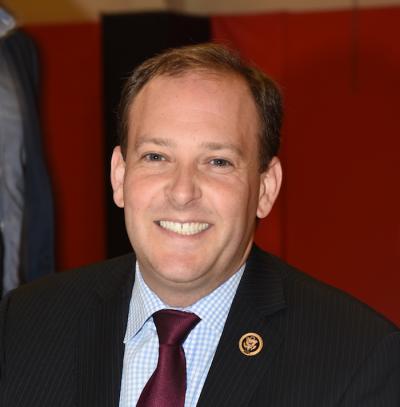
President Trump came out strongly for Representative Lee Zeldin via Twitter last week, writing that he "has my Complete and Total Endorsement!"
Morgan McGivern
By
Christopher Walsh

An organization founded by former Representative Gabrielle Giffords, who was critically wounded in a mass shooting in her Arizona district in 2011, has endorsed Perry Gershon’s campaign to unseat Representative Lee Zeldin in the Nov. 6 election to represent New York’s First Congressional District. 

Ms. Giffords and her husband, the former astronaut Mark Kelly, founded Giffords, a gun safety organization. The group’s #VoteCourage campaign aims to elect candidates who favor reform of the nation’s gun policies. 

Ms. Giffords, who was considered a conservative Democrat in Congress, had just begun a third term when she was shot in the head while meeting with constituents outside a Tucson supermarket on Jan. 8, 2011. Her assailant shot 24 others, killing six including a federal judge and a 9-year-old girl. Ms. Giffords resigned her seat a year later. 

“This year, voters are demanding leaders who offer more than thoughts and prayers when it comes to gun violence,” Ms. Giffords said in a Sept. 26 release announcing the endorsement. “They’re no longer willing to accept politicians who can’t imagine a world where schools, workplaces, churches, and communities are safe places, where our children don’t have to live in fear. The level of gun violence we experience in our country is not normal, and thankfully, we finally have leaders running for office who have the courage to fight to finally address it.”

Mr. Zeldin, who is seeking a third term, is a co-sponsor of the Concealed Carry Reciprocity Act, which the House of Representatives passed in December. If enacted, it would allow any person with a concealed carry permit from one state to carry their weapon in any other state, and allow anybody with a concealed carry permit to do so on any federal land, such as national parks or national monuments. The National Rifle Association gave him $9,900 in the 2016 election cycle. 

“With the support of Congresswoman Giffords, her husband Captain Mark Kelly, and countless other advocates for commonsense gun reform, I know we flip this seat in November,” Mr. Gershon, who lives in East Hampton, said in a statement. “Long Islanders who go to church, school, concerts, and movie theaters should not have to live in fear of violence. If elected in November, I pledge to make passing lifesaving gun safety measures a top priority.”

Mr. Zeldin picked up a high-profile endorsement of his own last week, when President Trump endorsed his campaign via Twitter. 

“Congressman Lee Zeldin is doing a fantastic job in D.C.,” Mr. Trump tweeted on Sept. 26. “Tough and smart, he loves our Country and will always be there to do the right thing. He has my Complete and Total Endorsement!” Mr. Zeldin retweeted the president’s remarks. 

Mr. Gershon, a Democrat, also took to Twitter, retweeting Mr. Trump’s message and adding “TFW your favorite puppet’s district is slipping away,” using a slang abbreviation for “that feeling when.” Mr. Gershon has called attention to high-profile Republican and conservative voices that have weighed in on the campaign, arguing that a tweet by Donald Trump Jr. and remarks by the radio personality Rush Limbaugh are indications that his race is winnable. 

Last month, the Democratic Congressional Campaign Committee added Mr. Gershon’s campaign to its “red to blue” list, a program that seeks to unseat Republicans in Congress.

Proposed Town Budget Hits $80 Million

Proposed Town Budget Hits $80 Million

Of the $775,000 increase in discretionary spending in the proposed budget, nearly 73 percent of it, or $605,000, goes to the airport fund, to purchase aviation fuel, an expense more than offset by revenue from selling the fuel to airport operators.
Durell Godfrey
By
Christopher Walsh

East Hampton Town Supervisor Peter Van Scoyoc issued a tentative 2019 budget last Thursday calling for a 3.73-percent spending increase, or $2.9 million, over the current budget. 

Under the proposed figure, $80.66 million, property owners would see an overall tax rate increase of 2.47 percent, except for residents of an incorporated village, who would see a 3.58 percent rise. The difference is due in part to a decrease in the highway fund tax rate for nonvillage residents, whose overall rate is projected to be $30.90 per $100 of assessed value. 

Just under $53 million of the tentative budget is to be raised through taxes, an approximately $1.6 million increase from 2018, or 3.17 percent. The budget stays under the state-established tax levy cap, which allows an increase of $1.787 million over 2018, “by balancing the need for proper funding with the desire to maintain moderate tax rates,” according to an accompanying message from Mr. Van Scoyoc. “It uses a reasonable amount of surplus to create this balance while maintaining ample reserves that meet the expectations of the credit rating community, which has assigned the town an AAA rating, based on our ample reserves, conservative budgeting, and proactive financial management practices.”

Nondiscretionary spending, such as contractual salary and benefits and debt service, accounts for 73.3 percent of the proposed increase. Salary and benefit increases, upgrades of positions, promotions, and salary adjustments account for $1.28 million. Another $861,000 is for debt service payments for projects including the new townwide emergency communications system, the water main extension in Wainscott, improvements to the Y.M.C.A. East Hampton RECenter, perimeter fencing at East Hampton Airport, and digitization of town records. Health insurance costs have also risen. 

Of the $775,000 increase in discretionary spending, nearly 73 percent of it, or $605,000, goes to the airport fund, to purchase aviation fuel. That expense, Mr. Van Scoyoc wrote, is more than offset by revenue from selling the fuel to airport operators, who pay the town’s purchase price plus 30 cents per gallon. 

An additional $125,000 would go to the town attorney’s office to pay for outside counsel retained for various legal issues. For example, the office has hired a specialist to guide it in negotiations with Deepwater Wind on its proposed South Fork Wind Farm. Also, a $109,000 increase is sought for new and renewed software maintenance contracts. That expenditure, Mr. Van Scoyoc wrote, will reduce some long-term expenses by decreasing the need for additional hardware. 

The tentative budget adds one new full-time position, for a cashier in the tax receiver’s office. 

The budget has been distributed to the town board and submitted to the town clerk. Copies are available to the public in the clerk’s office.

The board will consider the proposed budget on Tuesday morning during a work session at the Montauk Firehouse. After a final review on Oct. 16, potential changes will be incorporated. A public hearing will follow before adoption in November.

Issuing Bonds, Town Moves on Montauk Erosion Control

Issuing Bonds, Town Moves on Montauk Erosion Control

Jane Bimson
By
Christopher Walsh

The East Hampton Town Board agreed last Thursday to issue bonds through which it will spend up to $200,000 for a map, plan, and report, including a cost estimate, of  the proposed creation of a beach erosion-control district in downtown Montauk. 

The move follows a call last month by the recently formed Montauk Beach Preservation Committee for a feasibility study and engineering analysis for a plan to combat erosion of the hamlet’s ocean beaches. Laura Tooman, the committee’s chairwoman and president of Concerned Citizens of Montauk, had asked that the board provide funding for the initial steps of a project she estimated would cost $15 to $17 million. 

Approximately $50,000 will pay for the feasibility study, which would draw potential boundaries of an erosion-control district and explore funding mechanisms, and an additional $100,000 to $150,000 will go to an analysis including beach and inshore surveys, a study of the sediment of potential sand sources, beach replenishment options, and preliminary plans.

The Army Corps of Engineers has indicated that its Fire Island to Montauk Point Reformulation Plan, known as FIMP, would provide significantly fewer cubic yards of sand to replenish Montauk’s ocean beaches than town officials had hoped. Though decades in the making, the plan’s implementation remains several years in the future. 

 Supervisor Peter Van Scoyoc said at the town board’s Sept. 18 meeting that any federal work “could be offset and bettered by an erosion-control district project.” He said the town must pursue both FIMP and an erosion-control district, given the length of time federal projects take. “We need to have things in place to deal with what we know will be a continual cycle of erosion downtown,” he said. 

Also last Thursday, the board authorized a $700,000 bond for the purchase of property at 36 Gann Road at Three Mile Harbor. The money will supplement $1.42 million from the community preservation fund to complete the $2.12-million purchase of the property, where the town is to relocate its shellfish hatchery, which is now at Fort Pond Bay in Montauk. 

The new hatchery will be adjacent to the shellfish nursery in Three Mile Harbor and consolidate the town’s aquaculture program, in which waterways are seeded with juvenile clams, scallops, and oysters. The effort is aimed at both restoring shellfish, which were decimated by algal blooms in the 1980s, and promoting healthier waterways, as the bivalves’ filter water. 

A small residence on the property will house the town’s Aquaculture Department; other structures are to be removed. The property’s existing sanitary system is to be upgraded, Scott Wilson, the town’s director of land acquisition and management, told the board last month. A permeable reactive barrier, bioswales, and rain gardens may also be installed to intercept nitrogen in groundwater before it reaches the harbor, he said. 

The board also authorized a joint request for proposals, with the Town of Southampton, for the “last mile” shuttle service each town is to provide in connection with additional Long Island Rail Road trains that are to begin early next year between Speonk and Montauk.

The additional trains are aimed at alleviating traffic congestion. A key component is the shuttle service through which commuters would get from train stations to their workplaces and back. Two eastbound trains are to be added in the morning, along with one additional westbound train in the afternoon. 

Traffic to and from the South Fork, where the so-called trade parade clogs the primary route throughout the year, makes it difficult for employers, including the town, to find qualified employees, Mr. Van Scoyoc said earlier this month.

Hundreds Mobilize Against Deepwater Cable

Hundreds Mobilize Against Deepwater Cable

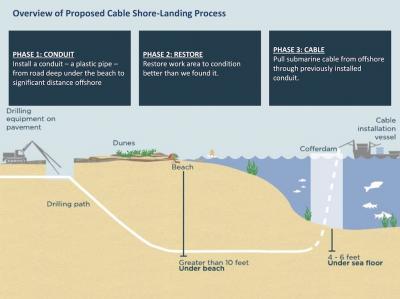
A page from a booklet prepared by Deepwater Wind last fall shows how a cable from the offshore South Fork Wind Farm would be landed onshore.
Deepwater Wind
Wainscott residents want different landing site
By
Christopher Walsh

The South Fork commercial fishing industry remains opposed to Deepwater Wind’s proposed offshore wind farm, and now several hundred Wainscott residents have opened another hostile front, this one specific to the Rhode Island company’s preferred cable-landing site, the ocean beach at the end of Beach Lane in their hamlet.

On Monday, a group calling itself Save Beach Lane submitted a petition with 341 signatures to the East Hampton Town Board and the town trustees,  taking issue with the landing beneath the beach, which may be within trustee jurisdiction. Deepwater Wind submitted an application to the New York State Public Service Commission on Sept. 14 for the portion of the transmission cable that would lie in state waters and underground.

“We demand that East Hampton not disturb Beach Lane with its planned wind landing site and select one of the other multiple viable alternative options,” the petition says. The beach “is already prone to erosion” and “will be forever altered by a for-profit (hedge fund-owned) company,” it adds. The D.E. Shaw group, an investment and technology development firm, is Deepwater Wind’s principal owner. 

The signers also assert that Wainscott “is already shouldering a disproportionate set of burdens for our broader community,” citing airport-related noise and contamination detected in many of the hamlet’s private wells.

By a 3-to-2 vote, the town board agreed in July to support the granting of an access and utility easement allowing Deepwater Wind to route the transmission cable from the proposed 15-turbine wind farm to the road end at Beach Lane. From there, it would be buried on a path to a Long Island Power Authority substation near Cove Hollow Road in East Hampton.

The trustees have been more hesitant, making no commitment, to date, to a land-use agreement. Both governing bodies have retained special counsel to advise their own lawyers and guide them through the P.S.C.’s Article VII review process, which covers applications to construct and operate a major electric-transmission facility. 

Should Deepwater Wind ultimately be allowed to lay the cable along its preferred route, offering the shortest path to the substation, it has agreed to fund an $8.45-million community benefits package for sustainability programs and infrastructure improvements. If it is denied an easement to land the cable at Wainscott and turns to an alternative site — probably state-owned land at Hither Hills — company officials say that offer will be withdrawn.

At the trustees’ meeting Monday, Pamela Mahoney of Wainscott read the petition into the record and told the trustees that the hamlet’s citizens advisory committee supports it, although one member, Frank Dalene, does not. The large number of signatures was obtained in just a few weeks, she noted.

Alexander Edlich, an organizer of the petition, wrote to Kathleen Burgess, the P.S.C.’s secretary, that “a for-profit company installing power cables will forever alter our sole, undivided community beach. . . . Many alternative and more reasonable landing sites exist other than Beach Lane. Nearly all those already-identified alternative sites would have less impact than on a heavily used and popular public beach.”

Another comment made to the state commission was more direct. “I vehemently oppose this project,” Franziska Klebe posted Tuesday on the State Department of Public Service website, “and will vote against any official who supports it.” 

But Mr. Dalene, a former chairman of the town’s energy sustainability advisory committee, is a vocal supporter of the wind farm. The citizens advisory committee “was in full support of Deepwater Wind until it was announced that the cable was coming down Beach Lane,” he said. “I view it as pure nimbyism.” 

“I’ve been dispelling a lot of fake news,” Mr. Dalene said, for which he blamed the wind farm’s opponents. “A lot of it is fear-mongering — scare tactics, fake news, and nimbyism.” 

A letter from Save Beach Lane to the town board dated Friday said that “the same type of cable with a similar installation executed by the same company two years ago became exposed in Block Island last month.” The Block Island Times reported on Aug. 17 that about 10 feet of the cable connecting the five-turbine Block Island Wind Farm to the island had become exposed in shallow water. In remarks to that newspaper, Jeffrey Grybowski, Deepwater Wind’s chief executive officer, cited “more sand movement than had been anticipated.” 

“This happened after a particularly aggressive storm that resulted in some visibly noticeable changes to the contours of the beach itself,” Clint Plummer, Deepwater Wind’s vice president of development, said earlier this month. In an email on Tuesday, he said that the cable has been fully covered since mid-August, when Deepwater Wind applied additional sand.

Mr. Plummer also maintained that the proposed South Fork Wind Farm and its cable route have earned “overwhelming support from Town of East Hampton residents, officials, and local environmental organizations. The long public review of this project has clearly demonstrated that the Wainscott route is the best option for the transmission cable because it will have the least impact to the town as a whole.”

“The beach will not be impacted, and public access to the beach will be maintained throughout construction; any claims to the contrary in this petition are simply false,” he continued. In fact, he said, “the South Fork Wind Farm cable will be installed beneath Wainscott Beach using a different method than that at the Block Island Wind Farm. This will allow the cable to be set much deeper under the beach and nearshore area, ensuring that it’s protected from erosion over the life of the project.”

Slacktivism or Activism?

Slacktivism or Activism?

Galvanized in part by a spate of school shootings, a record number of 18 to 22-year-olds have registered to vote this year. Above, East Hampton High School student activists joined in a national school walkout in March.
Durell Godfrey
Youth vote could turn tide in November midterms
By
Judy D’Mello

If a “blue wave” is coming in November, it could strike our South Fork shores, largely due to a recent surge in youth voter registration.

Although one of the abiding realities of American politics is that young voters do not participate proportionally in midterm elections, we’re in what some call “the golden age of student activism.” Propelled by a spate of school shootings, anger over gun laws, and a continuing disapproval of President Trump, a record number of 18 to 22-year-olds registered to vote this year. More important, a recent study conducted by Harvard University’s Institute of Politics showed a marked increase in this age group of those who said that they will “definitely be voting” in the November elections.

New York State reported a 10-percent increase in youth registration this year but the reality is that on Nov. 6, the date of the midterm elections, most of those eligible first-time voters will be away at colleges and universities, or traveling abroad — in other words, out of the district in which they are registered. 

But here on the East End — New York’s First Congressional District is one of 108 congressional districts nationwide that intersect with pivotal counties that went from Obama in 2012 to Trump in 2016 — younger voters seem undeterred by geography and appear to be galvanized to exercise their right to vote via absentee ballot. Most first-time voters polled on the South Fork said they will vote for Perry Gershon, the Democratic candidate seeking to replace the Republican Lee Zeldin, elected in 2014 to the House of Representatives.

Tali Friedman of Springs, a freshman at Butler University in Indiana who graduated from the Ross School in June, said she will be sending in her absentee vote for Nov. 6 because “I am unhappy with the way the government is currently being run. I disagree with many of the social and political issues of this president’s administration.” 

For Tali, and other young voters, the need for Mr. Zeldin to be replaced is clear. As reported in The Star, Mr. Zeldin has accepted $14,850 from the National Rifle Association since his first congressional run, the most of any sitting New York representative, earning an A rating as a solidly pro-gun candidate who has reliably supported N.R.A. positions.

Maya Schultz, who graduated from East Hampton High School in June and attends Emory University in Atlanta, Ga., registered to vote in August and is awaiting her absentee ballot. She will vote for Mr. Gershon because “Lee Zeldin is in lockstep with Trump and I don’t support Trump. I want common-sense gun control and the right to choose, and Zeldin doesn’t want either.”

Another recent Ross School alumnus, Kai Parcher-Charles, is taking a gap year and is currently in Prague in the Czech Republic, studying filmmaking. Despite the distance, Kai has taken the necessary measures to cast his absentee vote for Mr. Gershon and explained his reasons in an email.

“I’m very uncomfortable with what’s going on in our country right now. I feel voting is taking the first step in taking the next step to bringing change,” wrote Kai. “I think my age group will make a difference . . . if everyone in my age group were to make it their priority to not only vote but to educate themselves about our political environment as well, it would be huge.”

Historically, young people have the lowest turnout rate of all age groups because they are more transient and have not yet established the habit of voting. Students also face unique voting hurdles, including proof of residency, absentee ballot use, and voter identification — all issues that tend to unfairly affect college students because so many students travel out of state for college. Confusion and misinformation results in one in five mail-in ballots submitted by 18 to 24-year-olds being rejected because it arrives late.

All this has led universities and colleges to facilitate the process of student voter registration and absentee voting. Stony Brook University has joined forces with the Vote Everywhere, a program that is part of the Andrew Goodman Foundation, whose goal is to “ensure that every new student at Stony Brook University has an opportunity to register to vote, and to vote.” To date, this Long Island chapter claims to have helped 13,000 students register to vote.

Likewise, more than 176 colleges and universities around the country have formed a partnership with TurboVote, a nonpartisan effort that aims to increase voter engagement on college and university campuses. TurboVote has developed an app that offers a “one-stop-shop” voter platform available to students at campuses throughout the country as well as through companies like Starbucks, Univision, Facebook, Google, and Snapchat.

For Milo Munshin, a Sag Harbor native and freshman at the New School in Manhattan, an absentee vote for Mr. Gershon is forthcoming. “I’m well aware that every vote counts and would like to have someone with beliefs that align with mine in office,” he said.

With younger voters seemingly poised to have an outsize impact in key races in November, here are some facts about registering and casting an absentee ballot:

You must be a registered voter in Suffolk County with a valid reason to vote absentee. New York explicitly allows students to keep their voting residency even if they move out of their district to attend school, and the only way they will lose this is by establishing residency in a new state.

Voter registration and absentee ballot applications can be downloaded on the Suffolk County Board of Elections website (suffolkvotes.com) or at vote.org. 

Absentee ballot applications should be mailed to the Suffolk County Board of Elections, P.O. Box 700, Yaphank 11980, postmarked no later than the seventh day before the election. Generally, at least 20 days before the election is advisable.

Validated applicants will receive an absentee ballot in the mail. The completed absentee ballot must be postmarked by a governmental postal ser­vice not later than the day before the election and received no later than the seventh day after the election.

Lys’s Big Win Now Official

Lys’s Big Win Now Official

By
Christopher Walsh

The Suffolk County Board of Elections has certified the Sept. 13 Democratic Party primary election results, with East Hampton Town Councilman David Lys defeating his challenger, David Gruber, 61 percent to 39 percent. 

Mr. Lys won 1,757 votes to Mr. Gruber’s 1,117, according to the board of elections. The unofficial result, prior to the counting of absentee ballots, had Mr. Lys winning by 1,489 to 884 votes. 

“I am very happy and thankful that East Hampton Democratic voters concurred with the Democratic Committee who selected me to be their candidate,” Mr. Lys said in a statement issued by the East Hampton Town Democratic Committee on Tuesday. “I will work hard between now and November to win over all voters throughout East Hampton, as I hope to be the councilman for everyone regardless of party by winning the general election.” 

Turnout was 38.9 percent. 

“This decisive outcome bodes well for Democrats in East Hampton, and not only for David Lys but for ensuring Perry Gershon is elected to Congress,” Cate Rogers, the Democratic Committee’s chairwoman, said in a statement issued on Tuesday. Mr. Gershon, who lives in East Hampton, is challenging Representative Lee Zeldin in New York’s First Congressional District. 

The primary election was one chapter in a schism that has opened within the local party. Mr. Gruber leads a caucus called the East Hampton Reform Democrats, which also ran a full slate of candidates for the committee. Few of its candidates prevailed in the Sept. 13 vote. 

Mr. Lys also won the Working Families Party primary election and will appear on that party’s line in the Nov. 6 election, in which he will face Manny Vilar, the Republican and Conservative Parties’ candidate.