Long Island Books: Algonquian Peoples

Long Island Books: Algonquian Peoples
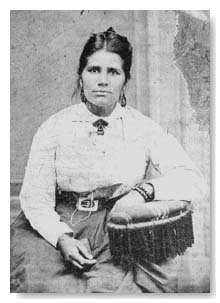
Lois Beachy Underhill | April 24, 1997

"The Algonquian

Peoples of Long Island From Earliest Times to 1700"

By John A. Strong

Illustrated by David Bunn Martine

Empire State Books

Heart of the Lakes Publishing

$50

"We Are Still Here!' The Algonquian Peoples of Long Island Today"

$12

Can present-day Long Islanders, European immigrants of 400 years, presume to write the history of their predecessors of 10,000 years?

"The Algonquian Peoples of Long Island From Earliest Times to 1700," a book by the ethnohistorian John A. Strong, proves he can.

Mr. Strong is professor of history and director of the social science division at Southampton College of Long Island University, and he has made Algonquian history his life work for the last 32 years.

Mr. Strong examined archeological digs, anthropological findings, contemporary records, and oral histories, alongside reports by 17th-century observers, as he pieced together the lives lived by the Algonquian peoples. The result is scholarly, yet accessible and constantly fascinating.

What To Call Them

At the start, Mr. Strong faced the puzzle of what to call these first Long Islanders. He found no clear consensus among the descendants of the original inhabitants except for a shared antipathy to European nomenclature, "Indian" and "Native American."

They had originally called themselves by their geographical place names of residence, such as Shinnecocks or Montauketts, and had no other generic name to differentiate themselves from strangers. Mr. Strong adopted this practice.

He also looked to shared languages - "All of the original inhabitants in what is now Long Island, New Jersey, Pennsylvania, and southern New England, for example, shared a common language root called 'Algon-quian' which distinguished them from their Iroquoian-speaking neighbors to the north."

Peace And Plenty

Mr. Strong prefers these terms, along with "original inhabitants" or "native peoples," which he considers "the only unencumbered generic references." This circumspection, which opens the volume, sets the tone for his entire work.

Mr. Strong paints the picture of a lost Eden, a vibrant society of peace and plenty on pre-European Long Island. The first inhabitants seem actually to fit the idealized image of native life that has often been imagined for them. He finds no evidence of the warfare that dominated the lives of the Iroquois to the north.

Villages spread themselves out spaciously over an acre or two and organized themselves around open public areas. The earliest Long Islanders picked sites on the banks of freshwater streams, at the point that they flowed into tidewater bays, where they had easy access to fresh water and seafood.

Extensive Networks

They preferred locations open toward the southeast, where the rays of the winter sun warmed their wigwams, but sheltered from the northwest winter winds by high hills or dense woods. These were beautiful as well as practical settings, popular with later European immigrants as well, a circumstance that has obliterated many archeological records, Mr. Strong notes ruefully.

Long Island wigwams, round or oval structures framed with saplings and covered with bark, provided warm and comfortable living quarters. They were "ingeniously designed to make efficient use of limited space," furnished with mats, benches, and sometimes beds, Mr. Strong believes.

These original inhabitants enjoyed a life of social and trade exchanges throughout Long Island and southern New England, as well as extensive trade networks with the mainland. Young people found marriage partners from throughout these many communities, and were free to select their future homes among either set of in-laws.

Ceremonial feasts marked the seasons of life. Algonquians greeted the emerging plants of spring with what is now called the "June meeting" and the autumn harvest with the "powwow." They celebrated rites of passage and buried their dead in cemeteries near the crests of hills on their southeast slopes.

Men occupied themselves with smoking rituals, still not well understood. They added tobacco to their local mixtures about 1,000 years ago when Nicotiana rustica reached the Northeast. The men tended their tobacco plots themselves, though the women of the villages cultivated and gathered food crops.

Mr. Strong best illustrates the abundance of early Long Island life when he describes the varied and bounteous meals that were the center of Algonquian social life. The archeological record, confirmed by later oral histories and written records, indicates that food preparation was an art.

Cooking As Art

Village women memorized herbal remedies. They prepared a varied diet of game, fish, shellfish, nuts, and berries - strawberries colored the fields red in June, and they were the high point of the June meetings.

The sweet white oak acorn was ground into flour for baking. They harvested ground nuts, small thin twining vines with tubers the size of hen's eggs, and Jerusalem artichokes during the late fall and winter thaws. In the spring they gathered green-leafed vegetables including chenopodium, or lamb's quarters, a relative of domestic spinach, and the new shoots of pokeweed. (Mature pokeweed is toxic.)

Stews were the cook's mainstay, but fish, fowl, and game were baked in clay molds - a meal of piquant delicacy and flavor. Clam bakes, prepared with hot stones and wet eelgrass, celebrated special occasions. Corn, beans, and squash, introduced from the Midwest and called the "three sisters" by the Iroquois, were adopted slowly on Long Island because, Mr. Strong believes, local food sources were abundant and satisfactory.

Europeans Arrive

Mr. Strong calls Algonquian life comfortable, with a rich religious system, lived in harmony with the environment - a beautiful environment little scarred by the passing of the first Long Islanders.

The arrival of Europeans in 1524 brought this idyllic life to an end. Mr. Strong recounts this more familiar story with patience. First, trading patterns changed. Wampum, made from Long Island shells, was in great demand among the inland tribes that trapped beaver. The Dutch and British traders made it legal tender, purchasing large quantities from the Long Island Algonquians and drawing them into a new economic network.

As the Dutch and English clashed in their grabs for Long Island land, the Algonquians became more structured politically to respond to these clashes. Their "sachems" engaged in intricate schemes to strengthen their power and influence, and they proved to be as adept at diplomacy and intrigue as the Europeans.

Dispossessed

The Montaukett Wyandanch was the most successful of these Algon-quian leaders, and his friendship with the English through Lion Gardiner, that nation's most powerful representative on Long Island, helped stabilize Long Island for Wyandanch's people. Wyandanch was proclaimed Grand Sachem of Long Island by the English in 1657. His death two years later marked the end of the Algonquian era.

The introduction of European diseases devastated the Algonquian populations. Lion Gardiner estimated that the smallpox epidemic of 1659-1664 took the lives of two-thirds of the Algonquians on Long Island.

In the latter half of the 17th century, European settlers took over Long Island, leaving just two tracts to the natives, Shinnecock and Poospatuck. "Cultural misunderstandings, deceit, patent violations, manipulation, the calculated use of alcohol, and payments made at roughly half of the market value characterized most of this tragic process of dispossession," Mr. Strong writes.

Still Here

But the original Long Islanders did not become extinct, as some reports claimed. The second volume, originally the final chapter of Mr. Strong's history, was expanded and published separately to tell the story of Algonquian survival and renewal.

Mr. Strong has written a contemporary classic to put on your shelf alongside James Truslow Adams's two volumes from 1916 and 1918, Henry D. Sleight's three volumes from 1929, 1930, and 1931, and Everett T. Rattray's 1979 "The South Fork."

Lois Beachy Underhill is the author of "The Woman Who Ran for President, the Many Lives of Victoria Woodhull," Bridge Works, 1995, Penguin, 1996. She lives in Sag Harbor, where she co-chairs the Sag Harbor Tree Fund and writes a bimonthly "Our Town" column for The Sag Harbor Express.
Opinion: 'Magic' Probes Inner And Outer Space

Opinion: 'Magic' Probes Inner And Outer Space

Patsy Southgate | April 24, 1997

The alluring title of Lanford Wilson's new play, "Sympathetic Magic," may well mystify those of us unfamiliar with the phrase.

Since regular magic is notoriously capricious, we may reason, then sympathetic magic must be dependable: a kindly power that intercedes reliably on our behalf, sort of like a fairy godmother.

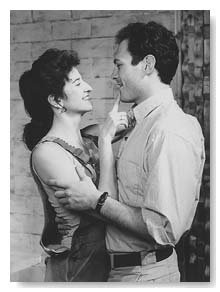
In the play, however, Liz (Tanya Berezin), an anthropologist, defines the term as magic based on the belief that one event can affect another, even at a distance, if there's a sympathetic connection between them.

She cites rituals performed by primitive tribes to induce the gods to do the right thing: staging a rain dance to make it rain, for example - not always a successful ploy, but comforting in its belief in an attentive higher power that can, at least, be appealed to.

Earth Or Heaven

Mr. Wilson is a Sag Harborite. His play, which opened on April 16 at the Second Stage Theatre in Manhattan, is about an eclectic group of family and friends all searching, in their various ways, for some form of sympathetic magic - if not on earth in sunny, neurotic California, then in heaven or the starry reaches of the cosmos.

Andy (David Bishins), an astrophysicist, slings his briefcase down on John Lee Beatty's clever high-tech set and lectures the audience on the visible universe, a grain of sand compared to the veiled beyond.

He works with a fellow astronomer, Micky (Jordan Mott), in a university observatory, researching black holes and other celestial phenomena. With their boosted-up telescope, they're looking for the farthest and oldest object that can be seen from earth.

AIDS Chorus

And they may have found it - there does seem to be something out there - but if the dean (Herb Foster) has his way, the university will hog all the credit for their discovery.

Dennis Barichy's beautiful lighting design also spirits us to a "medium-high" Episcopal church that displays a banner reading, Yahweh: I AM. Don (Jeff McCarthy), its gay pastor, labors tirelessly for his inner-city parish and its burgeoning caseload of AIDS patients.

He is helped by Pauly (David Pittu), his lover and the church choirmaster, who's rehearsing a chorus of sick and dying men in the "Kyrie Eleison" - "Lord Have Mercy" - from Mozart's Requiem.

Studies Of Shamans

Don's sister Barbara (Ellen Lancaster), a sculptor of monumental, "castrating" works, according to her critics, has just had a successful opening. She "lives in sin" with Andy and, unbeknownst to him, is pregnant: the secular artist and astrophysicist making a stab at the heaven on earth of human love.

Liz, the authority on sympathetic magic and Don and Barbara's mother, has devoted her life to studies of shamans and snakes' blood in her search for some sort of anthropological theology: she fears dying, and is going blind.

Rounding out the rather large cast for these straitened artistic times is Susan (Dana Millican), who's typing Liz's memoirs. She brings a puppyish gush of hero worship to the gathering of noted artists, scientists, and clergymen.

Stargazing

This is not the first of Mr. Wilson's works to stargaze. There are the earlier short plays "The Great Nebula in Orion," "A Poster of the Cosmos" (an ironic reference to the soccer team), and "The Moonshot Tape."

In "Sympathetic Magic," however, we find the playwright looking more deeply into outer, as well as inner, space: a seeker yearning to connect the baffling dots of the "visible universe" with imponderable infinity.

One wishes that Mr. Wilson had given himself a little more time to let this cosmic longing take root in his characters. They often feel like representatives of clashing philosophies rather than like people struggling to give meaning to their lives.

Excellent Acting

Despite brilliant direction by the playwright's longtime collaborator, Marshall W. Mason, and excellent acting, particularly by the no-nonsense Ms. Berezin, the funny Mr. Scott, and the intense Mr. Bishins, the play fails to illuminate the sympathetic magic between nurture, sexual orientation, violence, art, astronomy, religion, and the average person.

It is almost too abstract and too private at the same time: such unfathomable themes spread out before us, and such brief glimpses into the human heart - sort of like God playing peekaboo.

New Poolhouse Law?

New Poolhouse Law?

Susan Rosenbaum | April 17, 1997

Three approvals, two postponements, and a lot of talk about poolhouses filled a lengthy East Hampton Village Zoning Board of Appeals session Friday.

In a year's time, the board has considered requests from at least 20 homeowners - two this week - to convert garages or other existing structures into poolhouses, said Gene Cross, the village planning consultant. Perhaps, he suggested, it is time to amend the Village Code to allow poolhouses in pre-existing structures, spelling out specific limits on indoor facilities and setbacks.

That would eliminate a lot of hearings, Mr. Cross observed. More important, he said, once the requirements are spelled out, homeowners will find it harder to obtain variances that stretch the law - for inside showers or wet bars, for example, or to create kitchen facilities where none had existed.

Gould Street

The Z.B.A. approved both of this week's poolhouse requests. Steven Brown of Gould Street can convert a 410-square-foot garage into a 250-square-foot poolhouse, the maximum allowed, with the remaining space for storage.

Mr. Brown had received a variance in October 1995 to renovate the garage to a storage building, but without permission began work on a poolhouse and bath.

"The refrigerator is a nice touch, too," noted Joan Denny, a board member, with some sarcasm. She visited the site recently.

"The contractor thought the owner had a permit," said Tom Lawrence, the building code enforcement officer, "and the owner didn't think he needed [another] permit."

Nonetheless, Ms. Denny and the other board members agreed to allow the renovation, provided it includes only a sink, a toilet, and an outdoor shower. The code enforcement officer will make spot checks to assure compliance.

Egypt Lane

The board also approved Cordelia and William Laverack's 180-square-foot poolhouse, with bath and shower, on Egypt Lane, also a conversion of a 400-square-foot garage. The balance of the building will be storage.

The building is 2.4 feet from the side property line and 2.1 feet from the rear line, where required side and rear yard setbacks are 20 feet.

Fred and Sharon Stein of Old Beach Lane received permission to convert 655 square feet of storage space above a nonconforming garage into a workout room and art studio. William Fleming, the Steins' attorney, said his clients promised not to rent the space or include any kitchen equipment in it. The lawyer said the renovation was "an intelligent use of the property," which is about two acres and contains a tennis court, pool, and poolhouse in addition to the main house and garage.

The Steins were also given a variance for a 29.8-foot side yard setback, where the requirement is 30 feet.

Postponed

The board postponed two requests for lack of information - Ian Bruce Eichner's to replace a brick patio at his Ocean Avenue residence with a covered porch, and the Bayberry Close Corporation's to expand a cooperative cottage near Main Beach, which already has seen two expansions.

In connection with the latter, Frank Manelsky, a neighbor, said the coop has experienced "more maids, more service vehicles, and general saturation," with seven applications approved since 1978. The board's "good will has been abused," he said.

In other village news, the Planning Board will hold a work session next Thursday at 1:30 p.m. at Village Hall.


Ackerman Breaks Bank

Ackerman Breaks Bank

April 17, 1997
By
Star Staff

Leonard Ackerman, an East Hampton attorney and in vestor in local properties, won the bidding Tuesday for the Bridgehampton National Bank building on Main Street in that hamlet, topping the offers at $1.65 million for the brick landmark on behalf, he said, of a client or clients he did not name.

The 18,000-square-foot, two-story building has housed the Bridgehampton National Bank since the early 1900s. The bank is in the process of shifting its headquarters to a large new building of Georgian design just east of Bridgehampton Commons on the Montauk Highway.

Several others had entered bids but when the going edged toward $1 million only two bidders were left, Mr. Ackerman and Robert Morrow.

Recorded Deeds 04.17.97

Recorded Deeds 04.17.97

Data provided by Long Island Profiles Publishing Co. Inc. of Babylon.
By
Star Staff

AMAGANSETT

P.J. Const. to Seymour Fineman, Woodedge Circle, $585,000.

BRIDGEHAMPTON

Reh to M&M L.L.C., Sagg Road, $399,000.

Thompson to Richard Brennan, Snake Hollow Road, $250,000.

Brennan to Threesome Trust, Ambleside Lane, $725,000.

Gruber to the Hayground School, Mitchells Lane, $358,000.

Green River L.P. to David T'Hoen, Casey Lane, $152,000.

Drucker to Gary and Carol Scott, Old Farm Lane, $305,000.

Peluso to Elisabeth Quimby, Chase Court, $635,000.

EAST HAMPTON

Oxnam to Laurie Malman, Georgica Close Road, $590,000.

Fine to David Saatchi, Conklin Terrace, $288,000.

Hyman to Richard Anderman, Hedge Row Lane, $650,000.

Marcus to Richard and Stephanie Chestnov, Georgica Road, $2,700,000.

MONTAUK

Ziegfeld Villas Corp. to MYC New York Resort L.L.C., Star Island Road, $281,000.

Plaza Uniondale Properties Corp. to MYC New York Marina L.L.C., Star Island Road, $316,500.

Montauk YC Corp. to MYC New York Resort L.L.C., Star Island Road, $1,116,000.

Lake Front Land Corp. to MYC New York Marina L.L.C., Star Island Road, $2,080,000.

Montauk YC Corp. to MYC New York Resort L.L.C., Star Island Road, $2,436,000.

Zihlmann to Gilbert McGill, South Edgemere Street, $190,000.

Sousa to James and Danielle Bontempi, Duryea Avenue, $160,000.

Steck to Helen Dent, North Greenwich Street, $240,000.

NORTH HAVEN

DeCristofaro to Andrew Lack, Fresh Pond Road, $355,000.

NORTHWEST

E.R. Yankee Homes Inc. to Yvette Arsenec-Weir, High Ridge Road, $485,000.

Simmons Jr. to Sarah Oakes and Patricia Simko, Sally's Path, $170,000.

NOYAC

Ceresa to James Ross, Fairway Court, $505,000.

SAG HARBOR

Harvey to Marshall Garypie 3d, Noyac Road, $153,000.

Froebel Jr. to Bradley Lewart, Noyac Path, $365,000.

Klein to Elizabeth Kramer, Glover Street, $340,000.

SPRINGS

Surbeck to Alan Craven, Old Stone Highway, $165,000.

WAINSCOTT

McLaughlin to Fiona Dorst, Sayre's Path, $660,000.

WATER MILL

Squires estate to Emily Squires and Joseph DiMenna, Head of the Pond Road, $550,000.

Linder to Charles Tutt, Mecox Road, $225,000.

Bountiful Flounder

Bountiful Flounder

April 17, 1997
By
Russell Drumm

The flounders are biting, not only in Lake Montauk and at Shinnecock, but in deeper water off Block Island.

Fishermen aboard the Blue Fin IV charter boat from Montauk reeled aboard two very large flounder on Tuesday, one weighing nearly five pounds. The Blue Fin and other Montauk boats are now running split cod and flounder trips.

Kathy Vegessi of Montauk's Lazy Bones party boat reported good flounder fishing in Lake Montauk, the flatties responding to the traditional chummed corn, and biting on clams and mussels. She reckoned the strong showing could have to do with the clammers working the lake, stirring the bottom and perking the flounders' olfactory sensors.

Altenkirch Precision Outfitters in Hampton Bays reports continuing flounder action in the Shinnecock Canal and new action at the South Race and at Buoy 9 off Pine Neck Point, as well as cod up to 15 pounds southeast of Shinnecock.

A Mystery Still

Montauk's Viking Fleet of party boats will not be running its regular Friday cod trip because of the annual Coast Guard inspections. Saturday and Sunday trips are scheduled to go as usual, however, at 5 a.m. from the Viking Dock.

There were several responses to last week's mystery fish photo, but none hit the mark. The identity of the orange fish shaped like a small monk (alias goosefish) remains a mystery. It's clearly not an orange roughy, the guess of Tom Hashagen of Shelter Island.

Nor is it a red fish. That's what Joseph O'Connor of Montauk thought it was. Kaitlin Daniels of Sag Harbor thought an angler fish. Right shape, wrong color. Daniel Padovano of Concordia College in Bronxville suggested the fish was either a sculpin (alias sea robin) or a wolf fish. Alas, it's neither.

The Star Goes To Hicks Island: Bringing Back Roseate Tern

The Star Goes To Hicks Island: Bringing Back Roseate Tern

April 17, 1997
By
Russell Drumm

They looked like seven conquistadors claiming El Dorado as they stepped from their boat and walked up the modest rise of sand, moss, beach grass, and cobble-sized stones that marks the north-to-south center of Hicks Island.

Their quest was a modern one, however: to put an end to the island's long absence of roseate terns, an endangered species. The "gold" they sought was a few hatched tern eggs, sometime in the future.

The boomerang-shaped island is longer than narrow and lies close to land - less than 100 yards across the swiftly-moving tidal race that separates it from the entrance to Napeague Harbor to the east and the fishing cottages of Shore Road and the Lazy Point launching ramp to the west.

Return-The-Tern

Hicks Island has gained in size because of dredged spoil placed there over the years. Roseates are known to have nested on its western tip as recently as the late 1980s, but only one or two pairs.

Larry Penny, director of the East Hampton Town Natural Resources Department, described the roseate as an "elegant" member of the tern family, black and white with fine-pointed wings and forked tail, and with a breast that turns "a suffusive pink at the beginning of the breeding season."

On Friday, Mr. Penny was joined by a staffer, Barnaby Friedman, and a neighborhood resident, Job Potter, who has been hired by the department for the duration of the return-the-tern project to oversee the building of "apartment complexes" for the prospective tenants.

George Larson, representing the state, came along, too. Hicks Island is state-owned.

Museum Ornithologist

The other conquistadors included Cathy Brittingham of the Nature Conservancy and Andrew Milliken of the U.S. Department of the Interior, the agency that lists endangered species. Mr. Milliken, while looking for likely roseate sites, also kept an ear cocked for the sound of piping plovers, another endangered bird.

But it was Helen Hays, representing the ornithology department of the Museum of Natural History, who dispensed wisdom about ways to lure roseates back to Hicks Island and suggested likely sites.

She should know. Since 1969, Ms. Hays has returned each May to Great Gull Island, between Plum and Fishers Islands, to watch over that small outcropping's colonies of common and roseate terns. Both have swelled, the commons from 3,000 the first year to 18,000 last year; the roseates from a few to over 3,000.

They Ought To, But . . .

But that's Great Gull. In East Hampton, the only place roseates are known to roost is at the Ruins, off Bostwick Point on Gardiner's Island.

Several pairs try to establish themselves each year at Cartwright Shoals on the opposite end of Gardiner's Island, but have been frustrated by the aggressive behavior of herring gulls.

"They should come here," said Ms. Hays, but she said it in a way - with a quick shrug - that spoke of the difference between what humans know and what they don't.

For instance, there was a well-established colony on Cedar Point in Northwest not too long ago, numbering as many as 200. The Cedar Point population has disappeared, perhaps because of predators, but no one is sure.

Bring In The Cousins

The key to luring roseates back here, said Ms. Hays, could be to attract them to Hicks Island along with their more aggressive - and thus protective - cousins, the common tern.

The birds are very different, she explained. While they may nest in the same general place, common terns like large, open, central areas, while roseates keep to the outside edges, where they seek shelter under cover of beach grass.

The others bowed to Ms. Hays's expertise in choosing the proper ground for what she insisted they should consider an experiment - "It may not work the first year." She recommended trying several locations on both the north and south sides of the island.

Location, Location

Each site had to fit the bill for natural cover and proximity to the water, but would be enhanced to attract roseates.

Ms. Hays recommended short ground cover. The group crisscrossed the island, approving and rejecting various spots. They finally zeroed in on four possible landing zones, one of them beside the chimney remnant of an old menhaden-processing plant.

Hoe-wielding volunteers began clearing this week, making circular center sections and narrow lanes leading to the water. Because the roseates prefer to nest in shelter, a low apartment complex - a two-by-four roof above with small blocks of wood interspersed below - is being provided.

The apartments would be more attractive if they had a back wall, Ms. Hays remarked, with the opening facing the sea. Such custom lodgings should be ideal, she said, although the birds have been known to nest "in a pile of boards or a potato basket."

Roseate decoys are being put in place to give the site a lived-in look. A tape recording of a roseate's call is set to play at intervals.

Ms. Hays stressed that the sites and their appointments had to be ready by April 27 in order to lure birds looking for a place to nest. The project is being paid for in part by a grant from the U.S. Fish and Wildlife Service, an agency of the Interior Department, in cooperation with the Natural Resources Department.

Oystercatcher!

On the way back to the town boat for the short cruise to Lazy Point, heads turned to search for the source of a shrill cry.

"Oystercatcher!" the veteran birders exclaimed in unison, and there on the shore a strange-looking bird with an upturned orange beak searched for food.

The Fish and Wildlife Department's Mr. Milliken took his own roundabout route to the boat and reported hearing but not seeing a plover along the way.

Ms. Hays said it was only recently discovered that the endangered roseates traveled all the way to Argentina on their winter migrations, Punto Raso, to be exact. She said a scientist there had begun netting and attaching a small, orange flag to the birds to keep track. "You should look for the flags. They could come here," Mrs. Hays said.

Earth Day Ceremonies

Earth Day Ceremonies

April 17, 1997
By
Russell Drumm

In 1970 John McConnell, a Sag Harbor resident, and the anthropologist Margaret Mead suggested that a day be set aside each year to advocate for the earth and all of its inhabitants.

They wanted the day to be in March to coincide with the spring equinox. Others, including Senator Gaylord Nelson of Wisconsin, pushed for an "Earth Day" in April.

April won out. This weekend marks the 27th annual celebration of Earth Day, and a number of events and celebrations will be held around town to observe it.

Naturefest

Southampton College, the Group for the South Fork, and the college's student environmental group, PEACE (Protecting Every Aspect Concerning the Environment) have invited "parents, children, earthlings, granola lovers, tree huggers" to participate in a free event called Naturefest, from noon to 8 p.m. on Sunday.

There will be tellers of children's stories, a jazz quartet, and a professional drum troupe. A raffle will feature prizes donated by the Agri-Balance Organics Consulting Company of Sag Harbor. Wildlife rehabilitators will describe their activities, and there will be presentations on organic farming, alternative energy, and recycling as well.

Off-campus activities will include walks on Tuckahoe Hill and a boat ride on Shinnecock Bay aboard the Paumanok.

In Montauk

The Concerned Citizens of Montauk will celebrate Earth Day on Saturday, from noon to 2:30 p.m. at Third House.

This year's theme, "Celebrating Our Montauk Woodlands," will be dramatized by Montauk School students in a presentation called "Today's Tree, Tomorrow's World." The students will also present a "living diorama" depicting Native Americans in costume and traditional settings.

The Montauk-based group Trilogy, whose members are Bill Akin, Mathew Katz, and Teri Cox, will perform as well.

Student art and poetry will be displayed in the Teddy Roosevelt room at Third House - the perfect setting, said Lisa Grenci, president of C.C.O.M., "since he was the country's first statesman to address the need to preserve our forests." Concerned Citizens has worked to preserve Hither Woods, Camp Hero, Shadmoor, and Montauk County Park itself.

Caldicott Speaks

Dr. Helen Caldicott of East Hampton, winner of the Nobel Peace Prize, an author, and the founder of Physicians for Social Responsibility, will celebrate the day Sunday at Southhaven County Park in Brookhaven.

The Earth Day observance there, which is free, will begin at 11 a.m. and continue to 5 p.m., rain or shine. Dr. Caldicott will speak during the ceremonies on "reclaiming health," both for the planet and its population.

The park can be reached from the north service road of the Sunrise Highway (Route 27), between Exits 57 and 58.

Lovers of the earth and all its inhabitants also should know that the Nature Conservancy needs a few good coastal stewards and invites volunteers to join the effort to protect the local population of endangered piping plovers beginning on Sunday.

The conservancy says that the work can be arduous but is always rewarding. Volunteers have been asked to call the conservancy at its East Hampton offices today to learn about where to meet on Sunday. Another such work day is scheduled for April 26.

What The Trustees Want: Part Two

What The Trustees Want: Part Two

April 17, 1997
By
Russell Drumm

When Kevin Murphy wanted to replace his fixed dock on Three Mile Harbor in East Hampton with a floating one three years ago, the East Hampton Town Trustees, who own most of the land below the high water mark except in Montauk, said okay. The Town Zoning Board of Appeals, however, which reviews all applications for construction or changes in terrain that affect natural resources, said no.

An expensive lawsuit followed, with the court finding in favor of the Trustees because they owned the property involved.

The Trustees point to the Murphy dock case as a reason why they should be given sole authority over properties they own, even in the realm of zoning. Trustees say that needless confusion and lawsuits would cease if the Z.B.A. were left out of the picture.

The Z.B.A.

Zoning boards of appeal were established by the state to provide a check on the way municipal zoning laws affect individual applicants. In East Hampton, the panel also reviews those applications for natural resources permits about which questions arise, such as applications for bulkheads.

Ever since a court ruling that said the Town Board could not enact laws affecting Trustee property without their concurrence, the Trustees have argued that the board must follow their dictates.

Critics of the Trustees' proposal to end Z.B.A. review where Trustee property is involved fear that the Trustees, having gained de facto legislative power, would also become their own appeals board.

Legal Background

The Trustees own most of the land below the high water mark as well as many underwater lands by royal patent granted before the American Revolution, on behalf of "the commonalty." To what extent, therefore, the panel must comply with the laws of the State of New York is arguable.

In order to be able to consider whether projects on their property should be permitted, the Trustees want to replace the town natural resources permit process with their own permit system. They have dubbed it TWERP, for Trustee waterfront environmental review permit.

Some observers of local government have questioned the Trustees' ability to handle such review. They argue that, as landowners, Trustees should be subject to the same checks and balances provided by the Zoning Board of Appeals.

TWERP Hearing

James McCaffrey, however, a longtime Trustee, countercharges that the Z.B.A. is not subject to review when it makes its decisions, except through the courts.

John Courtney, the Trustees' attorney, supports the Trustees' extension of authority, noting that they have the right to regulate certain activities, such as shellfishing, on the common land already.

The Trustees held a public hearing on the permit process in December. At it, Carolyn Zenk, an attorney for the environmental Group for the South Fork, opposed the system, saying it could actually diminish the Trustees' authority. She said the regulatory authority they were seeking would be subject to interpretation and lawsuits, while their proprietary authority was absolute.

But the Trustees argue that while they now have an uncontested proprietary right to deny any project on their property, it is not balanced by the right to approve projects.

Several Hats

Mr. Courtney agrees that the Trustees would, with their own permit system, wear several hats. In addition to being able to tell the Town Board what regulations to enact and to acting as a review board, they also could make decisions simply as property owners. Mr. Courtney added that the Trustees would use town zoning and environmental laws and the State Environmental Quality Review Act as guides.

Among those who are studying the Trustees' request for regulatory authority through their own permit system is Richard Whalen, a deputy town attorney.

"My review has two purposes. One is to make sure the Trustees have the full panoply of powers over land use, that is, zoning. The second part is to eliminate any gap that may exist when a project is only partially on their land," Mr. Whalen said.

Legal Review

He said he was not advocating for or against the Trustees' proposal, but thought that if it did go through it should cover the land adjacent to the shorelines in addition to bottomlands.

"This would cover the loopholes. My job is to write it [the Trustees' permit law] so that if it is adopted, it will function," Mr. Whalen said on April 1.

He said his work probably would be the subject of discussion at the May 6 Town Board work session. Eliminating the Z.B.A.'s jurisdiction over Trustee lands would involve changes in the Town Code, following a public hearing.

So far, opinion among Town Board members follows political party lines. Town Supervisor Cathy Lester, a Democrat, said she wouldn't go for it.

Opposition

"The main reason is that right now we have an extra little bit of environmental protection by having both boards review applications. This process has worked very well in the past, and I don't see any reason to change it. As time goes on, there'll be more and more pressure on elected bodies to allow certain actions to take place that might not be put on an appointed board."

Ms. Lester was referring to the fact that the full nine-member Trustee panel is elected together every two years. Z.B.A. members are appointed by the Town Board for five-year terms, with one seat up for appointment every year.

Ms. Lester, who once was a Trustee herself, wondered whether the Trustees had thought the plan all the way through. She said the records were not entirely clear on which lands Trustees own, and boundaries were not clearly described. She added the opinion that giving the panel regulatory authority could result in an applicant's making a legal challenge to Trustee ownership and winning.

"That could end up diminishing their authority, when it turns out they don't actually own the property they're trying to regulate," she said. She noted that historically the Trustees had sold off great tracts of common land, such as the beach on Napeague.

Past History

Peter Hammerle, the only other Democrat on the Town Board, said he would await the public hearing before deciding how to vote.

"No one has shown what's broken," he said, adding, "I have a lot of questions."

Republican Town Councilman Len Bernard said he supported the idea and agreed with most of the people who spoke at the Trustees' hearing on it in December. "I feel the Trustees are in a good position to review and approve applications for their properties," he said.

Knobel's Effort

Councilwoman Nancy McCaffrey, who also is a Republican and whose husband is a Trustee, said, "It's not really expanding their jurisdiction; it's more like regaining what they had, from what I've been told."

"In areas of public domain the owners should determine how regulations are implemented," said Councilman Thomas Knobel. He began talking about expanding the Trustees' jurisdiction while serving on their board in 1993 and helping to draft the proposed permit procedure as well as the Trustees' policy statement, which they called a "manifesto."

"To those who say the system is not broken, there are glitches," he said, citing the example of how the Town Board and Planning Department last year applied to the county to have Three Mile Harbor dredged without asking the owners of its bottomland, the Trustees, for advice.

Enforcement Issues

Mr. McCaffrey sees the thrust of the Trustees' manifesto, described in part one of this article, and the proposed permit system as ending confusion. Enforcement suffers because of confusion over jurisdiction, he said.

Although harbormasters routinely enforce town shellfishing regulations, which the Trustees take the lead in creating, there are other cases where enforcement has faltered, he said.

In February, he reported, the Trustees discovered a bulkhead had been constructed on Georgica Pond out of wood treated with C.C.A., chromated copper arsenate, which the Trustees ban on nontidal waters, and without a Trustee permit.

Soak Hides, Too

Sent to investigate, James Cavanagh, the deputy natural resources director, left the scene when his authority was challenged by an agent of W. Clifford Klenk, who leases the property. The incident spawned a meeting among town officials and an agreement that the town attorney, Robert Savage, should codify the understanding that town officials would enforce Trustee regulations.

Another enforcement question was raised over the state-authorized cleanup of gasoline-contaminated groundwater near Three Mile Harbor. Millions of gallons of water are to flow into the Trustee-managed harbor via Soak Hides Dreen, but the dreen itself was not in their domain. The result is another proposed change in the Town Code, giving the Trustees jurisdiction over "tributaries" and their wetlands, as well as bottomlands and adjacent property.

Mr. McCaffrey reasoned that by reclaiming tributaries and their wetlands which had not already fallen into private hands, the Trustees could better protect the common resources that are left.

"All this," said Mr. Knobel, "is about respect for the abilities and proprietary protections offered by the Trustees."


Rancher Is Cleared; Restitution Ordered

Rancher Is Cleared; Restitution Ordered

By Josh Lawrence | April 17, 1997

Gardner (Rusty) Leaver, the proprietor of Montauk's Deep Hollow Ranch, is off the hook for now on a criminal charge related to the sale of a horse he did not own.

In East Hampton Town Justice Court last Thursday, Mr. Leaver was ordered to repay the Dix Hills woman who purchased the part Arabian, part quarter horse from Mr. Leaver in December only to find she couldn't take possession of it.

Though the woman, Allison Sorrelli, got her $3,085 back, and Mr. Leaver avoided a felony charge of third-degree grand larceny, neither side claimed to be completely satisfied.

"A Nightmare"

The rancher was granted a six-month adjournment in contemplation of dismissal, meaning the charge will be dropped if he is not involved in any other problems.

"The whole thing has just been a nightmare for me and my family," said Mr. Leaver on Tuesday. He stressed that he had attempted to compensate Ms. Sorrelli before she brought the matter to police, and said it could have been resolved as a civil matter.

"I've been in the horse business in Montauk for 30 years and I've never been in small-claims court over anything," he said.

"Duped"

For Mrs. Sorrelli, the resolution still leaves her without the horse she thought she had rightfully purchased.

"I just wanted the horse," she said Tuesday. She has arranged a lease deal with the horse's rightful owner, Anthony Longhitano, allowing her to ride the horse at a stable in Manorville at no cost.

"This hurt me," added Ms. Sorrelli. "This was his fault, bottom line," she said of Mr. Leaver. "He's trying to play it up as a misunderstanding. Yeah, maybe it was a misunderstanding to him, but I was the one who was hurt."

Restitution Offered

Mr. Leaver maintains the horse was left at Deep Hollow, along with another one belonging to Mr. Longhitano, for two years "without so much as a word or a visit" from the owner. Having paid the medical, feeding, and boarding costs for the horses, he said, he believed them to be his.

The rancher said that when the ownership question finally emerged, following the sale, he attempted to make restitution. He said he offered her all her money back or her choice of any of the ranch's remaining 50 horses.

"I offered to pay her verbally and by certified mail," Mr. Leaver said, adding that a certified letter came back unopened. "She didn't want satisfaction. She wanted to publicly embarrass me."

Mrs. Sorrelli said Mr. Leaver's certified letter came only after she had taken the matter to police. "He was crossing his 'T's' and trying to make himself out as mister innocent," she said.