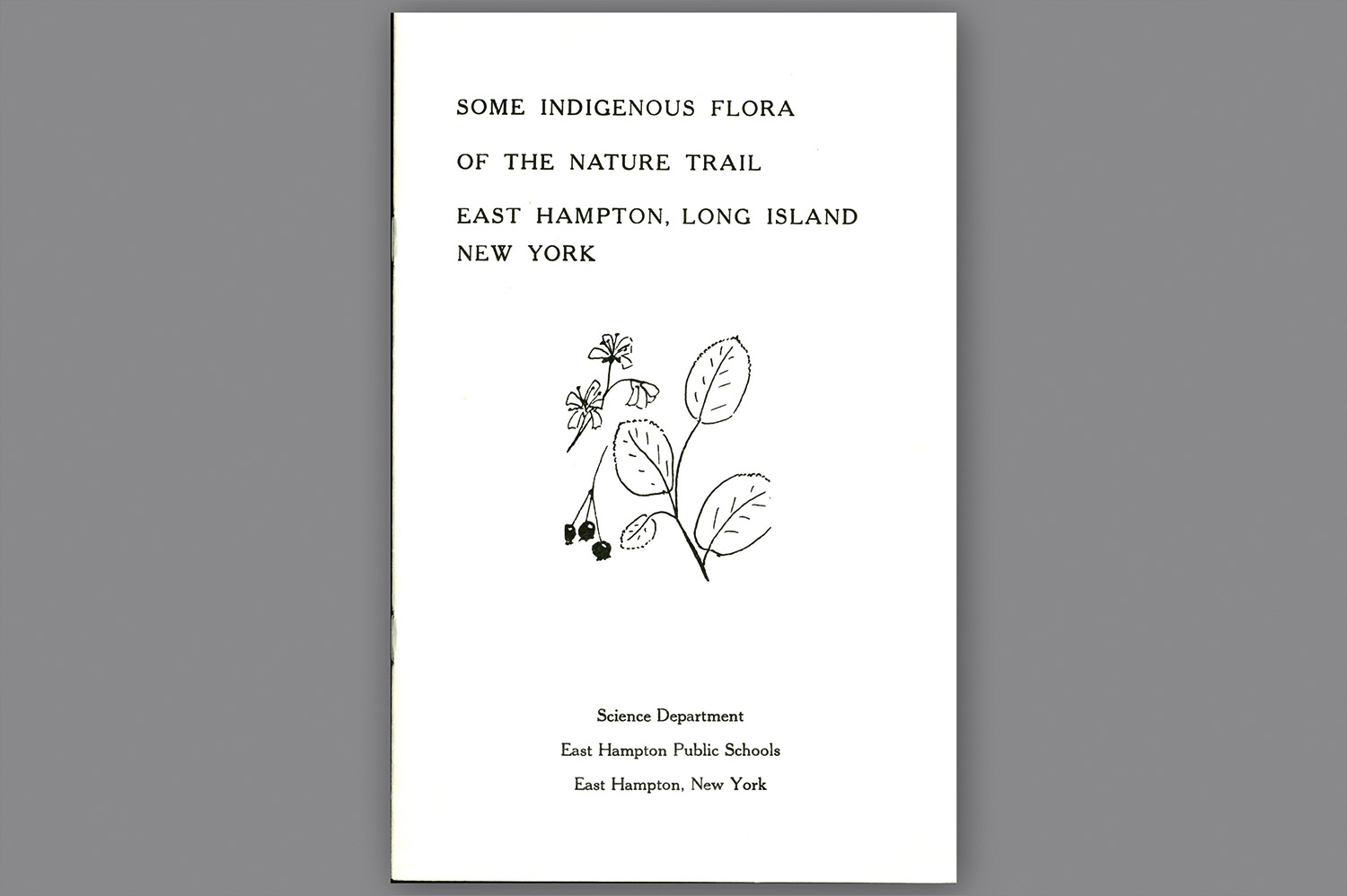
As spring takes a firm hold on the East End, this guide to the indigenous plants of the East Hampton Nature Trail feels particularly relevant. The duck pond and Nature Trail began as a private Japanese-style water garden for Mary E. Woodhouse. She opened it to the public in the 1940s. In 1951, Woodhouse donated eight acres of this land to the village, and over the following years her neighbors also generously donated parts of their lots to create the trail.
Helen Iannone, an East Hampton High School student, put this pamphlet together to provide an overview of some of the many plant species that grow on the trail. This was an independent study project conducted through the high school’s science department. Barbara Hale, a science teacher, assisted and advised Helen. The pamphlet’s completion was celebrated in 1976 with a brief article and picture in The East Hampton Star.
The first plant mentioned is skunk cabbage, which is unlike almost all other flora found in the area. As the name suggests, its most notable feature is its stench — less skunk than bilge water. The emergence of this malodorous plant marks the beginning of spring, and a large crop can be seen all over the Nature Trail. If you happen to be there in early spring, it tends to grow in shallow, marshy areas in and around the creeks that run through the trail.
Other marsh plants highlighted include false lily of the valley, another plant that can be seen in active bloom along the trail this spring, almost 50 years after Helen Iannone recorded its presence in her guide.
Julia Tyson is a librarian and archivist in the East Hampton Library’s Long Island Collection.