The East Hampton Village Board will hold a public hearing on a proposed update to the village’s comprehensive plan on Dec. 18 at 11 a.m. A draft of an updated plan, described as a policy document and a 10-year plan, had been presented to the village board by Noah Levine of BFJ Planning at its Oct. 16 meeting.
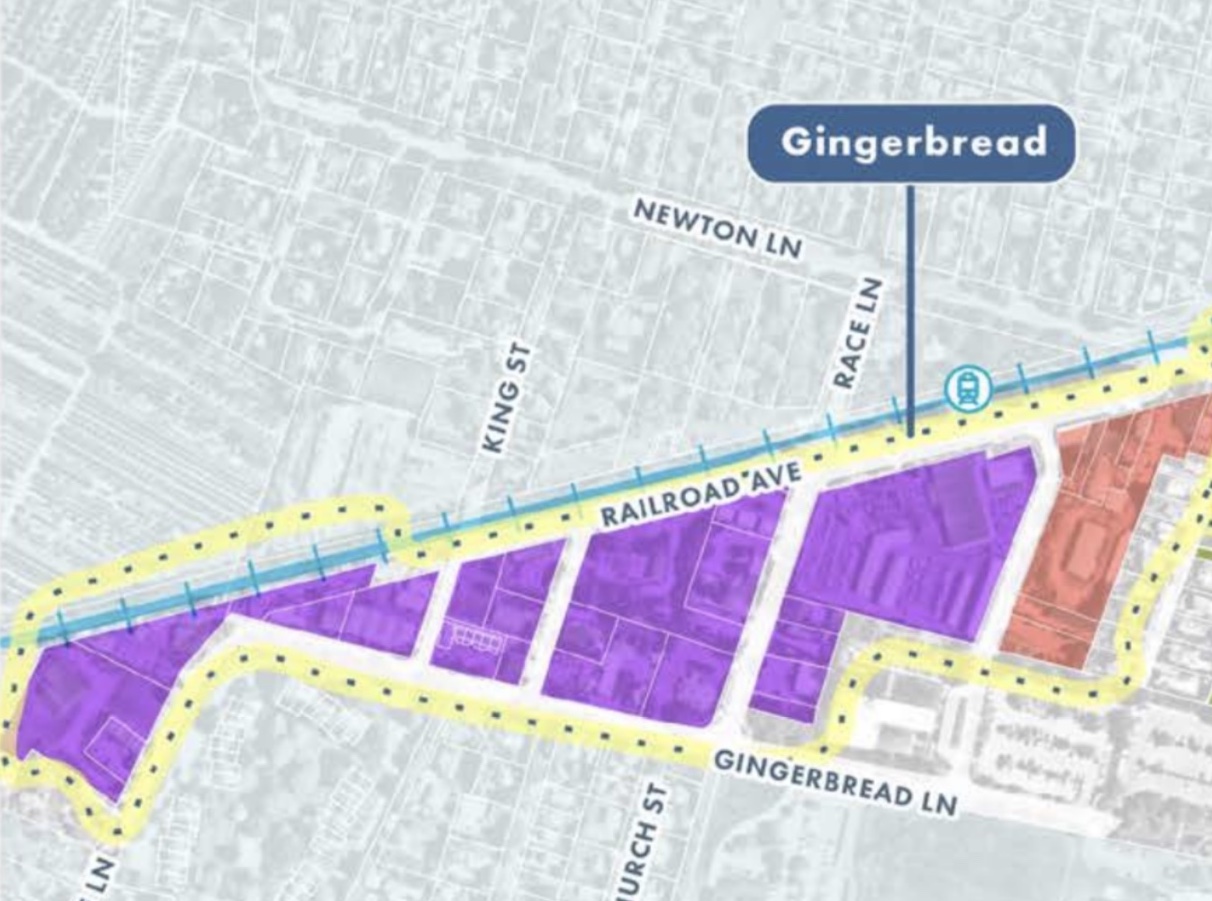
The process to update the plan, which last happened in 2002, began in 2024 with a public workshop aimed at assessing existing conditions and identifying issues and opportunities. A second, virtual workshop, during which a preliminary vision and strategies were outlined, was held in May 2025. At a third public workshop in March, during which draft recommendations were outlined, a focus was on the eventual development of the Gingerbread District along Gingerbread Lane, King Street, Race Lane, and Railroad Avenue.
The draft plan, which is on the village’s website, includes chapters on housing and neighborhoods, commercial development and the village center, transportation and mobility, historic preservation, community and cultural assets, parks, open space, natural resources, sustainability, and resilience, and future land use and implementation. It has been vetted by the Suffolk County Planning Commission, which deemed it complete, and the village’s planning board has recommended its approval.
On Friday, Carrie Doyle of the board asked Billy Hajek, the village planner, about the proposed Gingerbread District, which is zoned for manufacturing and which the draft plan envisions as a mixed-use zone also incorporating housing. Activities such as an ice plant or the manufacture of signs would be permitted uses, Mr. Hajek said, as well as any use that is permitted in the core commercial district.
“It’s probably the most intense zoning district that we have in the village right now,” Mr. Hajek said. “It allows the greatest amount of coverage, the greatest amount of building area, and it’s the least amount of parking that’s required for those specific uses.”
The district, Mr. Hajek said, comprises land south of the Long Island Rail Road track, from the northwest corner of Newtown Lane south to the Y.M.C.A. East Hampton RECenter at the corner of Gingerbread Lane Extension and Lumber Lane.
He was unsure as to when the manufacturing zone was established, but said the designation is likely more than three decades old. “From my personal perspective, it needs to be brought up to current times,” he said, “because there’s the potential for a lot of redevelopment in the manufacturing zone and there are a lot of large parcels. I think the idea is to try to craft zoning that encourages uses that are more appropriate than the [village’s comprehensive plan] committee thought, and maybe the community will think, are more appropriate for the village.”
The draft plan recommends further study of the Gingerbread District before any code change, which would require a public hearing, is enacted. “It would be another study that we look at and analyze the existing and permitted uses, and decide what proposed uses would be appropriate there,” Mr. Hajek said. “The plan does recommend increasing housing in that area, because the committee thought that with smaller mixed-type uses it’s more appropriate to have housing on the second floor . . . creating more of a downtown hamlet atmosphere versus large, big-box stores.”
The draft plan also includes a recommendation to monitor and possibly revise regulations pertaining to noise and construction. “Those are all items that we’d have to implement after the plan is adopted,” Mr. Hajek said.
Mayor Jerry Larsen said the plan, once adopted, “is just a roadmap for the village board. Any zoning or anything that’s going to be changed, or any laws that have to be created, all have to come before the village board and before public hearings.”
The comprehensive plan is a living document, Mr. Hajek said, “and it could be updated, too. You don’t have to wait 20 years to update it. Portions of it could be updated, could be edited. It’s supposed to live on.”