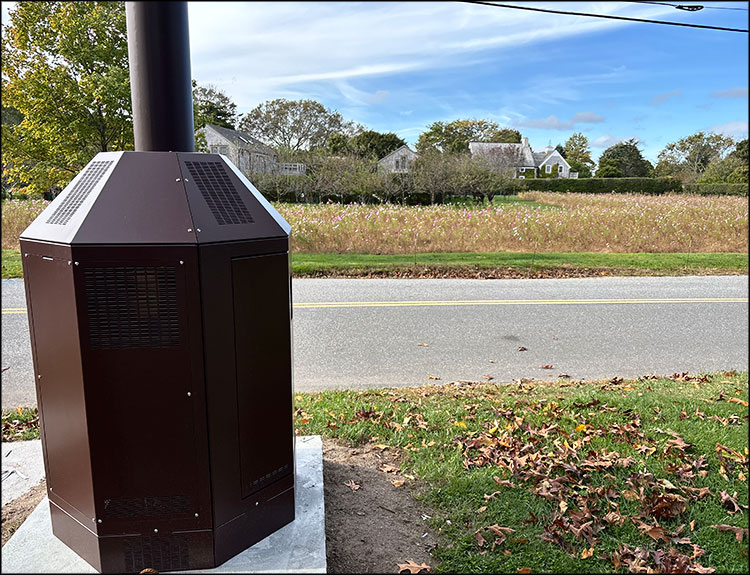
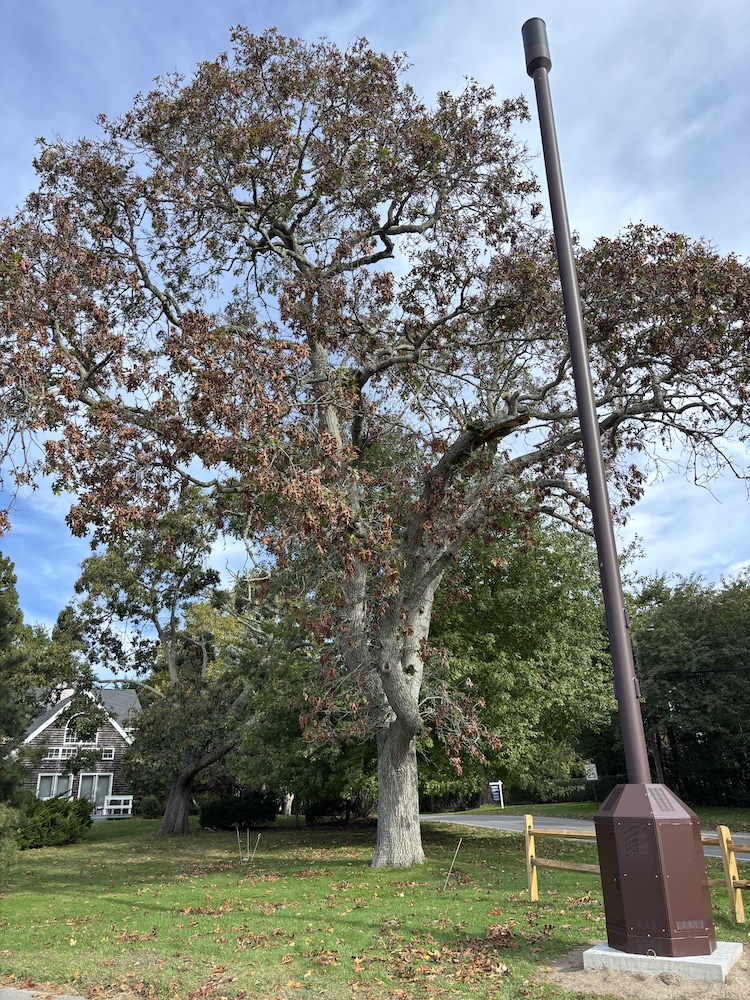
Tina Vavilis LaGarenne, East Hampton Town’s planning director, stood at the intersection of Wainscott Stone Road and Sayre’s Path last week next to a field of swaying cosmos. Behind her a pumpkin patch extended toward the ocean.
She had her back to all that though as she struggled to get a 38-foot-tall “small cell” wireless facility into the frame of her iPhone camera. The poles hold technology to help improve wireless coverage and address gaps in service.
A pedestrian, Marla Behrman, approached.
“Who put that up? Did the town allow that?” asked Ms. Behrman.
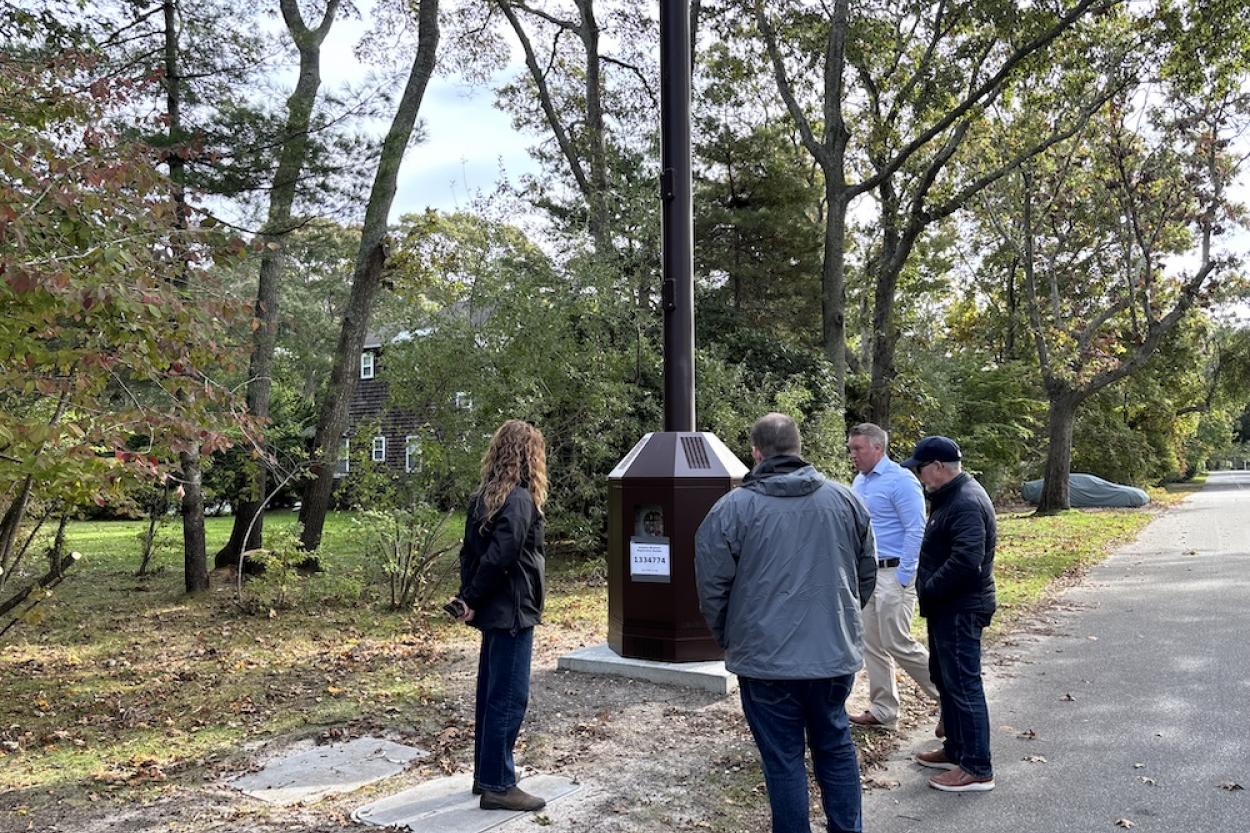
Ms. Vavilis LaGarenne listened to Ms. Behrman’s criticisms (“They’ve very industrial looking,”) and questions (“Are these going to be all over? Like it’s the new thing that’s just going everywhere?”) and responded.
“The town has a permitting process that they go through to make sure they’re following federal regulations, but the federal government does maintain a lot of jurisdiction over it,” she explained. “The town has limited authority over what we can and cannot do when a company wants to site one.”
As for the answer to the other question? Yes. These poles are going to be all over. In fact, close to 200 will be planted in just the next year. Ms. Vavilis LaGarenne is going to be very busy.
In short, it’s tough to figure out where these things are going to go.
A crowded strip of land, known as the right of way, where utility lines and fire hydrants live, is the usual spot, but there are restrictions. For example, if the utility poles carry “primary” electrical lines, a small cell pole can’t be within 15 feet.
And that’s the rub. Of course, no one wants them within sight of their house and suddenly, it feels like there’s 200 square pegs in a town of round holes.
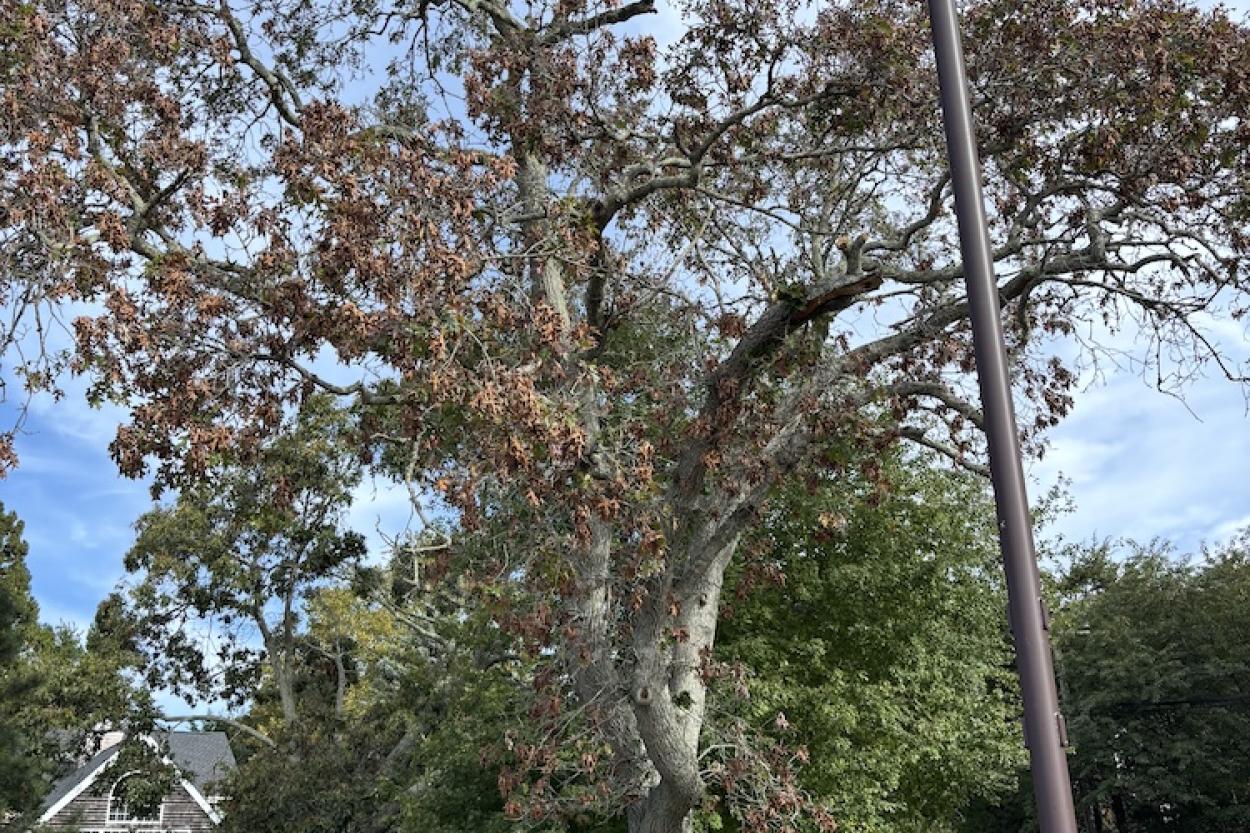
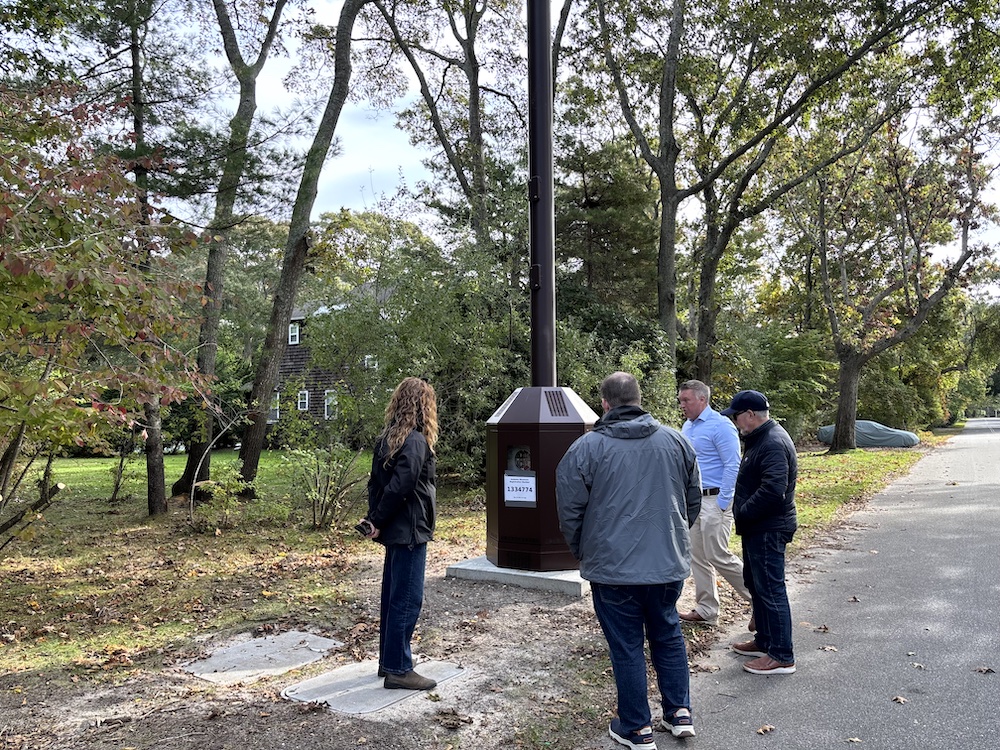
The tower at 1 Wainscott Stone Road was the fourth Ms. Vavilis LaGarenne had visited that morning with Tyler Borsack, a principal environmental analyst in the town’s Planning Department, and Darryl Forster, a senior external affairs manager at Arium Networks, the company that is installing the poles.
Their first stop was at 23 Montauk Avenue, off Hand’s Creek Road in East Hampton, where a pole sitting at the foot of Albert Intreglia’s lawn has galvanized an entire neighborhood in opposition.
Half a dozen neighbors stood staring at the foreign presence as if it were one of the black monoliths in the Stanley Kubrick film, “2001: A Space Odyssey.”
In the middle of them all stood Ms. Vavilis LaGarenne holding out a cellphone, which was on speaker, while Mr. Intreglia spoke.
“The money I’ve spent developing that property,” he said. “It’s absurd. I’m deeply offended. The irony is I have great affection for the town. I admire how they’ve been able to maintain it.”
“Darryl agreed he’d go back and look at the coverage maps and see what might work,” Ms. Vavilis LaGarenne told Mr. Intreglia. “But you know, he can’t promise anything. We’re out in the field and he doesn’t have that information. But he will look at it to see if there are adjustments possible. We’re here today simply to listen to neighbors’ concerns.”
Montauk Avenue is a narrow road, and perhaps because its electrical wires are buried and there are no utility poles, the brown 40-foot cell tower stands out even more.
“Is this tower mainly for coverage or capacity?” asked Charlotte Yerkovich, who lives across the street and was concerned about health impacts.
“I think it’s both,” said Mr. Forster. He added that the tower would not be “switched on” until the end of the year.
“I have no problem getting cell service here,” said Mike Alexander, another neighbor, shooting off a text.
The group decided there were no good options. The pole would be difficult to screen. Moving it was preferred, but it was unclear if that was an option.
“I’ll confirm the distance we can physically move this and that will help us figure out our options,” said Mr. Forster. “We’ll do proposals for shrubbery, but I’m just being transparent, we usually can’t move these more than a few feet.”
“We don’t want to move it a few feet,” said Ms. Yerkovich. “We want to move it 700 feet.”
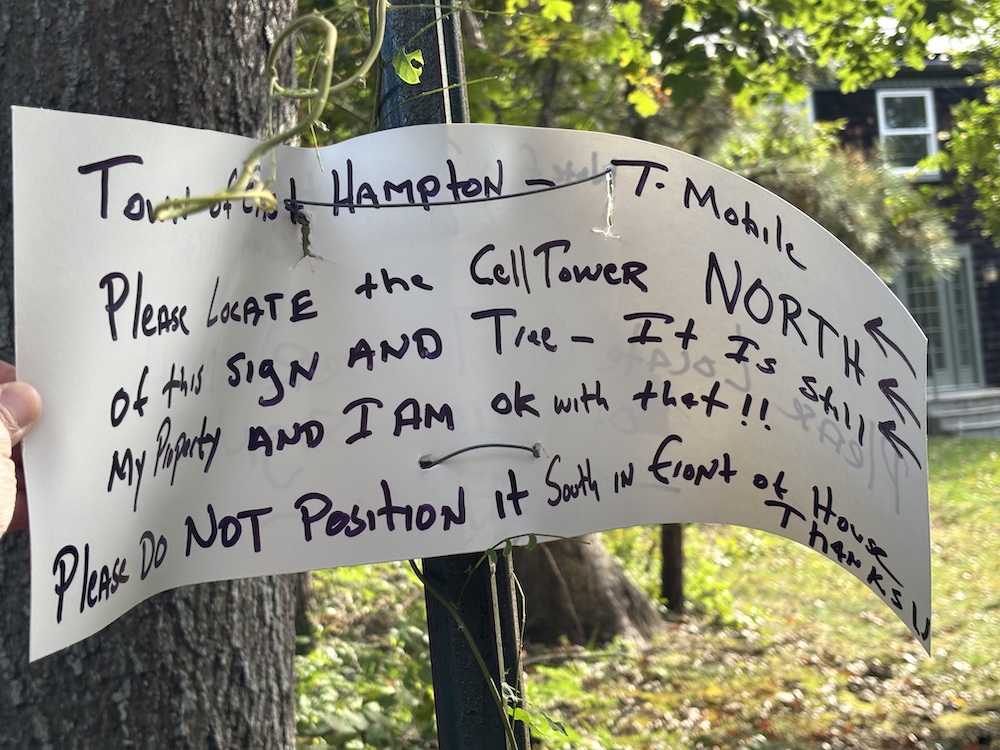
The next stop was at 42 West Gate Road in Wainscott, where a hand-drawn poster had been lashed to a “no parking” sign.
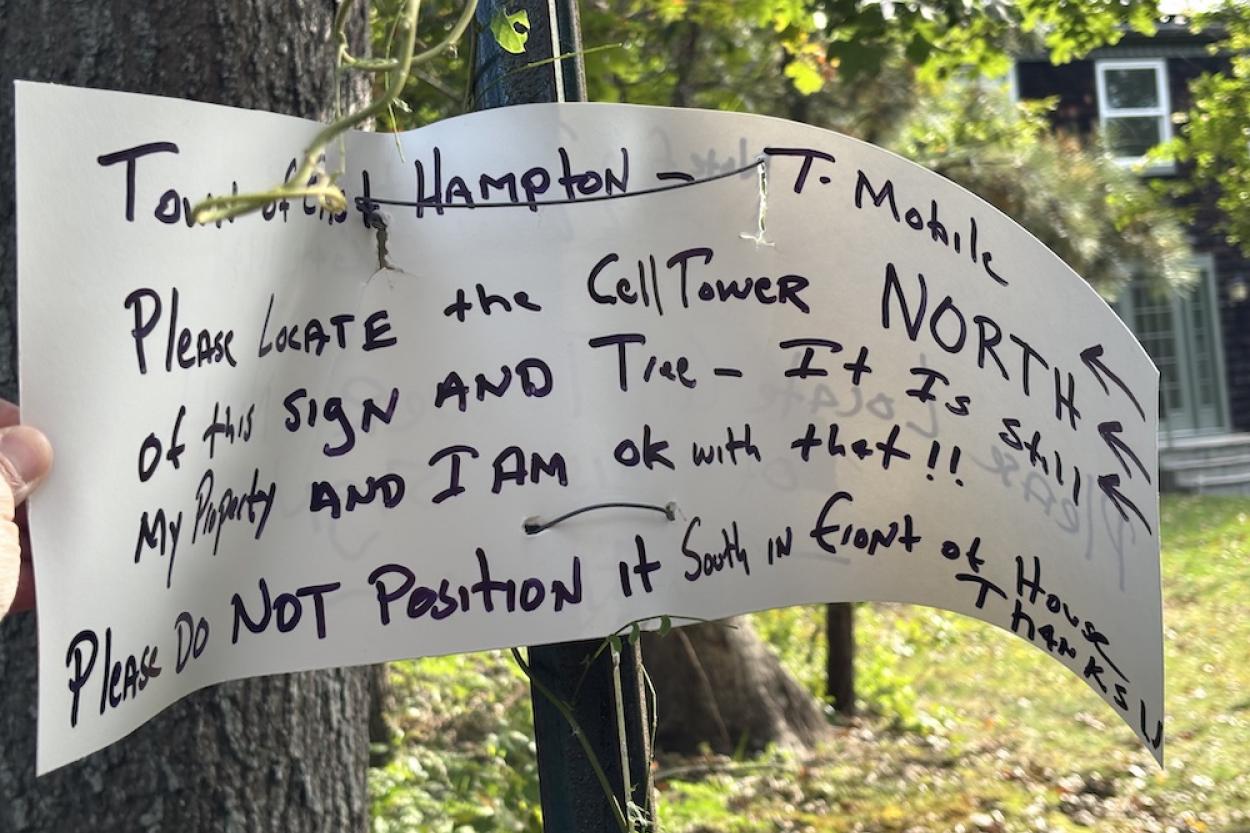
It read: “Town of East Hampton - T. Mobil. Please locate the cell tower NORTH of this sign and tree. It is still my property, and I am okay with that!! Please do NOT position it south in front of house. Thanks!!”
Ms. Vavilis LaGarenne explained the utility poles across the street were not an option for the wireless equipment. “If there’s existing poles we ask them to site on those and if they can’t, they need to explain why,” she said. In this instance, Mr. Forster pointed out that the poles held primary electrical wires.
Ms. Vavilis LaGarenne called the homeowner who had drawn the sign. Like Mr. Intreglia, he was out of town. His main concern was aesthetics. He told the planning director that he didn’t wall off his front yard with “soldiers,” meaning green giant arborvitae trees, and so if a pole was placed there, it would be impossible not to see it.
“I think that’s a reasonable request,” she said, of his desire to shift the tower placement north of the “no parking” sign. “They’re going to look at it.”
The next visit to an already placed tower at 123 Sayre’s Path had raised general concern, but nothing specific. It was near a corner, and the base, or shroud, could create a sightline issue, but the planners and Mr. Forster agreed that the tower itself was sort of lost in the trees and not an issue. Perhaps the base could be screened. They moved on.
For better or worse, this is the future. The telecommunication laws have been written so that the town’s Planning Department has only 10 days to review applications for newly proposed towers. It’s a scramble.
Ms. Behrman lives on Sayre’s Path, not far from either pole that has been erected on her road.
“At first I thought, what is this monstrosity?” she said, of the pole at 123 Sayre’s Path. “It looks like it belongs, I don’t know where.”
However, she tempered her tone as she watched the town employees FaceTiming with Paul Field, who owns land next to the tower at 1 Wainscott Stone Road.
“I’m sure it’s a challenge to get it right,” she said. “They could be softened somehow. The good thing is that it’s brown. Change and progress are great. Nothing should stay the same, but it has to blend in,” she said, and she walked up Sayre’s Path toward the next small cell tower.