
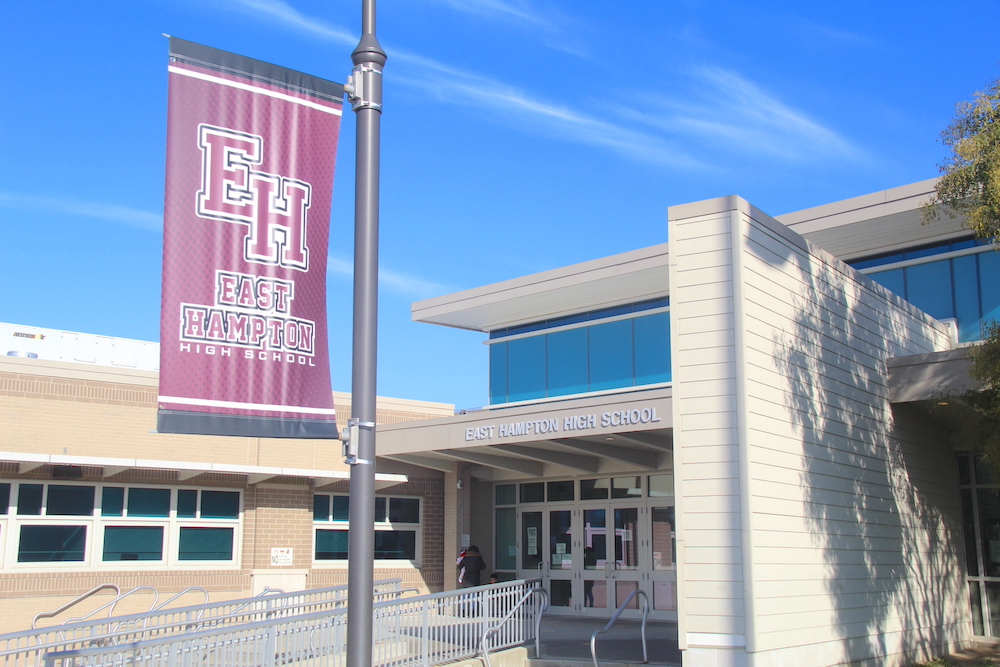
Graduation requirements may look vastly different for students as soon as next year after state officials overhauled curriculum requirements earlier this month. The new rules minimize passing state-led testing, instead providing multiple pathways for students to show competence in academic areas.
The state has left the details of what is being called the One Diploma system to individual districts, so, while the East Hampton School District has some direction from the New York State Department of Education, it has not yet announced the specifics around graduation requirements for the class of 2028.
Students will “still be encouraged to take the Regents exam,” said Sara Smith, the principal of the high school, this week. The state’s Board of Regents will continue to produce and circulate the tests.
The shift to the One Diploma system is apparent. However, how students will demonstrate competence and how course offerings and assessments will change to support the new guidelines is less apparent.
The change is going to make high school graduation requirements look very different than they have for generations of graduates who earned Regents diplomas.
Ms. Smith said this week that East Hampton has been moving in the new direction for many years by “creating multiple pathways for students to demonstrate success.” Specifically, she said, “our career and technical programs, like the automotive and culinary, could be a pathway for a student to demonstrate success.”
As it stands, students have to pass state Regents exams in math, science, social studies, and English in order to graduate with a required Regents diploma. In all, students must pass (with a grade of 65 or higher) a total of five state-level exams in their four years of high school. An advanced Regents diploma requires a total of nine Regents exams.
The advanced diploma will remain, Ms. Smith said, in the form of academic distinctions.
While New York’s reliance on passing these tests goes back to the 19th century, the insistence that all students, without exception, pass Regents exams dates back only to January 2002, with No Child Left Behind, a policy that based federal education funds on standardized test performance. Since that time, the state has insisted that all students should be held to strict testing standards as the only way to demonstrate mastery.
Today, 22 credits are required to graduate, and that will not change. In East Hampton, 30 hours of community service are also required for graduation, a standard not held by all districts.
Previous exceptions such as Regents competence tests and exceptions for students with disabilities were largely eliminated in 2002. What many may remember as the local diploma became a thing of the past.
Students with individual education plans (known as I.E.P.s) were initially allowed a passing grade of 55, but that was phased out in the last 20 years.
“Decoupling successful completion of the course and the Regents exam will benefit our students for whom that exam is a barrier to success,” Ms. Smith said. “Rather than hold a student back and deny graduation, there will be other measures for that student to demonstrate their college and career readiness.”