The Church's current exhibition, "Dear Mazie," is inspired by the life and work of Amaza Lee Meredith, the first known queer Black woman to practice architecture in the United States.
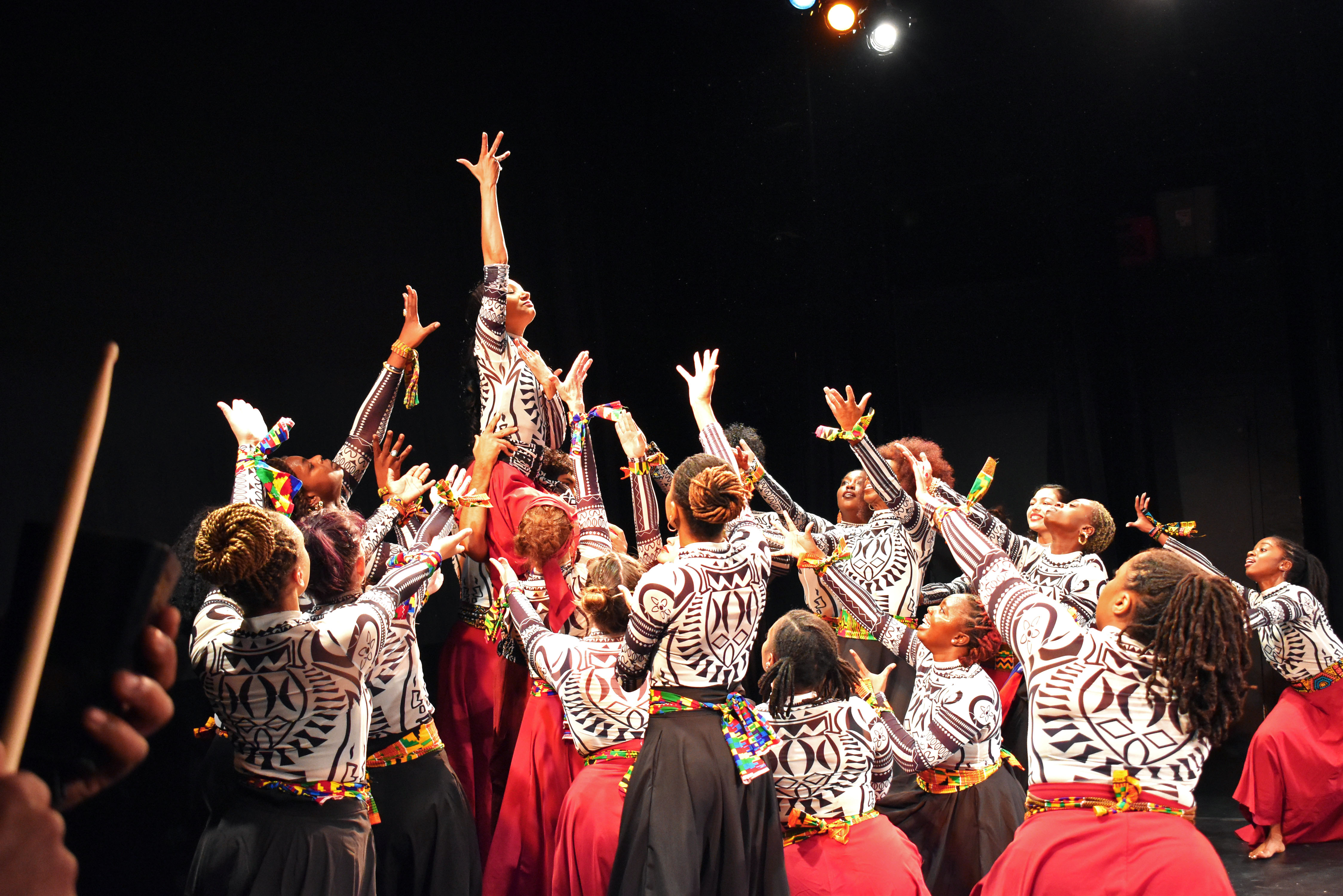
In connection with that show, Cumbe: Center for African and Diaspora Dance will perform "The Life and Legacy of Katherine Dunham and the Dunham Technique" in the Sag Harbor cultural center's main gallery on Saturday at 5:30 p.m. The program highlights the lasting influence of Black artists and cultural innovators of the Harlem Renaissance, among whom was Dunham, the "matriarch and queen mother of Black dance," according to Joyce Aschenbrenner, the author of "Katherine Dunham: Dancing a Life," a 2002 biography.
The Church's largest production yet, featuring a live musician and multiple dancers, the dance performance will be followed by a presentation about the life and work of Dunham (1909-2006). The evening will conclude with a workshop, in which the audience will be invited to move in the style and history of Dunham -- a style that invokes jazz and modern dance, according to The Church, while rooted in the traditions of dance from the African diaspora.
As a student at the University of Chicago, Dunham attended a lecture on anthropology that introduced her to the idea of dance as a cultural symbol; as a result, she began to study its African roots. In 1935 she traveled to the Caribbean, where she encountered sacred ritual dances performed in Haiti and Jamaica. She returned to the United States a year later and incorporated what she had learned into techniques that transformed the world of dance, according to her biography on The History Makers website.
She formed the Katherine Dunham Dance Company in 1940. Its alumnae include Eartha Kitt, Marlon Brando, and Julie Belafonte. Her repertoire combined interpretations of Caribbean dance, traditional ballet, African rituals, and African-American rhythms, which became the ingredients of the Dunham Technique. She performed with her company at venues around the world for two decades.
Cumbe is devoted to African and diaspora dance and music, which are imported through classes and cultural programs. According to its website, it "champions African and diaspora culture as a vibrant legacy for people of African descent and as an exuberant source of power, spirit and knowledge for all."
Candice Michelle Franklin is the artistic director of Cumbe RISE Community Dance Company, whose students are exposed to the Dunham Technique through classes, workshops, and performances. The artistic producing director for Jazz Ain't Dead, a live band and dance production group, Franklin is studying Katherine Dunham Technique as a certification candidate with Institute for Dunham Technique Certification.
Tickets, which were selling fast as of press time, are $45 for front-row seats ($36 for members), $35 for second row ($28 for members), and $25 for third row ($20 for members).
Theater Company in Residence
The Church has announced that the Accabonac Theater Project is its first-ever theater company in residence. Jonathan Shoemaker, the company's founder, and Nick Weber and Tracey Toomey McQuade, founding members, will use the venue as a site to create new work centered on the East End. A modest annual budget will support the development of its productions, which will be presented at venues throughout the region.
The company launched in January with its first production, "This Land Is Your Land," a program of three short plays by Shoemaker, all set in Springs. "What I want to emphasize about the theater project itself, as well as this production, is that the whole thing is about community," Shoemaker told The Star at the time, "not about being a community theater, but hopefully something a little deeper than that. Its source is community, and its method is community. So all the energy of it is hyperlocal."
Shoemaker, a producer of feature films and episodic television, including "The Trial of the Chicago 7" and "Mayor of Kingstown," left the film world, moved to Springs full time, and began to write plays. Weber is a visual artist, and McQuade a writer and yogi.
"I like to think of The Church as their Globe Theatre: a creative home where they can gather, experiment, rehearse, and build something that will eventually travel beyond our walls," said Sheri Pasquarella, the venue's executive director. The company's next full-length work, "Sanctuary," is in development to be performed during the winter.