
No doubt plenty of people read John Loring's obituary in The Times back in June, seeing as he was the design director for Tiffany & Company for 30 years, and everybody loves Tiffany.
Or used to. Even a broke, lost soul like me had a soft spot for the place under Loring's direction, say, back in 2002, when there was a store in East Hampton and I was wooing someone and could, somewhat within reason and with the help of American Express, spring for a small heart necklace.
There was more than that, of course. The Atlas pendant with clock-like Roman numerals, the simple T earrings. This, it seems, was his intention, as just as I was splurging 24 years ago, he was telling The Milwaukee Sentinel that "You'd be missing the point of being an American jeweler if you only aimed at the high end and insisted on keeping your nose in the air and being elitist about it. This is not an elitist country."
And if you ever saw his art, you'd really catch his drift. It's the best of gritty early-'70s New York. An illuminated subway map garishly adorned with graffiti. The tiled wall of the 57th Street stop further tagged with scrawl: "Eddie 181," "Tony 184," "Big 0116." Another showing a view from inside a subway car giving onto "Ballbusters," for whatever that commentary was worth.
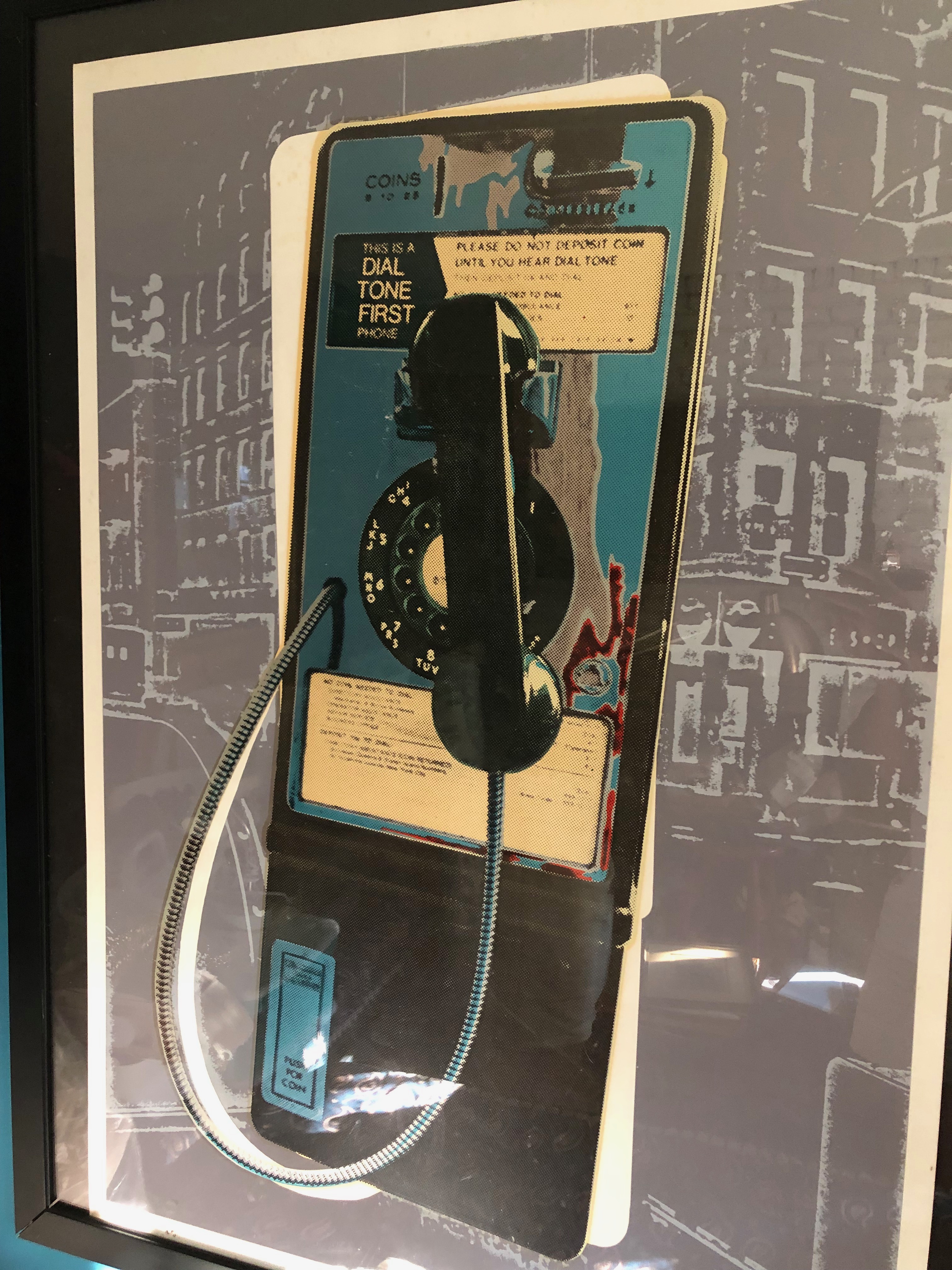
These are deservedly in the collection of the Art Institute of Chicago. Maybe my favorite, though, hangs on my wall, "Printer's Proof" in pencil at the bottom, across from "John Loring 72." It's a giant image of a rotary payphone, metallic blue on a pale purple cityscape background, with "This Is a Dial Tone First Phone" instructions to the caller next to the indestructible handset.
Carl Lindgren, one of my uncles and back then very much a creature of the city, was once a silkscreener. And there you have it.
But Loring's stuff is so good you could be forgiven for thinking the obituary got it wrong in its emphasis, with his career as an artist only alluded to. Nevertheless, in 1979, he joined Tiffany.
It fit, despite the down-and-out focus of his art. Happily, he was also a writer, and left behind a trail of choice words. "The usual thought of an arbiter of taste is a repulsive one, because it leads to sameness in the world, and is killing to the imagination."
Or, "What I would call bad taste is the perversions of taste which people acquire. Bad taste is received opinion."
To which I would add my own received notion, circa 1972: "Now more than ever."