News For Foodies: 02.26.15

News For Foodies: 02.26.15

Local Food News
By
Joanne Pilgrim

Wine Classes

Wainscott Main Wines and Spirits has launched its newest series of Wednesday night wine-tasting classes, held at the Montauk Highway shop in Wainscott each week at 5:30 p.m. “Noble Grapes: A Comparative Look at Riesling and Pinot Noir” is the topic for Wednesday’s session, with Kevin Tunney of David Bowler Wines and Mike Mraz of the North Fork Table and Inn. The cost is $10. Those interested have been asked to sign up by calling the store or sending an email to WainscottMain@ gmail.com.

Upcoming sessions will focus on wines from the Loire Valley, the Rhone Valley, California, and the Alps, Pyrenees, Dolomites, and Etna, and on shopping for wine and making wine, with Christopher Tracy of Channing Daughters Winery.

Lobster Night

Wednesday is lobster night at the Bell and Anchor in Noyac. Dinner, beginning at 5:30 p.m., will feature a three-course menu with lobster dishes at varying a la carte prices.

Cooking at Fresh

Todd Jacobs, the chef and owner of Fresh Hamptons in Bridgehampton, will lead a six-session cooking class beginning next Thursday from 6:30 to 9 p.m. At each class, a meal of several courses made with local, organic ingredients will be prepared, and students will get to taste each dish, along with a sweet at the end. The cost is $125 per class, or $650 for all six, though the first 20 people to sign up will receive a discounted rate of $95 per class or $495 for the series. Those interested may call the restaurant or send an email to [email protected].

Slow Food Dinner

A Slow Food East End dinner will be held at Nick and Toni’s in East Hampton next Thursday night, featuring four courses created from local ingredients. The evening will begin with hors d’oeuvres and a cash bar cocktail reception, followed by dinner served with two glasses of wine. The cost is $95 for Slow Food members, $105 for nonmembers. Reservations have been recommended.

Cooking at Wolffer

The Wolffer Estate Vineyard’s winter chef series of cooking demonstrations continues on Sunday afternoons at the private Wolffer residence. Christian Mir of the Stone Creek Inn in East Quogue will be the presenter on March 8, followed by Ryunosuke Jesse Matsuoka of Sen in Sag Harbor on March 15. The cost is $75 per person plus tax and processing fees.

Also at Wolffer, Friday, March 6, will bring the official release date of the winery’s 2014 vintage rosé.

Roman Roth, the Wolffer winemaker, will join Geoffrey Zakarian of TV’s “Iron Chef,” Alain Sailhac, and Eric Haugen for a discussion following a meal at the Lambs Club in Manhattan on Monday. The five-course French meal will be paired with Wolffer wines.

New Manhattan Almond

The folks behind Almond restaurant in Bridgehampton, Eric Lemonides and Jason Weiner, the chef, have opened a new Almond location in Manhattan, on Franklin Street in Tribeca. It joins an East 22nd Street location.

Crow’s Nest Chef

John Yashinowsky will assume the executive chef position at the Crow’s Nest restaurant in Montauk, where he once worked, in his first job in the restaurant business, as a dishwasher. Mr. Yashinowsky, who formerly owned and ran Caswell’s restaurant in Montauk, has been working as a private chef for the past seven years.
Local Growers and Producers, One Course at a Time

Local Growers and Producers, One Course at a Time

Long Island Grown II: Food and Beverage Artisans at Work
By
Mark Segal

The Peconic Land Trust’s spring lecture series, Long Island Grown II: Food and Beverage Artisans at Work, will kick off Sunday at 2 p.m. at the trust’s Southampton office at 300 Hampton Road with “The Drink,” a discussion featuring Jennifer Halsey Dupree of Milk Pail Farm, Roman Roth, winemaker and partner at Wolffer Estate Vineyard, and Richard Scoffier, the beverage and food director of Honest Man Restaurants. Laura Donnelly, food writer for The Star, will moderate. Subsequent programs will be held at Bridge Gardens in Bridgehampton.

According to Kathy Kennedy, the trust’s outreach manager, who organized the series with Rich Bogusch, manager of Bridge Gardens, “This is the sixth year of the series, but last year we decided to focus on local farmers, growers, and producers because there are a lot of lecture series here during the winter, but nobody was focusing on that. All four sold out, so we decided to do it again.”

This year’s program is organized by menu courses. “The Drink” focuses on hard cider. Ms. Dupree, a 12th-generation member of the Halsey family in Bridgehampton, grows some of the apples used by Mr. Roth in Wolffer’s cider. Mr. Roth was a winemaker in his native Germany before moving to the East End. Mr. Scoffier, whose food and beverage career began at the Twisted Pine Brewing Company in Boulder, Colo., creates the syrups in his cocktails with fruit sourced locally.

Participants in “The Appetizer,” which will take place March 15, are Brendan Davison, owner and operator of Good Water Farms, a certified organic microgreen farm in East Hampton; Carissa Waechter, a pastry chef who left a successful career in New York City to launch Carissa’s Breads, which use local wheat from Amber Waves Farm in Amagansett, and Jeri Woodhouse, found­er of A Taste of the North Fork, who has worked with pickled items for years.

“The Entree” is scheduled for March 29. “For this course, we are featuring farmers raising livestock on the North Fork for meat production,” said Ms. Kennedy. Doug Corwin is the president of Crescent Duck Farm in Aquebogue, which was started by his great-grandfather Henry Corwin in 1908. Tom Geppel, a former tax consultant, owns 8 Hands Farm in Cutchogue, which raises Icelandic sheep, pigs, chickens, and produce. Hal Goodale of Goodale Farms in Aquebogue raises beef cows, dairy cows, goats, pigs, and chickens.

The grand finale on April 19 will be dedicated to dessert. Panelists will include Steve Amaral, a chef who lived and worked in Hawaii and Madrid before settling on the East End. He is executive chef and chocolatier of North Fork Chocolate Company and will be bringing — spoiler alert! — chocolate.

Tom Stevenson of Oysterponds Farm in Orient, a source for a variety of fruits, vegetables, and jams, has become well known as a fig grower. “Even though it’s not the season for figs, we wanted to talk about the growing interest in them,” Ms. Kennedy said. “We used to think they couldn’t grow around here, but there are a number of varieties that do really well.” Mary Woltz of Bees Needs, an East End apiary, will bring some of her honey to the table.

The final three talks will take place in the house at Bridge Gardens and start promptly at 2 p.m. Refreshments created by Mr. Bogusch will be served after each lecture. The seating capacity is 40, and prepaid registration is required. Individual tickets are $25, $20 for members. A series subscription costs $90, $70 for members, and includes a one-year subscription to any of the four Edible magazines. Tickets can be purchased by emailing [email protected] or calling 283-3195.

A list of all the trust’s spring programs, including hikes, watercolor classes, talks, and readings, can be found at peconiclandtrust.org.

News For Foodies: 02.19.15

News For Foodies: 02.19.15

Local Food News
By
Joanne Pilgrim

Healthy bar snacks are available during a nightly 4 to 6 p.m. happy hour at Fresh in Bridgehampton.

Small bites on the menu include baked kale chips, steamed edamame, corn tortillas with salsa or guacamole, and dry-roasted cashews with chili, lime, and sea salt. More substantial menu items include organic chicken wings, local grass-fed beef sliders, whole-wheat pizza, and fish or vegetarian tacos. Bar food, house wine and beer, and house cocktails are half price during the happy hours.

Fresh is also hosting family night Sundays, when a family-style meal, enough for two to four adults, or two adults and two or three kids, is offered for $59 plus tax and gratuity. Main course choices include roasted chicken, barbecue beef shortribs, or butternut squash with vegetables and smoked tofu. The meal also includes a salad to start, a choice of vegetable on the side, and apple crisp with cinnamon ice cream for dessert.

Food Hub Here?

The Amagansett Food Institute is studying the feasibility of establishing an East End food hub to market and distribute local farm products for sale to institutional and wholesale buyers. Such hubs are used across the country, and, with the help of a United States Department of Agriculture grant, the food institute has hired a Chicago consulting firm to study whether one could work effectively here. A kickoff meeting, which gathered together farmers and other food producers at the institute’s Southampton office, was held on Feb. 5. Over the next few months, the consultants will survey growers, buyers, and other members of the food community as part of a market study. Those who wish to participate in the survey or offer suggestions have been asked to contact Kathleen Masters at [email protected].

Tasty Lottery

At Sen in Sag Harbor, the winner of a daily lottery — with names chosen from among those tossed into a fishbowl at the restaurant — is treated to a free tasting menu meal.

Almond Artists and Writers

Bruce Wolosoff, a composer and pianist, will be the next featured guest at Almond’s Artists and Writers Night on Tuesday. Beginning at 7, the evening will feature a family-style three-course meal for $45, which includes a glass of local wine or craft beer, tax and gratuity, and a discussion with Mr. Wolosoff. A Shelter Island resident, his compositions range across a variety of genres and styles, and he is a frequent collaborator on dance, opera, and film scores. He teaches music and performs his own work on piano.

Reservations for the event are required.

Nightly Prix Fixe

The Bell and Anchor in Noyac has a nightly prix fixe menu. Offered from 5:30 to 6:30 p.m., it features two courses for $30 or three courses for $35. Diners may choose among several menu items.

Wednesday Steak Night

Steak night at the Harbor Grill in East Hampton brings a two-for-one deal on filet mignon, hanger, or strip steak served with potato, vegetables, and soup or salad.

New Bay Kitchen Bar

Bay Kitchen Bar, which set up shop last summer at the Harbor Marina on Three Mile Harbor, has opened a second location in New York City, at 321 East 73rd Street. Eric and Adam Miller, the father-and-son team behind both restaurants, are transporting their sea-to-table, seafood-centric concept to the new Manhattan spot. Reservations may be made at bkbrestaurant.com.

Tours for Foodies

Kevin Penner, a longtime East End chef whose kitchen credits include Della Femina, Cittanuova, the 1770 House, and Wei Fun, will lead foodies on a personalized journey into the East End culinary world. He is offering customized tours featuring the food, farm, beer, and wine happenings that occur year round. Information can be found, and reservations made through his website at chefkevinpenner.com, which also contains the chef’s blog and information about his other culinary services.

Seasons by the Sea: The Presidential Table

Seasons by the Sea: The Presidential Table

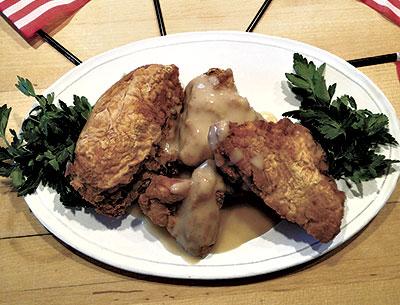
As American as . . . fried chicken and gravy?
Laura Donnelly
The foods and protocol and manners of the White House and our presidents have been as varied as the politicians themselves
By
Laura Donnelly

In honor of Presidents Day weekend, let’s take a culinary trip down memory lane. How our presidents dined and entertained, and how their wives handled White House-housekeeping, is not only historically significant, it is quite revealing.

Some of our presidents and their wives loved good food, good wine, and entertaining. Others, not so much. When Thomas Jefferson was minister to France he adopted the custom of conducting business while acting as dinner host. Although he was enamored of French cuisine and spent a great deal of money importing wines, Parmesan cheese, anchovies, capers, and other delicacies, he also never lost his taste for good ol’ American foods like turnip greens, sweet potatoes, baked shad, Virginia ham, and crab.

He grew over 30 varieties of peas in his garden at Monticello and attributed his long life to eating lots of salads and vegetables, and drinking wine rather than hard liquor. He did away with the traditional weekly levees (afternoon receptions for men only) and held parties on the Fourth of July and New Year’s Day. This was partly because there was no hostess at the White House; when he needed one, he called upon Dolly Madison to help out. He did, however, feed up to 12 guests almost every day of the week, dinner being served at 3:30 in the afternoon, and at a round table for more ease of conversation. Margaret Bayard Smith called Jefferson’s table “republican simplicity united to epicurean delicacy.” According to Monticello.org, Representative Manasseh Cutler, a guest for dinner on Feb. 6, 1802, recounted a meal of “rice soup, round of beef, turkey, mutton, ham, loin of veal, fried eggs, a pie called macaroni and not very agreeable, ice cream very good. Many other jimcracks, a great variety of fruit, plenty of wines, and good.”

Abraham Lincoln was not a foodie; he was more of a food-is-fuel kind of guy. He would start his day with cornbread smothered in honey with strong black coffee, and he loved pecan pie. He planned his own inaugural luncheon, served at the Willard Hotel, and while the menu was not bad, it was fairly simple: mock turtle soup, corned beef and cabbage, parsley potatoes, blackberry pie, and coffee.

All of the cooking at the White House was done over open hearth fires up until Millard Fillmore’s administration of 1850 to 1853. Meats were cooked on spits, and iron and bronze pots were suspended over the fire to cook stews, soups, and vegetables. Breads were baked first in bake ovens built into the back of the hearth wall, and, once the temperature dropped, pies, cookies, and custards were cooked next. Coal and hardwoods were used, coal for the highest heat, while maple, ash, oak, hickory, and dogwood would burn more evenly.

When Franklin Delano Roosevelt’s housekeeper, Henrietta Nesbitt, first saw the White House kitchen in 1933, it was full of cockroaches, all of the counters and the refrigerator were wood, and whatever equipment it had was outdated. She insisted on a complete upgrade and modernization, which became Public Works Project 634. The Depression was so bad, President Roosevelt wanted to use relief workers for the improvements. Unfortunately, the cooks continued to prepare food the same way, and apparently Mrs. Nesbitt was dreadful when it came to menu planning, so the food continued to be terrible. She was fond of cheap cuts of meat, tongue, sweetbreads, and Jello molds with marshmallows. F.D.R. claimed that the only reason he considered running for a fourth term was so he could fire Mrs. Nesbitt.

Years ago I took a tour of the White House and was fascinated to learn that Rutherford B. Hayes’s White House china was painted with gory hunting scenes. The purpose was to dissuade guests from eating too much. I have never read this in any book, but I saw the china with mine own eyes and it was rather unattractive. It probably also didn’t help that Hayes’s wife, Lucy, was referred to as Lemonade Lucy because she refused to serve alcohol in the White House. Party pooper!

Over time, the art of state dinners also changed. Dwight and Mamie Eisenhower were the first presidential couple to host a lot of state dinners. In 1959 they entertained the Soviet premier, Nikita Khrushchev, King Baudouin of Belgium, and the presidents of Argentina, El Salvador, Mexico, and New Guinea. Their guests were usually high-up government officials and corporate bigwigs. Mamie served American wines and her favorite dessert, apple brown Betty. The parties were big and guests were seated at a huge U-shaped table.

The John F. Kennedys replaced this kind of table arrangement with smaller, round tables to seat 10 to 12 guests. They also expanded the guest list to include more people from the arts, such as Andre Malraux, Robert Lowell, Tennessee Williams, and Leonard Bernstein.

Lyndon Johnson was the first to do away with regular, formal dinners at the White House, and moved them to his ranch in Stonewall, Tex. Some people made fun of this but many guests felt it was more homey and intimate to be invited to the president’s private residence. Richard Nixon gave the most state dinners, and George and Laura Bush gave the fewest of any postwar presidencies. The Clintons were fond of packing their state dinners with gobs of Democratic party donors, and the parties were held in tents to accommodate the many hundreds now invited.

Walter Scheib was the White House chef for 11 years, from 1994 to 2005, under Clinton and Dubya. I attended a wine pairing and cooking demonstration in 2012 presided over by Mr. Scheib and learned a few tasty tidbits from him. One Christmas the Clintons had so many houseguests the food costs went $25,000 over budget, and Hillary was super cranky when she had to write the check. Chelsea Clinton took six weeks of cooking lessons from Mr. Scheib before she left for college because she was converting to veganism. Laura Bush asked him to get the recipe for Blue Bell ice cream (big in Texas), which he did, but was sworn to secrecy by Blue Bell lawyers. He also got the recipe from Bill Clinton’s mother, Virginia, for his favorite dessert, peach and blackberry cobbler, but had to tinker with it “to make it good.”

The foods and protocol and manners of the White House and our presidents have been as varied as the politicians themselves. The Obama administration’s current emphasis on good health and having a kitchen garden is reminiscent of Thomas Jefferson’s years in the White House. Maybe the days of Barbara Bush’s layered pea and bacon salad with sour cream and mayonnaise dressing are over. Then again, maybe not. Whatever the case, celebrate the institution and our history with some favorite presidential recipes.

Click for recipes

News For Foodies: 02.12.15

News For Foodies: 02.12.15

Local Food News
By
Joanne Pilgrim

Should Valentine’s Day bring a desire to look into the eyes of a loved one across a restaurant table, the annual lineup of eateries offering holiday specials includes the following.

Almond in Bridgehampton will be serving a four-course menu centered on blood oranges as an ingredient on Saturday. It promises the $75 prix fixe will be “super sexy.” Among the menu items will be, to start, Montauk Pearl oysters with blood orange margarita granita or a shaved salad with blood orange chips, followed by duck and foie gras ravioli a l’orange or Peconic Bay scallops with blood orange, and, for an entree, roasted rack of pork with fennel and blood orange or salmon with spiced root vegetables and blood orange. Dessert will be a Mexican chocolate torte for two with ancho chile and blood orange gel. The a la carte menu will be available as well. Reservations are a must.

Nick and Toni’s in East Hampton has strongly recommended reservations for a Saturday night table, when a couple of a la carte Valentine’s Day specials will be added to the regular menu. They include roasted artichoke ravioli, grilled swordfish, and a melted chocolate pot de crème for dessert.

Holiday additions to the menu at Rowdy Hall in East Hampton on Saturday include a duck confit salad, rack of lamb entree, and dark chocolate panna cotta as dessert.

A special Valentine’s meal for two at the Living Room in East Hampton will be offered at $130 per couple, plus tax and gratuity, in addition to the restaurant’s regular menu. Although the menu is subject to change, slated to be served as of Monday were grilled Peconic Bay oysters, veal carpaccio, a grilled half lobster, and chocolate ganache.

At Sen in Sag Harbor, ladies who dine for lunch or dinner on Valentine’s Day will receive a free red rose.

Slow Food Dinner

A slow food dinner centered on market-fresh seasonal ingredients has been planned by the Slow Food East End group for March 5 at Nick and Toni’s. Joe Realmuto, the East Hampton restaurant’s executive chef, and Bryan Futerman, a chef and the vice president of Slow Food East End, will prepare four courses, which will be served with two glasses of wine selected by the Nick and Toni’s sommelier. The cost is $95 per person for Slow Food East End members, and $105 for others. The dinner will begin with a cash bar cocktail hour at 6:30 p.m. Reservations can be made online at slowfoodeastend.org.

Inlet Seafood Reopening

Inlet Seafood in Montauk will reopen for the season on Friday, Feb. 13, and will be serving lunch and dinner on Friday through Monday that weekend.

Oscar Contest

This is the month that Rowdy Hall holds its annual “Rowdy and the Oscars” contest. Oscar ballots will be distributed to diners who wish to participate and fill them out with their best guesses of who will be Oscar winners. Whoever makes the most correct predictions — as determined at the Oscars on Feb. 22 — will receive a $50 restaurant gift certificate and two movie vouchers. If there is a tie, a drawing will be held.

Winter Chefs Series

On Sunday, Japanese cooking will be the topic at a session of the Wolffer Estate vineyard’s Winter Chef Series featuring Ryunosuke Jesse Matsuoka of Sen restaurant in Sag Harbor. The cost is $75 for the 12:30 p.m. class, which includes lunch paired with wine.

Seasons by the Sea: Pie R Squared

Seasons by the Sea: Pie R Squared

Making pie may not be brain surgery, but it’s not as easy as it is reputed to be.
Laura Donnelly
“easy as eating pie.”
By
Laura Donnelly

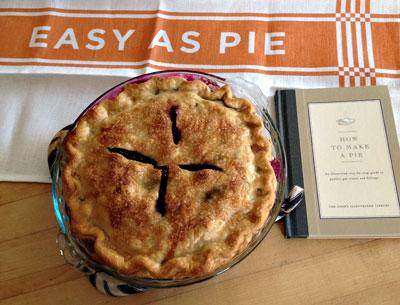
I have always wondered why there is the expression “easy as pie.” Pie is not that easy to make! Turns out the expression began as “easy as eating pie.” Now that makes sense. However, I am hoping that this pie column will encourage you to take the leap, perfect a piecrust, make a bunch, and keep them in your freezer so you can whip one up on a whim.

I have a piecrust recipe that I have been using for about 20 years. It comes from the marvelous Mary Schoenlein of Mary’s Marvelous. We had a little pie contest at the Red Horse Market years ago when she was head chef and I was pastry chef. I got all show-offy and rendered my own lard for the crust. It tasted heavy and rancid. Mary’s had the perfect balance between butter and vegetable shortening. Can you guess who won?

Here are the basic guidelines. All-purpose flour is all you need. Butter is essential for flavor but very difficult to work with on its own in a crust. A small bit of shortening will give the crust a nice, light, flaky texture. If you have a problem with shortening perhaps this breakdown of ingredients will ease your mind when ingesting the devil’s fat product. You only need a few tablespoons of shortening per pie. Slice that pie into eight pieces, and you are not consuming very much shortening at all, perhaps a half to one teaspoon. Salt adds flavor, and one or two tablespoons of sugar help the browning of the crust while baking. When it comes to liquids, a few tablespoons of ice water are best. I have seen recipes calling for buttermilk, vinegar, vodka, lemon juice, and more, but water is all you need.

Regarding equipment, I confess that the best, fastest, and easiest way to make crust is in a food processor. The blades do a quick and efficient job of blending the fats and flour without having time to warm up. Lastly, when you roll out your chilled dough, don’t be afraid to use plenty of flour to keep the dough from sticking to your rolling pin and rolling surface. The dough will not absorb much because it is cold. You can brush off excess as you proceed.

Some people suggest you roll dough between two sheets of wax paper or plastic wrap. This is kind of a pain in the behind. Some also suggest folding the dough in quarters, then unfolding it into pan, or laying it over the rolling pin, then unrolling gently into pan. If any of these make you feel more secure in the transfer of dough to pan, then by all means, try these methods. This is all just too much fiddling around for me. Pie dough is delicate, but should be sturdy (and cold) enough that you can pick it up and lay it into the pie pan directly.

When you fill a pie with wet fruit filling, like berries or apples, you should bind the fruit with tapioca, cornstarch, or flour. Tapioca is a favorite for some, but who has that lying around the house? Cornstarch will keep the color of the berries clear, and flour will muddy the color and take longer to thicken, so this is an aesthetic and personal choice. I use flour for apple pies and cornstarch for berry pies. To protect the bottom crust from getting soggy you can also sprinkle some graham crackers on the bottom before filling with fruit. This helps absorb some of the juices and enables the bottom crust to cook evenly.

Regarding pie pans, I like to use glass so I can see how well the sides and bottom are cooking. If you use a dark metal pan, keep in mind that it will absorb most of the radiant heat and conduct it to the crust. Thin metal pans can’t hold much heat, therefore they slow the cooking and produce uneven browning. So invest in a Pyrex glass or heavy-gauge metal pan.

When it comes to apple pie, I’m not a huge fan of cinnamon and nutmeg as additional, traditional ingredients. Try using two kinds of apples, such as Granny Smith and MacIntosh, some lemon juice and lemon zest, and let the apple flavor sing. Same goes for my blueberry pie. I only add a bit of lemon juice, zest, and a few dots of butter before the top crust goes on. Of course, all of these pies have sugar, but this, too, is personal preference and depends on sweetness of fruit.

Some pie recipes call for starting the pie in a pre-heated oven set at 425 degrees, then reducing the temperature after 15 to 20 minutes. If your crust is browning too quickly around the edges, you can wrap some strips of aluminum foil around the periphery until the pie has finished baking. I think baking a pie at 375 for the whole time works just fine, just make sure your oven is accurate and properly preheated.

My friend Eric has been badgering me to teach him how to make a pie. He once had the good fortune to be served Nora Ephron’s Concord grape pie and that’s the one he wanted to learn how to make. After some strenuous research, I have learned that even the great cook and writer Nora Ephron used Pillsbury dough for her pie. She is even quoted in Martin Short’s autobiography telling his children that “no human can make a piecrust as good as Pillsbury.” Well, if you think a crust made with partially hydrogenated lard, potassium sorbate, sodium proprionate, and artificial coloring sounds good, knock yourself out. With all due respect to the late great Ms. Ephron, when Eric gets his pie lesson, it’s gonna be homemade all the way.

Click for recipes

News For Foodies: 02.05.15

News For Foodies: 02.05.15

Local Food News
By
Joanne Pilgrim

News for Foodies

With Valentine’s Day approaching, those who envision a gourmet dinner for two at home — but don’t know how to cook one — may wish to order a heat-and-serve dinner for two from Debbie Geppert Events and Dreesen’s Catering in East Hampton. Orders must be placed by next Thursday. Packages will include a choice of appetizer, first course, and dessert, and one of four entrees: filet mignon with wild mushroom sauce, rack of lamb with fresh mint demi glace, chicken marsala, and roast loin of pork with sausage and apple-cranberry stuffing.

At the Harbor Grill in East Hampton, Valentine’s Day a la carte specials will begin on Friday, Feb. 13, and continue through Feb. 15. Those who order an entree special will receive a free glass of champagne, house wine, or bottled beer.

Golden Pear Treats

During last week’s snowstorm, Keith Davis, the owner of the Golden Pear cafes, showed his appreciation for all of the village and town highway workers who were out plowing the streets day and night by offering them free coffee, breakfast, and lunch.

Grow Your Own

News for those looking forward to planting and harvesting their own fresh food: The East End Cooperative Organic (EECO) Farm in East Hampton, where gardeners may rent a plot, has a few available for the coming season. They will be allocated on a first-come, first-served basis, so those interested have been advised to act quickly.

The Long Island Regional Seed Consortium is holding a seed swap on Saturday at Suffolk Community College in Riverhead. At the free event, there will be a brief introduction to seed saving at 1:30 p.m., followed by two hours of swapping from 2 to 4 p.m. Even those without seeds to swap are welcome. More information is available from Stephanie Gaylor at [email protected].

Wintertime Cooking

A monthly cooking class with various chefs at the Wolffer Estate vineyard in Sagaponack has been filling up, but as of press time there were still spaces available for the next one, a session with Ryunosuke Jesse Matsuoka of Sen restaurant in Sag Harbor on Feb. 15. The cost is $75 and includes lunch paired with Wolffer wines. Reservations may be made on the Wolffer website.

Slow Food East End will present an introduction to ayurvedic cooking with Corey DeRosa of the Tapovana Ashtanga Healing Center in Sag Harbor on Feb. 15. The class will include an introduction to proper food combining as well as the six tastes (sweet, sour, salty, pungent, bitter, and astringent), and how they relate to digestion and emotional state. The session will be held at the Hayground School in Bridgehampton from 2 to 4:30 p.m. and cost $40 for Slow Food members and $50 for nonmembers. Advance registration is required through SlowFoodEastEnd.org.


News For Foodies: 01.29.15

News For Foodies: 01.29.15

Local Food News
By
Joanne Pilgrim

The Super Bowl this weekend is, for some, as much of an occasion for noshing as it is for watching the game. The fest begins at 10 a.m. on Sunday at East Hampton’s Harbor Grill, which serves a “bottomless” brunch buffet until 2 p.m. The cost is $14.95 per person, plus tax and gratuity. Beginning at noon, those who order food or beverages will receive a free cup of chef Damien O’Donnell’s “championship chili.”

The restaurant will also offer party platters to go, for those who order by Saturday: chicken wing platters (boneless or traditional) at $20 for two dozen, or $40 for four dozen, with a choice of buffalo, Mongolian barbecue, or sweet Thai chili sauces, served with bleu cheese and celery sticks.

At Indian Wells Tavern in Amagansett, food and drink specials on tap for Sunday include pints of Montauk Brewery beer or Harpoon IPA for $5, a bar menu of $6 snacks, and Tecate, Miller Lite, and Pabst Blue Ribbon in cans for $4. Each drink purchase comes with a raffle ticket for a gift basket giveaway that will take place each quarter of the game.

At Rowdy Hall in East Hampton, the Super Bowl specials will begin at 3 p.m. and include a two-for-one deal on cosmopolitans, for female drinkers only, and beer and wine for $5 and $6. Those who order two snacks from the menu will receive the less expensive one for free.

Over at Townline BBQ in Saga­ponack, there will be whole roasted pigs to eat on Sunday during the game, and raffles held at the end of each quarter, with winners chosen from those in the crowd. The restaurant has recommended placing takeout orders for Super Bowl Sunday in advance. Among the menu items will be bar snacks such as hush puppies, spicy chicken rolls, and wings, and pig roast package specials featuring pork, chicken, and side dishes.

Wood-Oven Pizzas

On Mondays and Wednesdays, Nick and Toni’s in East Hampton offers two-for-one pizzas made in the restaurant’s brick oven, for consumption on site or for takeout. Among the selections, which may vary, are pizza Romana, with white anchovy, capers, and black olives, pizza with ricotta and chorizo, Cavolfiore pizza with roasted cauliflower, basil pesto, and ricotta salata, and Salsiccia, with sweet sausage, North Fork mushrooms, and provolone picante. The restaurant is open Wednesday to Monday beginning at 6 p.m.

Winter Options

At the Cuddy in Sag Harbor, there is a daily happy hour from 5 to 7 p.m. featuring reduced prices on wine, beer, and appetizers. On Wednesdays, billed as singles or ladies’ night, there are drink specials all night. The Cuddy also has a $26 prix fixe menu Sundays through Thursdays. Brunch is served from noon to 3 p.m. on Saturdays and Sundays.

Tonight is steak night at the Cuddy, with a special on a 10-ounce New York strip steak and fries, served with beer or salad.

In Jamesport, the Diliberto Winery is having Sundays With Grandma, a series of Sunday suppers featuring a pasta-making demonstration, live Italian music performances, and a meal paired with the winery’s offerings. The weekly suppers cost $49 per person plus tax and gratuity.

Tasty Fund-Raiser

The Love Bites fund-raiser on Saturday for the Ellen Hermanson Foundation will feature fare made by several dozen participating chefs representing local restaurants and caterers. Among them are Peter Ambrose of Endless Summer Catering, the “chef chairperson” of the event, Cheryl Stair of Art of Eating, Todd Jacobs of Fresh Hamptons, Damien O’Donnell of Harbor Bistro, Joe Realmuto of Nick and Toni’s, Arthur Wolf of Smokin’ Wolf, and Paul LaBue of the Seafood Shop.

The event takes place at Seasons in Southampton. Tickets can be ordered online at ellensrun.org.

Sweets Special

From now through Valentine’s Day, Tate’s Bake Shop in Southampton is offering a 20-percent discount on treats ordered online. The code vday15 must be used on the bakery’s website, tatesbakeshop.com.


Seasons by the Sea: Shhhh! Don’t Tell!

Seasons by the Sea: Shhhh! Don’t Tell!

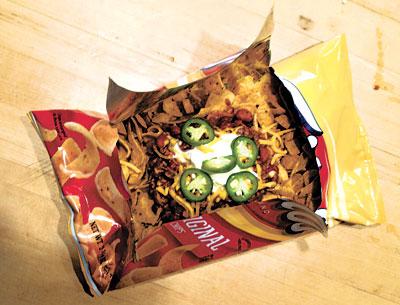
The author’s friend Joey likes Frito pie.
Guilty pleasures
By
Laura Donnelly

I generally eat a very healthy diet. This past week, for instance, I prepared wheatberries and roasted carrots from Quail Hill Farm, and last night I had scallops. A variety of greens are always at the ready in my fridge for a quick saute or salad. I love brown rice and oatmeal and just about any recipe from Yotam Ottolenghi’s “Ottolenghi,” “Jerusalem,” or “Plenty” cookbooks, which are full of yogurt and chili peppers and all manner of eggplant and other vegetables. However, I am occasionally possessed by the desire for something naughty, wrong, not so healthful. In other words, I want a guilty pleasure treat of the junk food variety, or a strange combination of foods that would appall most others.

When I cruise the aisles of the grocery store, seeking Velveeta (which is always hard to find because it doesn’t require refrigeration), I hide the naughty items in my market basket if I see a friend, especially a chef friend, approaching. This is guilt.

Merriam-Webster’s definition of guilt is “the fact or state of having committed an offense, crime, violation, or wrong, especially against moral or penal law,” and “an emotion that occurs when a person feels that they have violated a moral standard.” Pleasure is defined as “a feeling of happiness, enjoyment, or satisfaction, a pleasant or pleasing feeling, activity that is done for enjoyment.” A guilty pleasure is defined as “something, such as a movie, television program, or piece of music, that one enjoys despite feeling that it is not generally held in high regard. The guilt involved is sometimes simply fear of others discovering one’s lowbrow or otherwise embarrassing tastes.” And this is why I hide the Velveeta or Cheetos or Cool Whip under the broccoli rabe and yogurt in my shopping cart.

I recently asked friends on Facebook for their guilty pleasures. Facebook is the most delightful and useful “tool” for lazy but far-reaching research, and everyone likes to talk about food. Now, you would think that professional chefs would be above such lowbrow guilty pleasures, but you would be wrong. Joey loves Frito pie. Deena eats Spaghetti-Os. Ellen has perfected the frozen Mallomar nuked in a microwave for 10 seconds and swears it’s a good facsimile of a s’more. Andrew likes creamed chipped beef on toast with melted Limburger cheese. Colin loves his grandmother’s mashed potato-carrot puree on braised beef topped with Durkee canned onion rings. Even the super-duper talented David Chang of Momofuku and Ssam fame insisted in a March 2014 GQ article that the fried baloney sandwich served at Wilensky’s Light Lunch in Montreal is “a high point of gastronomy as vexing in its deliciousness as a Zen koan.”

Some of my guilty pleasures are peanut butter, mayonnaise, and lettuce sandwiches, the aforementioned Vel­veeta phony cheese-food product melted into a chile con queso dip, and strawberries dipped in Cool Whip, a chemical concoction made with hydrogenated vegetable oils and high fructose corn syrup that is so artificial and so ghastly I might as well drive without a seat belt.

Some people’s ideas of a guilty pleasure just sounded like delicious treats to me — lobster mac ’n’ cheese, raspberries with heavy cream and brown sugar, chocolate truffles, and cinnamon toast. But some of them are so bizarre, they sound like pica, a serious eating disorder in which people eat such things as soil, chalk, soap, or clay. How does lard on white bread with sugar sound? How about chocolate syrup on leftover Chinese takeout rice? Blech.

And yet, I want to try some of my friends’ guilty pleasures immediately. Amy’s sandwich of baloney, Velveeta, iceberg lettuce, Wishbone Thousand Island dressing, salami, and Durkee’s sandwich sauce on a potato bun wrapped in foil and left in the hot sun on the edge of your beach towel sounds awesome. Maybe it was the “sun” and “beach towel” part that appealed to me. Mike’s description of a hot dog from Hiram’s in Fort Lee, N.J., deep fried on a grilled bun with mustard, sauerkraut, and a Miller High Life just makes me hungry. Mike also happens to be a super healthy athlete so I don’t begrudge him this indulgence.

Hot dogs in many forms appeared frequently as a guilty pleasure. Cocktail weenies, Saucy Susan, and Wispride cheese mentions led me to realize that a lot of these are really childhood memories and, to some extent, comfort food.

If any of these guilty pleasures and following recipes lead you to the store for some naughty ingredients, all I can say is “mea culpa, mea culpa, mea maxima culpa.”

Click for recipes

News For Foodies: 01.22.15

News For Foodies: 01.22.15

Local Food News
By
Joanne Pilgrim

Pasta Night

Tuesday is pasta night at the Harbor Grill, which is on Three Mile Harbor Road in East Hampton. Beginning at 5 p.m., a pasta dinner special, featuring soup or salad, garlic bread, and an entree, is offered for $17, plus tax and gratuity. Choices include pasta with clam sauce, meatballs, Bolognese sauce, or with sausage, broccoli, garlic, and olive oil.

Cavaniola’s Gourmet

Besides a selection of cheeses and wines, the Cavaniola’s Gourmet shop in Sag Harbor has a winter menu and a lineup of weekly specials on soups, salads, side dishes, entrees, and sweets. Seasonal menu items include grilled salmon, macaroni and cheese made with three cheeses or truffled, chicken pot pies, meatloaf, pulled pork sliders, chicken noodle soup, and kale salad with dried cranberries, five-year aged gouda, toasted almonds, and balsamic vinaigrette.

The specials for this week include, for side dishes, creamed butternut squash soup, potato chowder, roasted beets, marinated gigante bean salad, sautéed napa cabbage with bacon and onions, and mashed celeriac. Among the entree specials this week are some game meats: elk tenderloin with rosemary and thyme, Moroccan duck confit, rabbit and ginger sausage with bok choy and scallions, and squab with sausage and apple dressing.

Merlot Makers

Martha Clara Vineyards in Riverhead is the newest member of the Long Island Merlot Alliance, a consortium of winemakers that seeks to help members produce high-quality merlot and merlot blends in the Long Island region. The group’s president is Roman Roth of the Wolffer Estate Vineyard in Sagaponack. Among the other East End member vineyards are Clovis Point, Lieb Cellers, McCall Wines, Raphael, Sherwood House Vineyards, and T’Jara Vineyards.

A blend of 100 percent merlot wine from each of the member vineyards, called Merliance, is created by the alliance and sold to fund the group’s activities, from research initiatives to events.

Martha Clara Vineyards was founded by Robert Entenmann, a member of the family that owned the Entenmann bakery, and is named after his mother, Martha Clara Entenmann. He developed a former potato farm into a thoroughbred horse farm and then, in 1995, planted grapes and began to develop the vineyard.