Recipes 04.07.16

Recipes 04.07.16

Almond Celebrates Fifteen Years
By
Laura Donnelly

Almond’s Brussels Sprouts 

Two Ways in the Style of Caesar Salad

Serves four.

For the dressing: 

1 Tbsp. anchovy paste

2 small garlic cloves

2 large egg yolks

3 Tbsp. finely grated Parmesan

2 Tbsp. fresh lemon juice

2 dashes Worcestershire sauce

1 Tbsp. rinsed capers

1 dash Tabasco

3/4 tsp. Dijon mustard

An ice cube or two

3 Tbsp. olive oil, divided

1/2 cup vegetable oil

Freshly ground black pepper and kosher salt to taste


In a blender, puree all the ingredients except for the oils, salt, and pepper. Now, with the blender running add the oils in a thin constant stream. Season with salt and pepper.


For the croutons:

1 cup diced bread

2 Tbsp. olive oil

1 sprig rosemary

2 smashed garlic cloves


In a sauté pan gently heat the olive oil with the garlic and the rosemary. Add the bread and toast until golden brown.


Salad:

1 lb. brussels sprouts (half sliced thinly with a mandoline; half quartered) 

1 lemon cut into wedges

4 white Spanish anchovies (boquerones)

1 small piece of Pecorino Toscano cheese (for shaving)

1 quart canola oil (for frying)

Salt and black pepper to taste


In a deep and wide saucepot, preheat the canola oil to 350 degrees.

In a mixing bowl toss the shaved brussels sprouts with the croutons, a desired amount of dressing (you’ll probably end up with extra), salt, and pepper.

Arrange the salad on a platter and garnish with a couple of the lemon wedges and the anchovies.

Right before you are about to serve, carefully drop the quartered sprouts into the canola oil. Fry for 30 seconds and toss with a couple squirts of lemon and a bit of salt.

Cascade the fried sprouts over the salad. 

Shave some cheese on top and serve.

News for Foodies 04.07.16

News for Foodies 04.07.16

Local Food News
By
Joanne Pilgrim

Bostwick’s Reopens

Tonight is the night that Bostwick’s Chowder House in East Hampton reopens for the season. The popular eatery’s seafood-centric menu includes favorites such as baked stuffed clams, seared tuna, grilled fish tacos, seafood pasta, and oyster po’boys. Bostwick’s will be serving from 11:30 a.m. through evening dinner hours from Thursdays through Sundays until the hours expand a bit later in the spring.

Superfoods on Menu

The East Hampton inn c/o the Maidstone is including dishes made with a variety of “superfood” ingredients on its menu this month. The inn has launched the first East End outpost of Lulitonix, a New York City-based juice company, and juices and other menu items include nutrient-dense foods such as cashews, chia seeds, spinach, coconut, cayenne, aloe, matcha, and activated charcoal.

The Living Room restaurant at the inn serves breakfast, high tea, lunch, and dinner, with seasonal prix fixes and vegan and gluten-free selections. 

Healthy Kids’ Cafe

At the Golden Pear Cafe, there is a new Healthy Kids breakfast and lunch menu designed to entice the younger set to eat well. The cafe has locations in Southampton, Sag Harbor, Bridgehampton, and East Hampton. 

New Chinese

Stratis Morfogen, a Manhattan restaurateur, is opening a branch of the Jue Lan Club, his Chelsea Chinese restaurant, on Elm Street in Southampton later this month. The new eatery will occupy the space that once held Savannah and that last year was the home base for the Hamptons version of Circo.

International Brunches

The Watermill Center arts foundation in Water Mill will sponsor an international brunch series this spring, beginning at noon on April 17, highlighting the cuisine of the countries from which its visiting artists hail: Chile, Cuba, Germany, Mexico, and the United States. Brunches will also be prepared by local chefs, using foods from local farm stands, on May 22 and June 12. Admission is $75. Advance registration is required; menus will be posted one week before each brunch.  

Fermentation Instruction

Nadia Ernestus of Hamptons Brine will present “Fermentation 101: What, Why, and How?” at the Hayground School at 3 p.m. on April 24. The workshop will include a discussion of fermentation’s role through history and of the health benefits of eating probiotic-rich fermented foods. Ms. Ernestus will also demonstrate foolproof methods for fermenting vegetables, and provide tastings. Admission is $25. 

Seasons by the Sea: Most Important Meal of the Day

Seasons by the Sea: Most Important Meal of the Day

When children eat a good breakfast they have more energy and focus throughout the morning
By
Laura Donnelly

Breakfast. It’s the most important meal of the day. Or is it?! You can read studies supporting this theory, and you can find research that refutes it. It definitely makes sense for children.

It has been scientifically proven that if you eat a balanced, nutritious breakfast, you are more likely to eat a nutritious lunch and dinner and less likely to eat junky snacks. It doesn’t have to be time consuming either; you can grab an apple or a banana and a yogurt, and that counts. It has also been proven that when children eat a good breakfast, they have more energy and focus throughout the morning.

Growing up in the ’50s and ’60s I recall our mother making freshly squeezed orange juice for us every morning. How lucky were we? Unfortunately, we’d also have a big glass of milk with breakfast, and I would balk until the end of the meal and have to drink both in quick succession before bolting for the school bus or carpool. If you’ve ever tasted this combination you know how gross it is. Some days we had oatmeal or Cream of Wheat, sometimes dry cereal with fruit, and on weekends it would be eggs or pancakes. Pretty healthy, right? But chances are our father was at the table smoking his Kent cigarettes, and then we’d pile into the ’64 convertible Mustang and barrel down the George Washington parkway with no seat belts. Ahhhh, the good old days!

If you’ve ever had the opportunity to experience breakfast traditions in other parts of the world, you were probably amazed at how different they are. In many countries of Europe, they basically eat cold cuts and cheese in the morning. The French enjoy a flaky croissant with coffee. A common breakfast in Asia is congee, a watery rice gruel that can be topped with anything from steamed fish to fried garlic and scallions, pickled vegetables, and spicy condiments. In Thailand, fried rice is offered. 

One of my favorite, very naughty morning meals is a full Irish (or English) breakfast. This traditionally consists of many kinds of meats: bacon, sausage, and two types of pudding, black and white, baked beans, sauteed mushrooms, broiled tomato halves, eggs, brown bread with butter and marmalade, and lots of tea. Black pudding is made from blood, meat, fat, and oatmeal or bread fillers. White pudding is the same without the blood. Needless to say, those hearty breakfasts are meant for people who are about to spend all day working on a farm or at other forms of hard labor.

Breakfasts in India vary greatly from region to region but often include dosas, idli, uttapam, or rotis served with a variety of chutneys, cilantro, coconut, tamarind, and more. The batter for dosas and idli are healthy and light, made with chickpea or rice flour.

Another of my favorite breakfasts is chilaquiles, popular in Mexico. You can make a huge batch in a cast iron skillet, pop it in the oven, and cut it into wedges for serving. It is essentially fried tortillas with fresh salsa, topped with cheese, fried eggs, sometimes radishes, cilantro, pickled onions or scallions, a bit of crema, and lime wedges.

In Jamaica, ackee is a common breakfast offering. Ackee is the national fruit and national dish of Jamaica. The fruit comes from an evergreen tree and must be fully ripe before cooking. It is often sold canned as well. The ackee is cooked with saltfish (salted preserved cod), onions, peppers, and spices and served with fried plantains.

Where did our ubiquitous breakfast cereals come from and how did they become so popular? In 1866, a group of Seventh Day Adventists set up a water cure colony in Battle Creek, Michigan, called the Western Health Reform Institute. The diet was vegetarian, grain-based, and generally monotonous. One of the Adventists, Harvey Kellogg, went to New York to study medicine and was living in a boarding house with no cooking facilities. He experimented with a cereal that didn’t need cooking; it was a mixture of wheat, oats, and corn, formed into a biscuit and ground up. He named it Granula, Latin for “little grain.” There was already a product with this name so he changed it to “granola.”

In 1893, a lawyer in Denver named H.D. Perky invented Shredded Wheat. When Kellogg got wind of this, he went to meet Perky and offered him $100,000 for the patent. At the last minute Kellogg withdrew his offer but had learned so much from Perky he was able to go home and come up with a similar cereal, called Granose.

Charles W. Post was an inventor who had been a patient at the Battle Creek sanitarium. Along with a fireless cooker, a water-powered electric generator, and an early version of the postal order called Post Currency Check, he invented Postum (a grain-based coffee substitute) and Grape Nuts cereal.

By 1908, everyone was making gobs of money from a product that had cheap ingredients and a high price. Quaker Oats Company came along and jumped on the cornflake bandwagon, and now we have a ridiculously huge number of (mostly unhealthy) breakfast cereals, 387 as of 2009. A product that was created with the best of intentions has turned into Count Chocula, Cap’n Crunch, and “Yucky” Charms.

You are an adult so you can choose whether or not to eat breakfast, but it truly is important that you get your children to eat a nutritious breakfast before school. Make some morning glory muffins and freeze them, make some homemade granola if they’ll eat that. Boil an egg, toast some whole grain bread, it doesn’t take long, but the benefits will last a lifetime. Or at least until lunch.

Click for recipes

News For Foodies: 03.10.16

News For Foodies: 03.10.16

Local Food News
By
Joanne Pilgrim

Sip, Sip

Sunday is the day for this year’s Empty Bowls event, when dozens of local chefs and restaurateurs prepare and dish out vats of soup to raise money for Project Most, a nonprofit that runs after-school programs and the Springs Seedlings, the Springs School’s student gardening program. From noon to 3 p.m. at the American Legion Hall in Amagansett, more than 30 chefs will offer all-you-can-sip soups for $12 per adult, $5 for kids aged 13 and below, or $25 per family. Kids under 5 can taste for free, and quarts of soup to go will be available for $12. Tasters can take their own soup mug or bowl, or one will be provided. There will also be a bake sale, arts and crafts, and music by Michael Pour.

On Wednesday, Wainscott Main Wine and Spirits has the next of its “Wine Wednesdays” featuring a talk and wine tasting at 5:30 p.m. This week’s speaker will be Nora Diminno of Paul Hobbs Selections, on “Family-Owned Wineries Creating Benchmark Wines in Argentina.” The popular series, which continues through May 18, has been drawing a crowd. As space is limited, an R.S.V.P. is important. Reservations may be made at the shop’s website, wainscottmain.com. The cost is $10.

Irish Food and Drink

There are several ways to mark St. Patrick’s Day, which is coming up next Thursday, with traditional foods for the holiday. 

At Rowdy Hall in East Hampton, Irish fare and drink specials will commence on next Thursday and continue on March 19 and March 20, the day of the Montauk St. Patrick’s Day parade. A lunch and dinner prix fixe next Thursday only will include two courses for $25, either an appetizer and entrée, or an entrée and dessert. The menu choices will include potato-leek soup to start, a choice of corned beef and cabbage, bangers and mash, or shepherd’s pie as entrees, and Irish whiskey chocolate cake for desert. On March 19 and 20, a la carte specials at lunch and dinnertime will include the potato-leek soup, corned beef and cabbage, and the whiskey cake for dessert, which is served with whipped chocolate ganache, salted caramel sauce, and brown bread ice cream. 

At the Harbor Grill on Three Mile Harbor Road in East Hampton, Irish classics will be on the menu from next Thursday through March 20. The specials — bangers and mash, shepherd’s pie, or corned beef and cabbage — will be served with soup or salad and Irish soda bread for $19. In addition, $5 Guinness drafts will be available.

On Saturday, when the Am O’Gansett Parade starts off the early St. Patrick’s Day hoopla, Indian Wells Tavern on Amagansett’s Main Street will offer a $20 corned beef and cabbage special all day, as well as specials on Giunness, shots of Irish whiskey, and Montauk Brewery beer.

The Indian Wells corned beef dinner special will resume next Thursday, St. Patrick’s Day, and continue through March 20. 


Another March Event

Townline BBQ in Sagaponack will celebrate the National Collegiate Athletic Association’s March Madness by airing games on its five large TVs and offering bar and food specials from next Thursday through April 4. Happy-hour specials will be offered on Thursdays and Fridays from 3 to 8 p.m. and all day on Saturdays, Sundays, and Mondays. The snacks include nachos, wings, hush puppies, hot dogs, and pulled pork and pulled chicken sliders.


Wine Dinners

For those who like a dose of learning with their glass of vino and meal, a couple of wine dinners are on the horizon. 

At Wolffer Kitchen in Sag Harbor on March 20, Gilles Martin, the winemaker at Sparkling Pointe, will pair five selections with separate courses of local fish, porcini risotto, venison, and mascarpone cheesecake. Roman Roth, the winemaker at Wolffer Estate, will help him present each wine. The cost is $85 per person, plus tax and gratuity. Space is limited. 

On Shelter Island, a four-course wine dinner at Red Maple, the restaurant at the Chequit Inn, will feature selections from Lenz Winery on the North Fork. Led by two sommeliers from Lenz, the March 26 event will include a chance to ask questions and discuss the wines. Reservations are required. The cost is $90 per person plus tax and gratuity.

Seasons by the Sea: Don’t Be a Dodgy Spalpeen!

Seasons by the Sea: Don’t Be a Dodgy Spalpeen!

The Irish never ate corned beef and cabbage on this holiday until they came to America
By
Laura Donnelly

St. Patrick’s Day has turned into a silly affair in this country. What began as a religious holiday in Ireland has morphed into an excuse to get buckled, fluthered, ossified, scuttered, and stocious on green beer. There, you just learned some Irish slang for getting drunk. Needless to say, my people have a lot of terms for this national pastime.

I am mostly Irish (Murphy, Donnelly . . . duh!), with a good bit of Norwegian from my grandmother (Wiborg). When we were growing up, our father made sure we were aware of the prejudice against Irish immigrants in America. We didn’t eat a lot of Irish-style foods, except for corned beef and cabbage with potatoes on St. Patrick’s Day. Which gives me another factoid to clear up. The Irish never ate corned beef and cabbage on this holiday until they came to America. Since the fatty bacon they were used to was too expensive or not even available, the Jewish butchers on the Lower East Side offered corned beef as a substitute. Corned beef and cabbage is British, as was St. Patrick. And he didn’t chase snakes out of the country, either; there were no snakes on the Emerald Isle.

If you want to prepare a meal for St. Patrick’s Day that is more true to the roots of that country, a simple baked salmon served with colcannon (mashed potatoes with sautéed onions and kale), some Irish soda bread, and perhaps an Irish cheese — cheddar or Cashel blue — could be on your menu. Any kind of lamb would be authentic as well. 

At the Ballymaloe Cookery School in Shanagarry, County Cork, a recent St. Paddy’s Day menu was fried lamb belly fingers, slow poached chicken with tarragon, colcannon, roasted carrots, and herbed Irish cheddar croquettes. Not exactly diet food, but certainly more tasty than corned beef and cabbage, right?

I went to Ireland 25 years ago and was  disappointed in the food: a continual round of smoked salmon, brown bread, butter, and Guinness stout. But a more recent trip for a wedding revealed a serious food revolution, especially in Dublin. We had the best mussels ever in Kinsale, a resort and fishing town very similar to Long Island’s East End. But the wedding itself revealed how backwards some parts of the country still are. As this was a hippie-heavy event (Donovan performed), the bride and groom requested vegetarian options for many of the guests. It was literally potatoes five ways, and nothing else. This cracked me up, although it’s a bit sad in retrospect. 

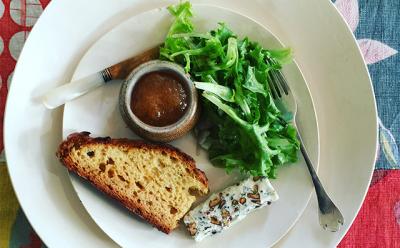
One of my favorite cookbooks is Cathal Armstrong’s “My Irish Table.” He grew up in Dublin where his mum was a renowned baker and his da had a garden and did most of the cooking. Cathal now has a number of restaurants and bars in Alexandria, Va., the most famous of which is Restaurant Eve. Every time I visit, I go see Cathal and tell him what I’ve cooked from his book. He always asks, “Did the recipe work for you? We really struggled with that one!” It’s true, some of the measurements are off, as is often the case when a restaurant chef tries to reduce quantities for the home cook. But his soda bread is simple perfection and the Cashel blue cheese and toasted pecan terrine with apple jam and frisee salad is one of the best flavor and texture combinations I have ever tried.

In Ireland, St. Patrick’s Day is still considered a religious holiday observed with reverence and solemnity. No dyeing rivers green like in Chicago, no green bagels. As a matter of fact, most of the pubs are closed. The holiday falls in the middle of Lent, when many people are fasting or abstaining. But on this day, after going to Mass, families gather to celebrate and feast on leg of lamb or roast prime rib or a whole baked salmon. So don’t be a dodgy spalpeen, celebrate responsibly and deliciously. Slainte!

Click for recipes

News For Foodies: 03.17.16

News For Foodies: 03.17.16

Local Food News
By
Joanne Pilgrim

Chimene Visser Macnaughton, the proprietor of Wainscott Main Wine and Spirits and a sommelier, will discuss “Decoding the Restaurant Wine List: Does ‘Date Wine’ Cost $100?” at the next of the shop’s ongoing Wine Wednesday events. The session, at 5:30 p.m. on Wednesday, will cost $10 and include a wine tasting. Those who would like to sign up may do so by calling the shop or by sending an email to [email protected].


Spring Market Dinner

Slow Food East End’s spring market dinner will be served at Almond in Bridgehampton next Thursday night at 6:30, and reservations are being taken until Sunday. The meal will celebrate the area’s native and traditional foods. It will begin with a cocktail reception. Four courses will be served family-style. The cost is $100, or $85 for Slow Food members. The price includes a beverage at cocktail hour, wine tastings, and tax and gratuity. Reservations can be made at slowfoodeastend.org.


Seasonal Reopening

Il Capuccino Italian restaurant in Sag Harbor reopens tomorrow night for dinner after a seasonal break. The restaurant will have a new bar menu and a fresh lineup of specials.


Easter Is Coming

Those making Easter plans might want to consider a trip to East Hampton Town’s easternmost hamlet, where a sunrise service is normally held at the Montauk Lighthouse on Easter Sunday. 

Starting at 11 on Easter morning, the Montauk Yacht Club will offer a buffet holiday meal that will stretch until 4 p.m. The buffet will include a chef’s table with pan-seared Montauk tilefish, stuffed chicken breast, salads, vegetables, and assorted antipasti, stations with custom-prepared eggs and omelets and leg of lamb, a seafood bar, and handcrafted pasta with a choice of sauces. For dessert there will be a chocolate fondue fountain and a Viennese dessert table. The cost is $74.95 per adult, or $24.95 per child age 8 and up. Those under that age may eat for free. 


Momi Ramen Reservations

Momi Ramen in East Hampton has a new online reservation system at momihamptons.com, where tables may be reserved up to two weeks in advance. The number of reservations will be limited, so walk-in diners can still be accommodated. Bar seating at the ramen eatery is also reserved for walk-in guests. 


Cavaniola’s in ’Gansett

Cavaniola’s Gourmet cheese shop, which sells cheeses, sandwiches, soups, and other prepared foods in Sag Harbor, will be opening in Amagansett in early May. The shop is setting up in a space at Amagansett Square.

Pay Your Farmer Now, Enjoy the Bounty All Summer

Pay Your Farmer Now, Enjoy the Bounty All Summer

Long before harvesting begins, local community supported agricultural programs use prepaid memberships to pay for seeds and other planting expenses at places like Balsam Farms.
Durell Godfrey Photos
“Producer and consumer are joined in a mutual support system"
By
Levi Shaw-Faber

For those who care about stocking the refrigerator with the freshest produce on the East End, March is the month to begin signing up for membership in a community supported agriculture program, or C.S.A. 

A C.S.A. member prepays a farm for a share of its future yield and gets a weekly supply of fresh produce during the harvest season, usually beginning in June. C.S.A.s eliminate the middleman, putting consumers in direct contact with growers. “Producer and consumer are joined in a mutual support system,” explained Scott Chaskey of the Peconic Land Trust’s Quail Hill Farm in Amagansett. A C.S.A. “builds and sustains local relationships between people and local soils and local economies and the local ecosystem,” he said. “Why not enjoy food with a name and a place and a face?”

Ian Calder-Piedmonte of Balsam Farms, also in Amagansett, agreed that the benefits go far beyond merely connecting a consumer to fresh produce. His farm’s C.S.A. exposes consumers to the bounty of the East End in a new way. “We include vegetables that are longtime favorites, but we also include lesser known varieties, along with recipes and cooking suggestions so that members know how to use them. It’s a great way for members to experience the many delicious vegetables that thrive on the East End that they might not otherwise think to try.”

By paying up front, C.S.A. members cover many of the early-season costs needed to restart a farming operation. In exchange, Mr. Calder-Pied monte says, “members get vegetables at what amounts to discounted prices throughout the season, along with recipes, varietal information, and other personal touches that bring them closer to their food source.” 

Below are a few of the choices for people interested in joining a C.S.A. this season.  

Amber Waves

Amber Waves farm offers weekly, family-size boxes of organic produce that members can pick up at the farm off Amagansett Main Street or offsite in Montauk or Sag Harbor. Members also have access to “you-pick” areas of the farm where they can harvest flowers and in-season produce including herbs, raspberries, and cherry tomatoes. 

Memberships range in length from 15 weeks for $750 to 26 weeks for $1,050. New this year, members will receive a field guide that includes storage tips, field maps, and a calendar of events. Local bread, cheese, and fruit can be added to the weekly box for additional fees. All shares begin the week of Memorial Day  and continue as late as Thanksgiving, depending on the plan. 

Produce offerings vary, but one sample box from last fall included butternut and kabocha squash, radishes, tomatillos, daikon, Russian and Italian kale, mustard greens, sweet potatoes, eggplant, garlic, and lettuce.  

Balsam Farms

Farmers at Balsam Farms curate a box of fresh vegetables, greens, herbs, and fruit that members pick up weekly from the stand on Town Lane in Amagansett. Memberships range from $500 for a 15-week plan to $860 for 26 weeks. Flowers, cheeses, bread, fruit, and eggs can be added to a share for additional fees. The 26-week plan runs from May through November. 

A share in the last week of July 2015 included corn, lettuce, Sungold tomatoes, celery, cucumbers, Cubanelle peppers, cabbage, bok choy, onions, and kale. 

Bhumi Farms


Bhumi Farms, which also has fields in Amagansett, offers memberships that begin June 7 this year. Members can pick up their weekly boxes of organic produce at the farm stand on Pantigo Road in East Hampton or at the Montauk Farmers Market or the Hayground Farmers Market in Bridgehampton. 

Bhumi might be the best option for the busy foodie because it offers delivery as well. Members who enjoy getting out in the fields can harvest certain vegetables themselves.  

Bhumi lets members customize their box each week online. A default box will be put together when selections are not made. Bhumi also offers add-ons like a fruit share, almond milk, coffee, and prepared vegetarian foods. Memberships range from $300 for a five-week share to $750 for a 13-week share including delivery.

The offerings, according to the Bhumi Farms website, include such things as “carrots of every color, sugar snap peas, striped beets, shelling peas, husked cherries, shishito peppers by the crateful, cherry tomatoes, string beans, cucumbers, tomatoes large and small, red and orange, kales, lettuce, wonderful salad mixes, the juiciest watermelons, herbs for every occasion, sweet potatoes, and fairytale eggplant” among other things. 

Quail Hill

If you are feeling a little more adventurous this summer, Quail Hill Farm, on Side Hill and Deep Lanes in Amagansett, offers a more hands-on experience. Although one type of membership offers a weekly boxed pickup, what sets Quail Hill apart from other C.S.A.s is that members harvest in the fields themselves, twice a week. Farmers post a list of what is available each harvest day and where it’s located on the farm. In the fields, signs let them know how much they can harvest per share and how to pick, cut, or dig it up. 

Quail Hill memberships begin in early June and continue through the end of October. Prices start at $350 for a weekly box pickup for a single member to $950 for a family membership that allows you to harvest produce, herbs, and flowers in the fields. Boxed shares do not include herbs or flowers.

A weekly share in early July 2015 included arugula, bok choy, collards, fava beans, kale, fennel, green beans, lettuce, potatoes, radishes, scallions, spinach, Swiss chard, flowers, and herbs such as chives, cilantro, dill, mint, parsley, rosemary, and thyme.

News for Foodies 03.24.16

News for Foodies 03.24.16

Local Food News
By
Joanne Pilgrim

Slow Food East End will have its spring market dinner tonight at Almond restaurant in Bridgehampton. While the deadline for reservations has passed, reservations are being taken for the group’s next event, a dinner co-sponsored by the Joshua Levine Memorial Foundation on April 17. “A Moveable Feast,” to be held at the Dodds and Eder Landscape Design Showroom in Sag Harbor, will raise money for kitchen gardens on the East End in honor of the late Mr. Levine, who was interested in educating children about healthy eating and sustainable farming. A host of East End chefs, restaurants, and purveyors will contribute foods, and a silent auction will take place. Tickets are $150 per person, or $100 for Slow Food members, with a $25 discount given to members who buy two or more tickets. 

Easter Sunday

Baron’s Cove restaurant in Sag Harbor will serve an Easter brunch on Sunday from 11 a.m. to 4 p.m. Diners may order from the a la carte menu or choose a “Sunday Roast” featuring lamb or beef served with maple carrots, smashed parsnips, roasted fingerling potatoes, and local kale. Outdoors on the lawn, there will be Easter egg hunts for kids at 10 a.m. and 1 p.m. Reservations are required, and guests have been asked to specify if they are bringing children. 

Easter Sunday dinner at the 1770 House in East Hampton will be served a la carte beginning at 5 p.m. The menu will include sweet pea soup with crab, tarragon, and crispy speck; asparagus salad with a North Fork duck egg, spring onion, and baby mustard greens; lamb chops with rosemary, garlic, potatoes, and roasted ramps; roasted Texas Wagyu prime rib, and maple-cured Berkshire pork chops with smoked local apple, spiced sweet potato, and slow-cooked greens. The restaurant’s downstairs tavern will be serving, as well, from its regular menu. Dinner begins at 5:30 p.m. and reservations have been recommended. The restaurant is also holding a chocolate bunny raffle to raise money for the Flying Point Foundation for Autism. 


Indie Wineries Tips

On Wednesday at Wainscott Main Wine and Spirits in Wainscott, two experts from Indie Wineries will discuss Chilean wines at the next in a weekly series of tastings and classes. Christian Troy, a partner in Indie Wineries, and Kate Olivares, the Chilean portfolio manager, will lead the session at 5:30 p.m. The cost is $10. Those who wish to attend can sign up by calling the store or sending an email to Wainscottmain@ gmail.com.

News For Foodies: 02.25.16

News For Foodies: 02.25.16

Local Food News
By
Joanne Pilgrim

Awarded the Snail

Estia’s Little Kitchen in Sag Harbor has received the Slow Food organization’s Snail of Approval award from the international group’s East End chapter. The award recognizes businesses that exemplify the Slow Food ideals regarding local, sustainable, and seasonal food. Estia’s owner and chef, Colin Ambrose, was an early advocate of the farm-to-table philosophy; he has been a member of the Quail Hill Farm community-supported agriculture collective for two decades, has tended his own kitchen garden, and has been a supporter of Slow Food and of the Edible School Gardens program. 

Other East End restaurants that have earned the Snail of Approval include Nick and Toni’s in East Hampton, Noah’s in Greenport, the North Fork Table and Inn in Southold, Love Lane Kitchen in Mattituck, and 18 Bay restaurant on Shelter Island. 


Farm Memberships Open

Memberships are available for the 2016 season in the community-supported agriculture program at Balsam Farms in Amagansett, at fees ranging from $500 for a 15-week season of weekly produce deliveries to $860 for a 26-week season. Add-on deliveries, of cheeses, bread, flowers, fruit, or eggs, can be arranged for additional individual charges of up to $253 for the long season. The season begins on May 27, and payment in full must be made two weeks beforehand.

The items in the weekly share are chosen by the farm, according to what is available, and may include a food product such as Balsam pickles, tomato sauce, jam, or pesto. A list of what was provided to members during last year’s season can be found at the farm’s website. Those who sign up by March 15 will receive a free hat or T-shirt and a shopping bag. 


Assorted News

A new Jack’s Stir Brew Coffee shop will be opening in Sag Harbor. The company, established in New York City in 2003, has a location in Amagansett in addition to its five Manhattan shops.

The Shagwong in Montauk is being rehabbed — brought back to its past, according to a press release, with its original interior decorations, such as vintage Montauk photographs, returned. An updated menu has been promised, however. 

An Olive Oil’s Unlikely Journey From the Balkans

An Olive Oil’s Unlikely Journey From the Balkans

Olive trees in coastal Albania, where olive oil has been made the same way for centuries
Andrew Strong
Residents of Kosovo, known in ancient Greece and Rome as Illyria, have been making olive oil for some 2,500 years
By
Mark Segal

To say Kosovo, a landlocked country on the Balkan Peninsula, has had a complex history is an understatement. Before the breakup of Yugoslavia during the early 1990s, Kosovo was a region of that country, populated for centuries by Serbs and Albanians. The Kosovo war of 1998-99 pitted the forces of Serbia and Montenegro against the Kosovo Liberation Army, led to the withdrawal of Yugoslav forces from the region, and, in 2008, to Kosovo’s declaration of independence. 

Against this turbulent background — not to mention its subjugation over the years to the Roman, Byzantine, Bulgarian, and Ottoman empires — residents of that region, known in ancient Greece and Rome as Illyria, have been making olive oil for some 2,500 years. Indeed, Romans brought the product from Illyria to Italy.

However, not until 2013 did olive oil from the region around the small Albanian coast city of Vlore make its way to the United States through the agency of Andrew Strong and Rachael Faraone, Springs residents, and their company, Illyrian Press. How that came about involved “a wild series of events,” according to Mr. Strong, an attorney who is an associate in the Amagansett law office of Richard Whelan.

In 2005, while researching a paper on insurgency in law school, Mr. Strong chose an unusual destination for spring break — Kosovo. He managed to secure an interview with Ramush Haradinaj, the prime minister.  

“He’s an ethnic Albanian and was a villager in western Kosovo,” said Mr. Strong. “His village and family were attacked and killed by Serbs. He helped form the Kosovo Liberation Army, got NATO involved, and became a national hero after the war.” The day Mr. Strong arrived in Kosovo, however, the International Criminal Tribunal for the former Yugoslavia indicted the prime minister for war crimes.

“It was a really interesting legal case. In a moment of out-of-body experience, I asked him for a job as a summer intern.” Mr. Haradinaj agreed to take on the young law student, who then dropped out of law school, spent the next two years living in Kosovo helping prepare for the trial, and then a year in The Hague working on Mr. Haradinaj’s defense.

While in Kosovo, Mr. Strong's job was to go out to the villages and piece together the narrative of the Kosovo War. “I had built this picture of the conflict in a very specific part of western Kosovo, on the border of Albania. That was where all the weapons that fueled the conflict came through. It was kind of like the Wild West.” 

Mr. Strong spent much of his time in that region, learned basic Albanian, and made friends with ethnic Albanians. “We would go to Albania to check it out, and I was arrested by how beautiful it was. There were mountains covered in olive trees diving down into the Mediterranean. And the tradition of pressing olives by hand had remained unchanged for more than 2,000 years.”

The area has hundreds of olive farmers, some with only two or three trees, who bring their harvests to Vesaf Musai, now a partner with Mr. Strong and Ms. Faraone. Mr. Mesai custom presses a limited quantity of organically grown olives in his organic certified press. The oil, made from the indigenous Kalinjot olive, is bottled in Albania; Ms. Faraone designed the label.

In part because of Albania’s history of isolation, its olive oil had never been exported. The oil, which won gold medals in tasting competitions in Italy and Croatia in 2013 and Best in Show in the Albanian tasting of 2013, is now available on the East End at Serene Green Farm Stand and Cavaniola’s Gourmet Cheese Shop in Sag Harbor, Marders Garden Center and Nursery in Bridgehampton, the Seafood Shop in Wainscott, and from Eli Zabar. It can also be purchased online through the Illyrian Press.

Mr. Strong, who grew up in the Midwest, and Ms. Faraone, an East Hampton native, met 18 years ago when both were students at Middlebury College in Vermont, but it wasn’t until years later that their friendship developed into both a personal and business partnership.

Until the birth of Henry, their 11/2-year-old son, Ms. Faraone taught kindergarten at the Hayground School and was assistant coach of the East Hampton High School girls volleyball team. The couple’s second child is due in mid-March.

While Mr. Strong wouldn’t absolutely rule out wider distribution in the future, he emphasized he is happy with the scale of the operation at the moment. Everything is done by hand, and maintaining small batches ensures quality. “When you scale up,” he said, “quality can suffer.”