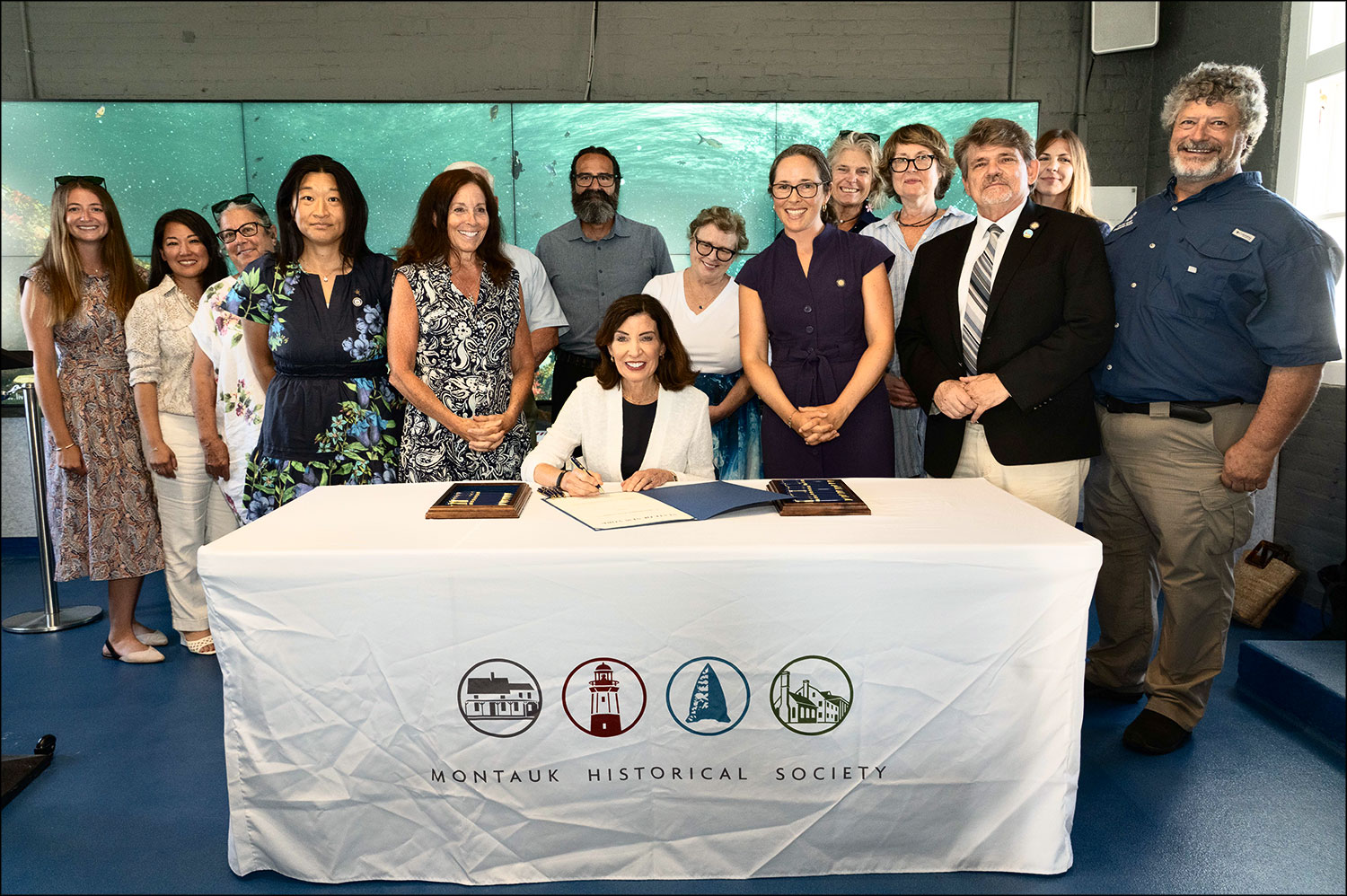
Gov. Kathy Hochul visited the Montauk Lighthouse over the weekend to sign new protections for whales into law.
Called the Whale Awareness Act, the legislation is centered on education and integrates marine mammal protection into both New York State boater safety courses and the vessel registration process.
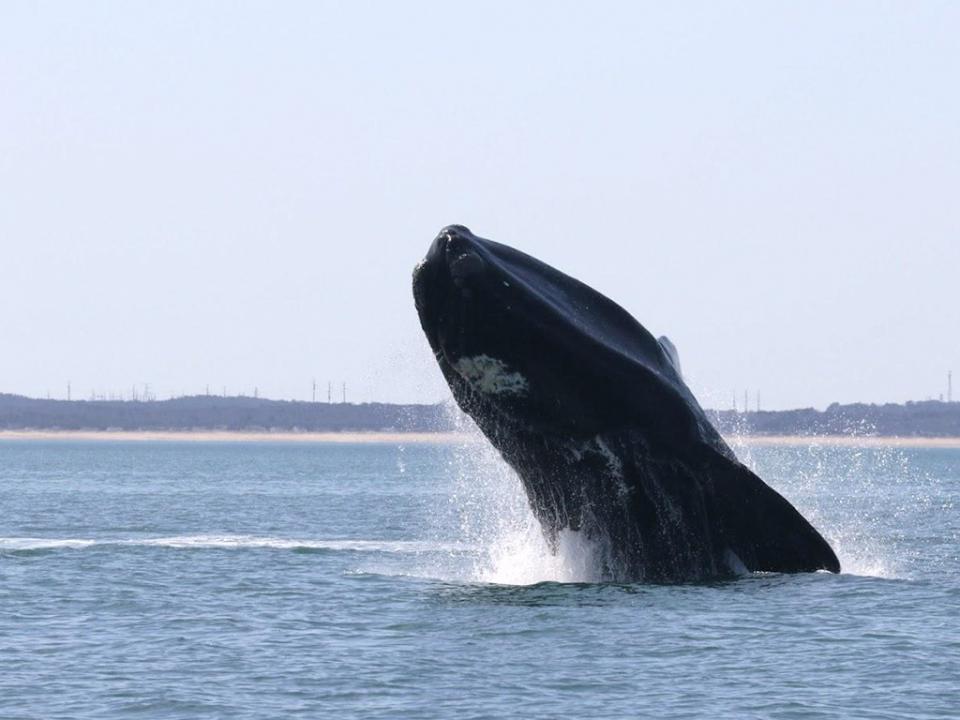
The idea is to limit collisions with the mammals, which are seen frequently from the shore of East Hampton Town’s beaches and occur even more regularly a few miles offshore.
“Thanks to decades of conservation efforts, New York’s coastal waters are alive with marine life, including whales. But with this comeback comes added responsibility,” Carl LoBue, the director of Nature Conservancy New York Oceans and Fisheries, said in a press release put out by the governor’s office.
“There is something truly special about seeing whales breaching just off our shores,” Supervisor Kathee Burke-Gonzalez said in the press release. “It reminds us how fortunate we are to call East Hampton home, and how important it is that we care for the waters we share.”
According to the bill, the owners and operators of licensed party and charter boats and anyone participating in a New York State Parks, Recreation, and Historic Preservation-certified boating safety course will receive the new educational material. Then, starting Dec. 21, 2028, anyone who registers a boat in the state will receive the extra training.
“Vessel strikes have become one of the leading causes of injury and death among marine mammals, particularly whales, undermining both ecological stability and species conservation efforts,” the legislation reads.
“This is super important,” texted Craig O’Connell, who runs the O’Seas Conservation Foundation out of Montauk. “We were out the other day and spotted a humpback with fresh prop marks all over it. So, the more education that can be provided to the everyday boater, the better.”
“Great program,” agreed Rob DiGiovanni, the founder and chief scientist of the Atlantic Marine Conservation Society, who was at the signing. “There are still some individuals that don’t know we have whales here, or how to operate in their presence.”
“Our Atlantic coastline is a precious resource which deserves increased attention, and thanks to decades of work by policymakers and local partners, our ocean waters have never been cleaner, and our fish stocks are improving year over year, leading to increased whale sightings,” said Assemblyman Tommy John Schiavoni. “As a co-sponsor of the Whale Awareness Act, I am proud to support this initiative which will create safer interactions with marine life and protect everyone on the water.”
According to the National Oceanic and Atmospheric Administration’s marine life viewing guidelines, federal law requires vessels to stay 100 yards away from humpback whales and 500 yards from North Atlantic right whales.
Whales should never be chased and viewing times should be kept to 30 minutes or less. If a whale is approaching, boaters should slow down, operate at a no-wake speed, and put the engine in neutral. Excessive speed or sudden changes in speed should be avoided.
If ever a calf is present, extra caution is necessary. “Never put your watercraft between a mother and calf,” according to the guidance.
“This education bill is essential to ensure boaters understand how to safely respond if they spot a whale,” said Adrienne Esposito, the executive director of Citizens Campaign for the Environment. “They should not speed towards them to get a good photo but rather stay away or shut down the engine so the propeller doesn’t harm the mammal.”
Mia Certic, the executive director of the Montauk Historical Society, said her organization was honored to have the bill signed at the Lighthouse, which the society owns.