Seasons by the Sea: Christmas Eve Traditions

Seasons by the Sea: Christmas Eve Traditions
The Feast of the Seven Fishes is believed to have originated in southern Italy, perhaps Naples or Sicily
By
Laura Donnelly

Christmas, Christmas, Christmas. Enough about Christmas and the music and the decorating and how many more shopping days we have until the big day. To my mind, some of the more interesting aspects of this massive holiday are the Christmas Eve food traditions celebrated by different cultures. There is Noche Buena, celebrated throughout Latin America; Kucios, the traditional dinner served in Lithuania, and, for Italian Americans, Esta dei Sette Pesce, or Feast of the Seven Fishes. (I assume Dec. 24 is the only day that “fishes” is grammatically correct?)

The rituals that accompany Kucios are many and varied, some solemn, some amusing. It is important that as many family members as possible make the effort to travel to be together for this evening. A handful of hay is laid upon the table before a white tablecloth is placed over it. The hay represents baby Jesus being born in a stable. If a family member has died within the past year, a place setting without silverware is laid out for that person with a candle upon the plate. The candle is lit throughout the meal in their memory.

The meal begins when the first star in the sky appears, representing the Star of Bethlehem. There are fir boughs and candles for decoration but no live flowers. Plotkeles, wafers similar to Communion hosts, are shared first, with each person breaking off a piece and passing it along. No meat or dairy or hot food is served, but it is an ample feast with as many as 12 courses. Fish, such as herring or eel, bread, vegetables, beet soup, mushroom dumplings, cranberry kissel, poppyseed milk, sauerkraut, and cider are some typical foods served. The meal itself is relatively somber and quiet, and each person must sample a bit of each dish. 

After the meal, family members reach under the tablecloth and draw straws from the hay underneath. The length and width of straws drawn signify longevity, how low, tall and thin, or short and wide your future spouse will be, how many decisions must be made that year, and more. Even the shadows cast on the walls from candlelight hold significance. If the shadow reflects the whole person, the coming year will be healthy; if the shadow is skinny and wavering, the year will be difficult. If the shadow is headless, well, that signifies that something bad may happen. In a touching and sweet ending to the evening, the table is left as is with leftover food, so that the souls of departed friends and relatives will feel welcome.

The Feast of the Seven Fishes is believed to have originated in southern Italy, perhaps Naples or Sicily. The significance of the number seven has many theories. It could be the seven sacraments, the seven hills of Rome, the fact that the number seven appears most often in the Bible, and perhaps Genesis 2:2: “By the seventh day God completed the work he had been doing. . .”

The menu dates from the Roman Catholic tradition of consuming no meat or dairy on Wednesdays, Fridays, Saturdays, during Lent, or on the eve of special holidays. Some common offerings are baccala (salted cod), eel, lobster, clams, whiting, sardines, squid, octopus, mussels, anchovies, and more. Preparing and consuming this many fish dishes does sound daunting, but there are plenty of ways to do it. As Melissa Clark of The New York Times suggests, anchovies in a salad dressing is perfectly legit, as is a dab of salmon roe on a potato chip dabbed with creme fraiche. Okay, that’s kind of cheating with the dairy product, but she’s Jewish, so no need to follow the “rules.” And I like her idea of ending the meal with chocolate babka.  

Considering the bounty of fresh fish out here, I think a feast of the seven fishes would be a culinary delight, perhaps starting with some smoked striped bass or bluefish paté, searing some scallops, whipping up a cioppino, or a fish in parchment paper, clams casino, the possibilities go on and on.

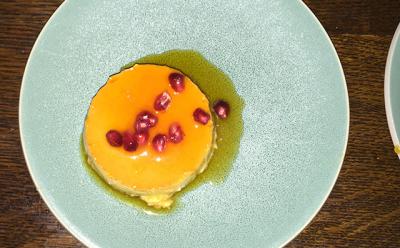
For many of the last several years my son and I have been guests at our friend Kathleen’s Cuban Christmas Eve. She is an excellent cook, and it is a feast of marinated and roasted fresh ham, mojo criollo, a garlicky citrus sauce, black beans, rice, fried plantains, salad of watercress, avocado, and mandarin oranges, and flan.

According to the Cuban chef and scholar Maricel Presilla, Christopher Columbus is partially responsible for pork being served instead of fish on Noche Buena. When he brought pigs from Europe to Hispaniola (the island that now comprises the Dominican Republic and Haiti), they multiplied all over the islands, resulting in approximately 30,000 pigs roaming around Cuba by the 16th century. When they became a nuisance to farmers, the settlers began hunting them and roasting them whole. Well, when you’ve got that much animal roasting, you have to have a party with all your friends and family! 

“The Caribbean was a looser society. It didn’t have all the ecclesiastical apparatus. That’s why we have a gigantic feast surrounding pork,” she explains.

My personal heritage is mostly Irish mutt with a bit of Norwegian. After working in a Scandinavian restaurant for five years I realized that Swedish meatballs, herring five ways, and St. Lucia buns (sweet yeast rolls flavored with saffron) are definitely not my cup of tea, or aquavit. Perhaps someday I will attempt a feast of the seven fishes, and I am definitely intrigued by some Lithuanian recipes. Imagine how beautiful a big bowl of saltibarsciai (beet soup) would be on the Christmas table! 

For now, we are honored to be a guest at Kathleen’s Cuban Christmas Eve table, with all the traditional, savory, and colorful dishes that entails. Buon Natale, Linksmu Kaledu, and Feliz Navidad!

Click for recipes
News for Foodies 12.10.15

News for Foodies 12.10.15

Local Food News
By
Mark Segal

Living Room Specials

The Living Room restaurant at c/o the Maidstone is celebrating the holiday season with special offers for two-legged and four-legged patrons. The restaurant’s winter prix fixe menu, usually $49, is now $29. Available Sunday through Thursday, 5:30 to 7 p.m., and Friday and Saturday from 5:30 to 6:30, the menu includes the day’s soup, a choice of organic chicken breast, pan-seared salmon, or Köttbullar (Swedish meatballs), and, for dessert, either sticky-toffee date cake or two scoops of ice cream.

Dogs get an even better deal. Throughout December, pooches accompanied by hotel guests or diners are entitled to a free meal from the dog-friendly inn’s Woof Menu. 


At the Chequit

Red Maple, the restaurant at the Chequit hotel on Shelter Island, has devised a fall/winter menu of seasonally inspired dishes. Light bites for sharing include chicken croquettes with blue cheese dipping sauce and pumpkin hummus with toasted pumpkin seeds and flatbread. Among the salads are shredded Brussels sprouts with lardons, red onion, and dried cranberry, and poached pears with manchego and candied walnuts. 

Diners are invited to mix large and small plates, which include duck confit rillettes with Granny Smith apples, apricots, and pistachios; bacon-wrapped shrimp with apple and fennel slaw; Prince Edward Island mussels with fennel, leeks, and ale; selections of cheeses or charcuterie; herb-roasted Amish chicken with baby carrots, fava beans, and vermouth natura, and pan-roasted Atlantic cod with classic ratatouille.

The hotel will a hold its first-ever tree-lighting party on Saturday from 4 to 6 p.m. Visitors will be serenaded by carolers in Victorian finery, and mulled wine and hot apple cider will be for sale, as will desserts from Baked, a Red Hook, Brooklyn, bakery. Kids can decorate ornaments and enjoy cookies. Profits from the event will benefit the Shelter Island Historical Society.


Santa at Rowdy Hall

Santa will be sitting by the fire at Rowdy Hall in East Hampton on Saturday morning from 10 to noon, posing for pictures with children of all ages and adding their gift requests to his list. A suggested donation per photo will benefit local food pantries, as will donations of canned and shelf-stable food. Dreesen’s doughnuts and warm apple cider will be served.

In addition, children and adults can make holiday cards for veterans at the Walter Reed Army Medical Center. The cards will be delivered before the holidays by a representative from the Wounded Warrior Project.

Sen’s Sake Social Sundays

Sen’s Sake Social Sundays

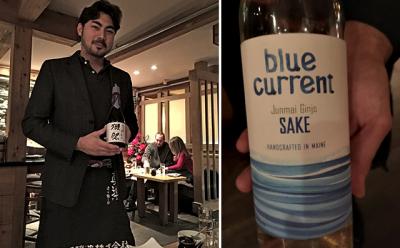
Ryunosuke Jesse Matsuoka is one of the very few sake sommeliers in New York, quite possibly the only one on Long Island.
Laura Donnelly
Who knew sake was so varied, so complicated, so complex?
By
Laura Donnelly

A lot of restaurants will try a lot of things to bring in business during the slower months. There are happy hours with meatball sliders, specialty cocktails, free pizza, cheap beer, fondue by the front door, and more. When I heard about Sen’s Sake Social Sundays my interest was piqued. And not just because I can walk home from there.  Ryunosuke Jesse Matsuoka is the general manager and a partner at the Sag Harbor restaurant. He is also one of the very few kikizakeshi, or sake sommeliers, in New York, quite possibly the only one on Long Island. Who knew sake was so varied, so complicated, so complex?

From 5:30 to 7, for $28, you can sample many fine examples of sake, with a tutorial from Mr. Matsuoka and tasty treats to go along with the sakes. Sake is pronounced sak-eh, not sak-ee; let’s get that straight right away. Every time I pronounced it incorrectly, Mr. Matsuoka admitted (politely) that it sounded like fingernails on a chalkboard. Gomen ne, Jesse, I’m sorry!

We began with Blue Current, a sake brewed in Kittery, Me., of all places. It was slightly sweet and smoky. Along with this lightly chilled sake we enjoyed some edamame and little skewers of kushiyaki, pork tenderloin strips marinated in soy and mirin. 

Mr. Matsuoka pointed out that “rice is the heart of sake; it is the heart of Japan.” Sake rice is different from sushi rice in that it is more delicate and grows taller, making it vulnerable to high winds. The starch in some strains of rice is contained in the very center, which means it has to be milled, or refined, up to 50 to 70 percent, sometimes even more, to reach the starch. In other words, the finer sakes have been made from an ingredient of which 70 percent has been discarded. Now I’m starting to understand why some can be quite expensive. The quality of the water used is also of utmost importance.

Next we tried Hyakujuro 110 with wagyu beef and daikon pickle tartare on crunchy sushi rice with scallions. This sake was delicate and a bit fruity. The wagyu tartare was one of the best things I have ever tasted, and Sen only rolls it out during holiday seasons.

Once upon a time there were over 6,000 sake breweries in Japan, now there are approximately 1,200. Apparently, the younger generation has very little interest in making and/or drinking sake. They are currently enamored with French wines and whiskey.

I asked Mr. Matsuoka if he prefers chilled sake over hot. He said he enjoys it in any form and pointed out that sake is one of the few alcoholic beverages that have this flexibility of being served from yukibie, snow chilled, to tobikirikan, extremely hot. 

“My job is to get people to relate to it, even if they already enjoy it. I want to break the mold, have people realize they can drink sake every day. If you break it down, the profiles are succinic acid, also found in shellfish, and lactic acid, which gives some sakes that creamy flavor.” Which makes sake very compatible with cheese. He suggested trying Midnight Moon, an aged goat cheese in the style of Gouda, with brown butter and caramel undertones. While the more refined sakes do cost a pretty penny, he insists that price doesn’t matter; it’s really just a matter of preference.

Why do some of the sakes have such poetic, romantic names like Raindrops From the Maple Leaf, Plum Tree in the Snow of Kaga Area, Flower in Winter, Glory of the Sun, Nightingale in the Garden, and Hawk’s Bravery? This is strictly for the American market because, well, who really knows what Banshu Ikkan Kaede no Shizuku means, much less remembers to ask for it at the liquor store?

Next we had seared sea scallops with miso sauce on fried wonton chips served with Born Gold, a moderately pricey bottle that can rival sakes priced in the hundreds. It was slightly sweet and light golden. A sampling of mushroom and tofu soup and some vegetable sushi followed. Because our gang of tasters was relatively small, Mr. Matsuoka decided to share one of his favorite sakes with us, Dassai 23, which sells for $160 on Sen’s menu. Lucky us!

At this point, another group came in to join the class. Jesse switched gears and began from scratch with the new group, which left us to ponder and savor the intricacies, customs, etiquette, and beauty of Japanese culture, and especially sake.

Dr. Andrew Weill says that the purest sakes, such as Daiginjo, are so refined they do not cause hangovers. I’d prefer to not put this theory to the test, but I would agree that this ancient beverage is fascinating, fun, and utterly delicious, especially when enjoyed with friends and under the guidance of the only kikizakeshi on Long Island.

The tastings at Sen will continue through December and possibly beyond. Each event is different; even the weather plays a part in determining what Jesse will serve and talk about.

Domo arigato, Jesse!

News for Foodies 12.03.15

News for Foodies 12.03.15

Max Blagg will be the next host of Almond’s Artists & Writers Night on Tuesday.
Local Food News
By
Jennifer Landes

Blagg for Dinner

Max Blagg will be the next host of Almond’s Artists and Writers Night on Tuesday. The Bridgehampton restaurant will serve a family-style three-course menu for $45 with a glass of wine or craft beer while Mr. Blagg reads poetry from his new book.

Mr. Blagg’s performance credits and readings extend from the Guggenheim to the old CBGB and the National Arts Club. His latest book was inspired by artists and their work. He has collaborated with artists such as Alex Katz, Richard Prince, Keith Sonnier, Billy Sullivan, and Donald Sultan.

Reservations for the dinner, which starts at 7 p.m., are necessary and can be made by calling the restaurant or online.


Grapes of Roth Merlot

New York wines have hit a new peak with the elevation of Roman Roth’s Grapes of Roth merlot to the Wine Spectator list of the top wines of 2015, ranked 64 out of 100 wines that made the list. Its rating of 92 makes it the magazine’s highest rated red for New York State to date. Mr. Roth has been the winemaker at Wolffer Estate in Saga­ponack since 1992. This wine is from his personal label, using grapes sourced from the North Fork. It is a blend of 82 percent merlot and 18 percent cabernet sauvignon. 


Wolffer Kitchens Warms Up 

For those who might like to try some of Mr. Roth’s wines with food, the Wolffer Kitchen, the vineyard’s sister restaurant in Sag Harbor, serves Wolffer wines and recommends pairings for its dishes. The restaurant is now offering winter-themed dishes on its regular menu and new prix fixe menu specials to further satiate the cooler-weather appetite. For $35, the prix fixe includes three courses and a glass of Wolffer wine. A recent menu included a beet salad and soup for starters, chicken and salmon main courses along with farro and pasta options, and a fruit strudel and gelato for dessert. Warming offerings from the new winter a la carte menu include braised short ribs, wild mushroom risotto, rigatoni with a braised lamb ragu, and butternut squash ravioli with kale, walnut, and sage limoncello brown butter. The restaurant is now serving brunch on the weekends as well.


What’s Special at E.N.E.

East by Northeast is having both a daily prix fixe menu and happy hours for winter. The $29 prix fixe menu is available daily from 5 to 7 p.m. A special sushi and sake prix fixe is available at the same hours for $50, not including holiday weekends. Live music will add to the fine dining atmosphere on Tuesdays as well. The happy hour specials include half-price house sushi rolls, $8 apps, and drink specials in the bar and lounge daily from 5 to 7 and all night on Tuesdays and Thursdays. 

Reservations are also being taken for a five-course dinner, featuring pig from Wells Farm in Riverhead on Dec. 18 at 6 p.m. 


Hanukkah in East Hampton

Nick and Toni’s and Rowdy Hall will both offer two special Hanukkah menus in December. Nick and Toni’s will serve a prix fixe menu of three courses and an amuse bouche for $40. Menu items will also be available a la carte. From Sunday to Wednesday, the menu consists of chopped chicken liver crostini, potato latkes with house-cured salmon and creme fraiche, braised beef brisket, and apple fritters for dessert. Next Thursday, the menu changes to cured salmon salad, roasted beet soup with herb creme fraiche, braised lamb shank, and apple cake for dessert. The restaurant will serve the second menu through Dec. 13. The holiday items will only be available a la carte on Dec. 12.

At Rowdy Hall, there are lunch and dinner specials for Hanukkah. Lunch begins Monday with special menu items that include potato leek soup, short rib grilled cheese, and apple cake. The same soup and dessert will also be served at dinner, beginning on Sunday. Other items on the dinner menu from Sunday through Tuesday will be roasted beet salad and braised beef short ribs with maple whipped sweet potatoes and root vegetables for $28. Beginning next Thursday, the soup changes to beet puree, but the dessert remains the same. A smoked salmon and chives omelette and braised brisket sandwich will be the new lunch additions. At dinner, braised brisket with honey glazed carrots and potato cake at $28 will be the new entree selection. Appetizers are $13 and dessert is $11.

More details about the menu items and pricing are available on the restaurants’ websites.

Seasons by the Sea: All-Time Favorites

Seasons by the Sea: All-Time Favorites

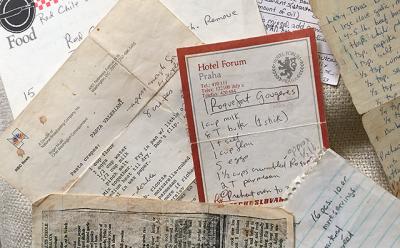
Much-loved recipes can often look like a favorite stuffed toy or blanket: frayed at the edges, faded, and stained.
Laura Donnelly
The best of the best
By
Laura Donnelly

Today is your lucky day! Today I am going to share with you my absolute favorite recipes of all time. The tried and true, the foolproof, the crowd pleasers, the best of the best.

I thought it would be easy, but it got harder and harder as I went through my files. Is that recipe a favorite because I like it or because others love it? Are some of them significant because of the time and place they were served?

Favorite recipes and favorite foods are different things. For instance, some of my favorite dishes are Peking duck and sticky rice with mango, two things that are better made by others. Another favorite dish is the Singapore street food “chicken rice,” something that tastes especially good in the wee hours of morn after a night of drinking. In Singapore. I shan’t ever attempt to make this.

Most of these recipes are easy and economical. There have been times when I wanted to feed a lot of people but couldn’t afford costly ingredients. Thibadeaux’s Creole Jambalaya to the rescue! Or Lazy Texas brisket with spoon bread. Or chicken in a bag! Some of the recipes have already been published here but good luck finding them; I know I can’t. So here are a whole bunch of them, from friends and relatives, magazines and restaurants, cookbooks and churches. Get out your scissors because you will want to clip this column out and start cooking.

Click for recipes

News for Foodies 11.26.15

News for Foodies 11.26.15

Local Food News
By
Joanne Pilgrim

Today’s a big day for foodies, and here’s hoping that everyone can enjoy a Thanksgiving meal with family and friends.

Looking ahead, for those who want to step away from the turkey sandwiches, tetrazzini, and other unending leftovers, local restaurants continue to offer prix fixes and other deals. 

Tuesday is pizza night at Cittanuova in East Hampton. Any pizza on the menu, with a draft beer or a scoop of homemade gelato to top things off, is $15. Wednesday is steak night at the restaurant, with a $19 deal, and Thursday is pasta night, when any entrée pasta is served at the appetizer-size price.

Over in Southampton, Le Charlot is still open daily, and has a brunch or lunch prix fixe from 11 a.m. to 1 p.m. throughout the week. Two courses are $20 and three are $25. A dinner prix fixe, available all night on Monday, Thursday, and Sunday, and from 5 to 6:30 p.m. on Friday and Saturday, is $30 for two courses and $35 for three courses.

Seasons by the Sea: How ’Bout Them Clams

Seasons by the Sea: How ’Bout Them Clams

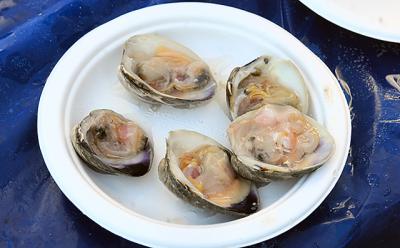
Some of the clams offered at the Largest Clam Contest on Sunday.
Morgan McGivern
Spend the day immersed in clammy activities
By
Laura Donnelly

Clams have already been covered in this column, but there’s always more to learn and more recipes to be shared. What better way than to spend the day immersed in clammy activities?

The first stop was in Amagansett, where the East Hampton Town Trustees’ Largest Clam Contest, postponed due to Hurricane Joaquin, was taking place on Sunday. Outside the American Legion Hall you could wait in line for clams on the half shell and buy raffle tickets for a chance to win the prettiest little Pooduck skiff built by the East End Classic Boat Society. Inside, you could check out the largest clam entries.

Good God, those Napeague Bay clams are on steroids! We admired the amateur clam chowder contest selections and got information from the East Hampton Town Shellfish Hatchery, including seeding maps from previous years, a helpful tool for those serious about clamming, scalloping, and oystering. F.Y.I., oysters take two to three years to reach harvest size, clams four to five, and scallops are harvestable during their second year. So do the math and get a seeding map according to your mollusk desires.

Best of all, for no charge whatsoever, you could dine on Fred Overton’s famous clam chowder, dark as dishwater, but briny and light. For hours, huge cauldrons of steaming chowder were wheeled out of the kitchen as Mr. Overton worked his magic behind closed doors.

What does one do after this Mercenaria mercenaria immersion? Why, go to Bostwick’s, of course, for more clams. In this case, bellies and strips. And who better to go with than Peter Bologna, a.k.a. Pebo, a fellow who knows his way around a clam rake and a kitchen. Peter clams all year round in Accabonac Harbor and always strikes gold. His favorite way to eat a clam is while he is clamming, in warmer waters, about 70 degrees. Have knife, will feast.

He shared his recipe for clams and pasta, all cooked together on the grill, but it was hard to pay attention when presented with platters of clams and oysters and shrimp and flounder and a bucket with four kinds of hot sauces.

A friend asked recently why “spaghetti alle vongole” is so perfect in Italy, no matter where you try this dish. Certainly one reason is the pasta. Whether dried or fresh, it will be superior when eaten at the source. And chances are, the garlic, lemons, olives for oil, and parsley incorporated into the dish were grown within miles of where you consume it. Lastly, their clams are different; they use the vongola (Venerupis decussata), Cozza (Mytilus galloprovincialis), and Tellina (Donax trunculus). The Italians prefer spaghetti to linguine and don’t believe in the addition of cheese.

Another friend asked why we don’t have clam shacks all up and down the East End, like they do in Ipswich, Mass.  Well, they too, have a different variety of clam, Mya arenia, steamer, or Ipswich clams, which have long necks, soft hanging bellies (like me, after lunch at Bostwick’s), and fragile shells that don’t close completely.

What gives clams (and other bivalve mollusks) their distinctive flavor? For these complicated questions we must always turn to Harold McGee’s “On Food and Cooking: The Science and Lore of the Kitchen.” Oysters, clams, and mussels achieve their savoriness by accumulating “internal taste-active substances as an energy reserve and to balance the external salinity of their home waters.” They store energy not as fat, but as amino acids. The saltier the water, the more savory the shellfish. And why are we still told to only consume shellfish during months with an “R,” in other words, the colder months of the year? Without getting into too much sexy detail, let’s just say that when the waters are warmer and the lights are turned down and the Barry White music is turned up, your clams et al are getting busy, ready to spawn. There is also the possibility of more red tide algae in warmer waters, but that’s not as much fun to talk about. . . .

Long ago, clamshells were used as wampum for trading. Some sites claim that the purple interior of clamshells was especially prized and considered more valuable, but according to the Mohican Press, the white and purple shells also served different purposes. If someone arrived wearing a white clamshell belt, they were bringing good news. If they wore a purple shell belt, they came with news of disaster. Like more white men coming to “buy” land, perhaps?

Indeed, as Mr. McGee says, “the secret to the mollusk’s success — and their strangeness — is their adaptable body plan.”

I love clams in all their forms, except for maybe the geoduck (pronounced gooey duck), which I have tried in a few Asian restaurants and came face to face with (face to siphon?) in Seattle. Just give me some local littlenecks, lots of parsley and garlic, some good, dry white wine, and I think the resulting dish would rival any that one could find in Italia. Here are some recipes to inspire you.

Click for recipes.

News for Foodies 11.19.15

News for Foodies 11.19.15

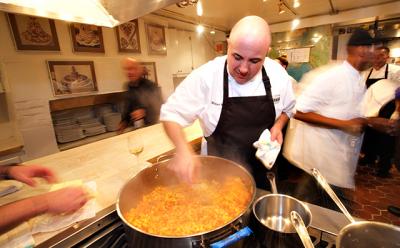
Chef Michael Rozzi of East Hampton’s 1770 House was recently invited to cook at the James Beard House in Manhattan. One of his locally sourced dishes was Berkshire pork with smoked Halsey Farm apples and root vegetables.
Clay Williams
Local food news
By
Joanne Pilgrim

At Sen in Sag Harbor, “Social Sundays” bring a chance to participate in an organized discussion and to socialize, as well as enjoy sake, wine, cocktails, and passed hors d’oeuvres between 5:30 and 7 p.m. The cost is $28 per person, and reservations are not needed. Different speakers will be featured weekly.

Thanksgiving Options

One option for a no-mess but tasty Thanksgiving is to order from Art of Eating in Amagansett, where Cheryl Stair, the chef, has a lineup of more than 40 items to choose from. The fresh freerange turkeys offered are from LudlowFarms in Mecox, pies are all-natural and made with local fruits, and everything is prepared by hand in small batches. Orders can be placed through tomorrow, by phone or by email to [email protected], for pickup by 10:30 a.m. on Thanksgiving Day. Minimum purchase amount is $600.

Orders for pies and cheese platters by Lucy’s Whey can be placed through Monday, for pickup by Wednesday, at the Amagansett Farmers Market. The market, which will remain open until Dec. 20, also has a variety of fall vegetables, fresh cranberries, and apples from the Milk Pail in Water Mill.

Another choice is Thanksgiving dinner out, for example at the American Hotel in Sag Harbor. Service will begin at 1 p.m. next Thursday, with the last seating at 8:30 p.m. Along with the traditional turkey entrée, diners may choose Peconic Bay scallops, roast Scottish salmon, pasta primavera, or dry aged sirloin steak. Reservations can be made with the hotel.

Boxing Match

Indian Wells Tavern in Amagansett will offer drink specials during the Miguel Cotto vs. Canelo Alvarez boxing match on Saturday, which starts at 10 p.m. The match will be shown on five flat-screen TVs in the bar. Admission is $25.

Fall at Winston’s

Winston’s Bar and Grill in East Hampton, now serving breakfast, lunch, and dinner Wednesday through Sunday, has a three-course prix fixe available each day for $24, beginning at 5 p.m. The menu changes weekly. During happy hour, from 5 to 7, margaritas are two for one, and on Thursday nights during those hours, Red Stripe draft beer comes with a plate of wings, served any style, for $10. Also every Thursday, between 5 and 6 p.m., one table of diners, randomly selected, will get a surprise, such as a complimentary bottle of wine, dessert, or chef’s special. On Sundays when football games are on, a plate of ribs served with Montauk Brewery draft beer is $10 from 11:30 a.m. to 7 p.m.

Seasons by the Sea: Make Room Now

Seasons by the Sea: Make Room Now

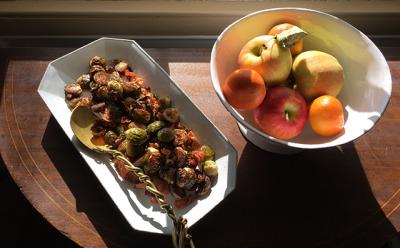
If a friend or relative makes the best Brussels sprouts dish, by all means have them bring it for Thanksgiving. That goes for desserts and breads, and wines for those with a good nose and cellar.
Laura Donnelly
Make a checklist and timeline
By
Laura Donnelly

Here’s the best advice you’re going to get while preparing for your Thanksgiving dinner. Make room now in your freezer and refrigerator. Be brutal. Just as we are told to change the batteries in our smoke detectors at daylight saving time, you should take the time twice a year to go through those mystery meats, leftover loaves of bread, soups from 2010, chutneys, whatever. And now is the time, well before Turkey Day.

The best way to attempt to make Thanksgiving Day stress-free, low-labor, and well-organized, is to make a checklist and timeline. Order your turkey, create your menu, try as best as you can to determine how many guests you’ll have, and delegate. Does your Aunt Matilda make the best Brussels sprouts dish? Let her bring that in an attractive, ovenproof casserole that can go straight from the oven to the table. Is Uncle Buck a wine aficionado? Let him bring the pinot noir or chardonnay or festive Beaujolais nouveau.

Not a baker? Get your pies from Blue Duck or Carissa’s Breads. Don’t you feel better already?

Now what can you do in advance? If you have a dining room that doesn’t get used much, set it ahead. Polish your silver and put out those wine glasses you only use twice a year. Isn’t that pretty? The only things missing are your floral centerpiece and Grandpa Roy, who’s going to tell you why Donald Trump should be president.

Food-wise, there are quite a few things you can make in advance and freeze. If you are making mashed potatoes with full-on fat content, as in whole milk and/or cream, and butter, this freezes very well. If you use watery, low fat ingredients (broth, low fat milk, and why would you on Thanksgiving?), the texture will not be so great. If you are ambitious enough to make your own pies, freeze them unbaked, then bake when needed.

The most important thing to consider when preparing food ahead and freezing is to allow the cooked food to cool rapidly to room temperature, then freeze tightly wrapped in a shallow layer. To cool mashed potatoes, quickly spread them out in a two-to-three-inch layer, cool, then pack into Ziploc baggies, squeezing out as much air as possible.

I love all manner of cranberry relishes, jellies, and chutneys, even the canned stuff. I have already made Mama Stamberg’s cranberry relish, a recipe that NPR’s Susan Stamberg shares every year. After about 25 years of this popular broadcast, Craig Claiborne contacted her and said, “Uh, that’s not your mother’s recipe, it’s mine.” He-he, oops. Regardless, it is an unusual and delicious combination of raw cranberries ground with onion, enriched with sour cream, and perked up with horseradish. It is frozen, then served partially thawed, in all of its Pepto-Bismol pink glory.

Personally, I like all of the old-fashioned dishes I grew up with, from the green bean casserole with canned fried onions on top to mashed sweet potatoes with marshmallows. When I was little, I got the assignment of garnishing the sweet potatoes with the mini-marshmallows. I’m pretty sure this activity planted the seed of my brilliant cooking career.

There are also some things you should have on hand for other meals throughout the weekend. I keep a dense loaf of nutty bread for toast in the morning. For heartier appetites you can make one of those eggy-cheesy-mushroom-sausage casseroles that you assemble the night before and bake in the morning. Plenty of cut-up fruit is handy, along with a big bowl of clementines.

One of my favorite ways to use up leftover turkey is in mole enchiladas, or enmoladas as they say in Mexico. Get some tortillas, Monterey jack cheese, and a jar of mole sauce in advance.

An unusual but tasty leftover turkey idea is sandwiches with a dollop of cheap, supermarket caviar. I thought my English friends were the only ones who knew about this, but even The New York Times offers a recipe for this sandwich. Of course theirs is gussied up with chive enhancements and Cognac tears, whatever. Basically you just construct an open-faced turkey sandwich with whatever fixings you like — leftover stuffing, mayo, white bread — and top it with a tablespoon of caviar.

Do you know how to make perfect gravy? Two choices: either have a canister of Wondra flour to sprinkle into your broth and drippings or make a slurry of equal parts softened butter and flour. Add a bit of hot broth to the slurry, then slowly whisk this into the pan and thicken. Voila! Perfect, silky smooth gravy, sans giblets, I hope.

I don’t believe people should be gorging themselves on heavy cheese platters and boozy drinks before they sit down to the biggest feast of the year. I put out a bowl of spiced nuts, maybe one hard cheese (a little bit goes a long way), and have a light, low-alcohol aperitif like vinho verde or sherry. Stick to your schedule, and if possible, eat early enough in the day so that everyone can take a long constitutional after the meal. Some fresh air and exercise after all that soporific turkey tryptophan will do everyone good. Actually, turkey has no more tryptophan than other poultry, so there goes that myth.

Hopefully, these few tips will help ease your preparations for Thanksgiving Day. Keep in mind that a few grocery stores may stay open that morning, and there are plenty of caterers willing to do the job for you if you want to go that route.

Remember what the day is really about: giving thanks. Or as Oscar Wilde once said, “After a good dinner, one can forgive anybody, even one’s own relatives.”

Click for recipes

News for Foodies 11.12.15

News for Foodies 11.12.15

Local food news
By
Joanne Pilgrim

Food is on the front burner, so to speak, as Thanksgiving approaches.

The Amagansett Food Institute, which operates the Amagansett Farmers Market, is taking orders for Thanksgiving foods including locally grown vegetable dishes such as a stuffing mix made with local wheat bread. Also on tap are local honey and Carissa’s pies. They include her bacon lattice apple pie, pumpkin and squash, and five other varieties. Cheese platters from Lucy’s Whey may also be ordered, in quantities for 6 or 12 people. Items must be ordered by Nov. 22 and will be available for pickup at the market between 9 a.m. and 3 p.m. on Nov. 25. The market will have holiday hours on Nov. 24 from 9 a.m. to 6 p.m., and on Nov. 25 till 3 p.m., but will be closed on Thanksgiving Day. The Gulf Coast Kitchen restaurant, in Montauk at the Montauk Yacht Club, will have a Thanksgiving buffet from 11 a.m. to 6 p.m. on the holiday. There will be a carving station with roasted turkey, smoked ham, and herb-crusted prime rib, a seafood bar, seasonal starters, and main courses of pan-roasted fluke etoufee or lobster-stuffed chicken medallions, along with side dishes. A selection of desserts will round out the meal. The cost is $39.95 for adults and $15.95 for children; children age 6 and under eat for free.

Thanksgiving at the 1770 House in East Hampton will offer a holiday meal featuring first-course choices of seared Peconic Bay scallops, roasted cauliflower and apple soup, Balsam Farms beet and English cucumber salad, spicy Scottish salmon tartare, or porcini mushroom risotto. Main dishes will include traditional turkey and fixings, roasted Icelandic cod, or a roasted Berkshire pork chop. For dessert, there will be pumpkin pie, an apple crisp made with Halsey Farm apples, or the restaurant’s signature sticky toffee date cake.

In East Hampton, the Hampton Seafood Co. has closed for the winter.