AIDS: Hope And A Challenge

AIDS: Hope And A Challenge

By Susan Rosenbaum | December 5, 1996

A year ago, Matthew Grady was talking about raising money for an East End AIDS hospice for the dying. These days he also talks about how to help people who only recently seemed resigned to death, but now may have a reprieve.

Mr. Grady heads the East End AIDS Wellness Project, an educational and support agency. In recent years he has fought the good fight on behalf of continued state-subsidized drug treatment for people with AIDS, local support of the East End AIDS Clinic at Goodfriend Park in East Hampton, and Federal Ryan White Act monies for prevention programs in schools and among minority populations here.

But the introduction of protease inhibitors, an expanding group of medications which appear to prolong life, "took people by surprise," he said this week. Protease inhibitors attack the virus's ability to replicate and appear to be more effective the earlier in the illness they are taken.

Alive, But Little Else

As a result of the medicines, some East Enders with advanced AIDS who had sold most of their worldly possessions and "maxed out" their credit cards are still alive, but have become virtually impoverished, Mr. Grady said. "The only thing they own now is a cemetery plot."

AIDS was the third most common sexually transmitted disease in the nation last year, according to the Federal Centers for Disease Control and Prevention in Atlanta.

Long Island, with roughly 5,000 cases, is said to have the largest number of AIDS patients in any suburban area. One out of every 100 U.S. AIDS cases and AIDS-related deaths occurs here.

Protease Inhibitors

The World Health Organization estimates that about 22.5 million people are infected with AIDS worldwide, about 42 percent of whom are women. Half are under 25.

Federal Drug Administration approval this year of the first protease inhibitors, with more expected in the next few months, has added a new demand to life in the age of AIDS. The challenge now, advocates say, is to keep those with the disease physically and financially alive and at the same time push for more and earlier AIDS testing.

Adam Grossman, a 31-year-old attorney and Noyac resident, was diagnosed H.I.V.-positive in August 1994. He said he began treatment the following year with A.Z.T. (Retrovir), which is thought to disable the AIDS virus.

He "never did get sick," he said, but he did not tolerate A.Z.T. well, experiencing severe nausea.

In time, Dr. Jennifer Schranz, who until recently worked at the East End AIDS Clinic, began prescribing experimental combinations of drugs. This fall he began taking Crixivan, the protease inhibitor known as Indinavir, in combination with Videx (ddI) and Zerit (d4T).

Activist: "Get Tested"

"The virus is now almost undetectable," Mr. Grossman said. "While no one knows yet how long this will last, my perspective of my lifespan has changed from five to six years, max, to longer."

"What I don't know is - a little longer, or a lot?"

Mr. Grossman is committed to helping the East End's young people understand that "the way of the world now, if you're sexually active, is you get tested." It's the only way to "protect their future and their health."

"I had two sexual partners in my life," Mr. Grossman said. "All you need is one."

He tells teenagers that there are many ways to express physical intimacy besides intercourse, and practices what he preaches.

"This virus," Mr. Grossman promised, "is only taking ME out."

Suspicious Colds

Janie, 33, has been living with AIDS for a decade. She acquired the virus from a man who injected himself with drugs. About two years after their relationship ended, and after marrying another man, she found she was "getting a lot of colds and not getting better."

She also had repeated "yeast infections, abnormal Pap smears, and cervical warts." She did not know, she said, that "there was any connection" between those symptoms and H.I.V.

After testing positive, she recalled thinking, "I can stand here and cry - or go on to [a graduate school] class."

Janie moved to the East End about two years ago and was referred to the University Medical Center at Stony Brook, where she joined a study on Crixivan.

"I feel well now," she said, adding that her biggest concern is fatigue.

New Lease On Life

Janie takes 25 pills a day, at 8 a.m., 4 p.m., and midnight. Besides the Crixivan, she takes A.Z.T. and 3TC (Epivir). The regimen requires that she take the pills on an empty stomach, but that she eat something within an hour.

Not unlike others taking the new medications, Janie now views her condition as a "chronic" illness, rather than a death sentence.

"Four years ago, I didn't think I'd be here," she said. "Now I have dreams of a house and a picket fence."

"I feel very grateful, especially on birthdays," she added. "It sounds corny, but sunsets are a lot more beautiful, and watching the seasons, you appreciate life a lot more. I don't sweat the small stuff."

Hopeful Diagnosis

John, 38, another East Ender, was diagnosed in 1984. Within four years, he had become ill and was in and out of hospitals, experiencing fevers and night sweats so intense the sheets frequently had to be changed. He also complained of periodic memory loss.

John, too, began taking protease inhibitors this year, and within a few months was told that his "viral load" - that is, how much AIDS virus is present in the blood and lymph nodes - had been dramatically reduced. He takes Crixivan, d4T, and 3TC as well.

A recent study at the Academic Medical Center of the University of Amsterdam showed that 90 percent of the AIDS virus "lurks" in the lymph glands, where it destroys the architecture of the immune system.

To cover living expenses, John and his lover, who died in April, liquidated an insurance policy that had been sold to a company that paid just a few cents on the dollar. "It was the only option," he said.

Vulture Insurance

A slew of companies have come on the scene, explained Mr. Grady, that will buy a percentage of life insurance policies covering terminally ill people. "The amount they'll pay is determined by how close to death they are," he said, with the highest payments going to the sickest.

As demonstrations marked World Aids Day in more than a dozen world capitals on Sunday, Mr. Grady pointed out that on the East End "there is nothing set up yet to help people who now look ahead to lives which may be longer than expected."

Such support efforts as Ryan White funds, he said, "are still helping people die."
 

Accidents Mar Holiday: One Dead, Infant Hurt

Accidents Mar Holiday: One Dead, Infant Hurt

By Michelle Napoli/ Rick Murphy | December 5, 1996

It was a bad week for holiday drivers.

Three people remained hospitalized as of yesterday with serious injuries sustained the night before Thanksgiving in a four-car accident on East Hampton's Main Street.

On Thanksgiving Day at twilight, icy roads were blamed for a series of accidents in Southampton Town, including one that left a 5-month-old girl with a fractured skull.

And in Water Mill, a Southampton man was killed Saturday night when his truck slid off a road into an embankment and overturned.

Veered Into Traffic

One of those hurt in the Main Street collision, Herbert K. (Smokey) Anderson 3d of Accabonac Highway, East Hampton, 45, was charged with driving while intoxicated, which East Hampton Village police said was the cause of the accident. An additional charge of vehicular assault, a felony, is possible.

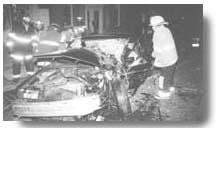
At about 11:30 p.m., police said, Mr. Anderson's van, headed north near the East Hampton Cinema, veered across Main Street and into oncoming traffic, where it struck a Volvo driven by Pierre L. Schoenheimer of East Hampton.

Robert A.M. Stern of East Hampton and Manhattan was just pulling out of a parking space when the Volvo, propelled backward by the force of the collision, hit his B.M.W. The B.M.W. in turn was pushed into a parked car, an Isuzu registered to Mark W. Tuthill of Springs. No one was in the Isuzu.

Arduous Rescue

Main Street between Huntting and Newtown Lanes was closed to traffic for more than two hours while the East Hampton Fire Department's heavy rescue team, the White Knights, worked to get Mr. Schoenheimer, his wife, Idee Schoenheimer, and her parents, Meyer and Beatrice German, out of the Volvo.

Rescue workers had to remove all four doors and the roof of the car to extricate its occupants, according to East Hampton Fire Department Chief Jim Dunlop.

Passengers Hospitalized

Freeing the trapped driver was the biggest challenge, said Mr. Dunlop. The left front of the car took the brunt of the collision.

"Everything we did hurt Mr. Schoenheimer," Mr. Dunlop said.

Mr. Schoenheimer, 63, was taken to Southampton Hospital with a possible broken femur among his injuries and then to Stony Brook Medical Center, where he was listed in stable condition on Tuesday. Mrs. Schoenheimer, 45, was admitted to Stony Brook but discharged several hours later, on Thanksgiving Day.

Mr. German, 82, was listed in fair condition at Southampton Hospital on Tuesday. His wife, also 82, was in stable condition at Stony Brook.

Mr. Stern, the architect, reported no injuries at the scene.

Mr. Anderson, who was discharged Sunday from Stony Brook, was able to get out of his car on his own steam, but was unconscious when the ambulance took him away. Police said he submitted to a blood test at Southampton Hospital. Mr. Anderson has no record of alcohol-related offenses.

Five Ambulances

A Montauk ambulance on its way back from Southampton Hospital was one of the first emergency vehicles on the scene. Two East Hampton ambulances and one each from Amagansett and Springs also took the injured to Southampton.

"I don't remember a call where we used five ambulances," Mr. Dunlop said. He added that "nobody ever envisioned a collision of that magnitude on Main Street," where traffic is relatively slow, and Village Police Chief Glen Stonemetz agreed.

Altogether, about 25 ambulance personnel and 50 members of the Fire Department responded to the accident.

Mr. Anderson's van and Mr. Schoenheimer's Volvo were impounded for safety inspections, which police said revealed nothing. Both drivers were ticketed for expired inspection stickers, and Mr. Anderson was additionally ticketed for crossing into oncoming traffic.

Mr. Dunlop remarked that the Volvo had stood up to the collision remarkably well. "I don't think many other cars stand up to what happened to that car," he said.

Infant Injured

A harrowing two hours on Thanksgiving night, during which Southampton roads froze over and created a potentially deadly sheet of black ice, caused several serious accidents. The worst occurred on Montauk Highway in Water Mill. Shortly after 8 p.m., Southampton Town police said, a Ford truck headed west with Gary Krogman of Mattituck, 30, at the wheel, veered into oncoming traffic and struck another vehicle head-on.

A 5-month-old infant in the other car, Nicole Padden, suffered a fractured skull and possible internal head injuries. The baby was taken first to Southampton Hospital and then to Stony Brook University Medical Center, which, however, could not confirm her admission.

Previous D.W.I.

Mr. Krogman, police said, had been drinking; he allegedly failed several roadside sobriety tests. He was charged with driving while intoxicated.

The charge will likely be upgraded to a felony; police said he had a previous D.W.I. on his record.

Capt. Anthony Tenaglia said additional charges may be lodged depending on the extent of the baby's injuries. The District Attorney is reviewing the case, he added.

Water Mill Fatality

The Water Mill crash that killed Ian Carl Frankel, 30, happened on Cobb Road. Southampton Town police said Mr. Frankel had lost control of his 1996 Ford Explorer before the car pitched over an embankment.

Mr. Frankel and a passenger, Sean Daly, were rushed to the Southampton Hospital emergency room, where Mr. Daly was treated and later released. Another passenger in the car, Aaron Gill, complained of pain but declined emergency treatment.

A graduate of the Millbrook (N.Y.) School and Skidmore College, Mr. Frankel was vice president of advertising for Hamptons magazine. An active volunteer for Southampton Hospital, he was a past chairman of its junior committee benefit.

He leaves his mother, Jacqueline Goodwin of Southampton, two sisters, Elizabeth and Amanda Frankel, his stepfather, Todd Goodwin, and two stepsisters, Alix and Leslie Goodwin.


Letters to the Editor: 12.05.96

Letters to the Editor: 12.05.96

Our readers' comments

Sutro Baths

Sunnyvale, Calif.

December 2, 1996

Dear Helen:

On the first page of the Arts section of the Nov. 28 issue of The Star, I believe the picture behind Anthony Harvey is one of the historic San Francisco landmarks that have disappeared, the Sutro Baths. This great bathhouse was built by Adolph Sutro in the 1800s on the ocean side of the city below the promontory of Sutro Heights (now a park) and near the Cliff House where the views of the Pacific are spectacular.

I am curious as to why Mr. Harvey has chosen to display this image so prominently. I enjoyed the article immensely, especially his telling of the collaboration with Katharine Hepburn and "The Lion in Winter." Even after the third viewing, I still found the film fascinating.

When will his recent work with Hepburn, "This Can't Be Love," be released?

RITA SELDON

Self-Help Method

East Hampton

November 15, 1996

Dear Editor,

The holiday season can be stressful, especially for people who tend to be nervous. People may have more trouble with panic attacks, fear, depression, etc. Friends and family often don't understand.

There's a group called Recovery Inc. which can help. Recovery Inc. is a nonprofit organization which teaches a self-help method for calming nervous symptoms. Recovery Inc. is run by nonprofessionals.

A local Recovery Inc. meeting is held in Southampton at the Veterans Hall on Thursdays at 7:45 p.m. Meetings are held year-round. Call 324-2817 for more information.

Or visit our Web site at: http://www.ed.psu.edu~recovery.

SHELLY KURTZ

Group Leader

No Added Value

East Hampton

December 2, 1996

Dear Helen,

I'm gratified that Robert Warner (in regard to his letter to the editor about my Guestwords piece, "Don't Bank on Cyberbanking") is an enthusiastic user and endorser of Intuit's CheckFree system. He mentions all of its advantages, which I mentioned in the essay.

The point of my piece, and one which he does not take issue with, is that the banks are attempting to create a value-added product in which there is no added value. That is, they want to shift the burden of labor to the customer, and they also want the customer to pay extra for this.

Hence, my metaphor about the oil change. Would Mr. Warner pay more to change his own oil if he could do it a little faster than the gas station attendant? That's up to him. I wouldn't.

As for the security issue, I happen to agree with him that this is more of a perception than a reality issue. I did make what I felt was a cogent argument: Any glitches in the system (either by their own doing or by outside interests) will cause users headaches. It's a lot like trying to get a bill straightened out. The store makes the mistake, but it's up to the customer to send both copies of the canceled check, etc., ad nauseam, to make the account come out right.

Sincerely,

DOUG GARR

Please address correspondence to [email protected]

Long Island Larder: A Groaning Board

Long Island Larder: A Groaning Board

Miriam Ungerer | December 5, 1996

When is more better? On holiday tables when Big is Beautiful and to err on the side of plenty divine. Allegedly everyone is watching his fat and hitting the gym two hours a day - not.

The time between Thanksgiving and Jan. 2 should be known as the Partying Season - like Fasching in Bavaria, which goes on for months. The beer flows like wine and the bratwurst like turkeys. Actually, we're not a true wine-drinking country, as you soon discover when you go west of the Hudson (or head down I-95, which leads to warm, sunny, but mostly beer-drinking climes).

Keeping the boards groaning for the next few weeks is the cook's job and unless you have help and/or lots of time to make scads of little twiddly bits for cocktail parties and dinners, the best direction to head in is the great big ham, turkey, or Christmas standing rib roast. These, with your own personal touches like a special marinade or spice rub, feed multitudes with the least amount of fussing in the kitchen, or, even better, get the job out of the kitchen and onto the grill.

While the notion that outdoor cooking - i.e., the barbecue grill - is a "guy" thing, it's never been so in my house. True, it's a bit tricky trying to be both inside and outside simultaneously, but, as Peggy Lee sings so triumphantly, "I'm A Woman," so I manage it.

Recently I've added to my collection of outside equipment and sent one old Weber kettle grill to the dump. Now I'm down to two smokers and two gas grills, and my husband wonders if I'm planning to open a chicken and ribs joint.

My new smoker/grill is a fabulous ceramic cooker called the Big Green Egg. Patterned after the kamado, an ancient Japanese smoker (which, as many Japanese things are, was lifted from a Chinese design about 3,000 years old), the Big Green Egg is manufactured in Mexico for a company in Atlanta that sells nothing else. (Nothing else except all the auxiliary grills for fish and vegetables, and even a baking stone for bread or pizza and a couple of weird but effective vertical stands for roasting turkeys and game birds.)

Vertical Roasting

Peking duck and nearly all the smoked foods are hung vertically to cook, a feat usually impossible in the heavily insulated and wide rather than tall American oven. Naturally, you can roast things in a V-shaped rack in the Big Green Egg, but the vertical roasting technique is especially great for turkey and chicken because the heat penetrates inside and outside very quickly and ensures a brown and succulent bird.

In my zeal for "plenty" at Thanksgiving I went overboard and bought two turkeys, so with a couple of flu-stricken drop-outs I had more than plenty. The second turkey went into the new ceramic cooker/smoker and emerged triumphantly juicy and shining deep brown, albeit minus stuffing.

But everybody around here was pretty well set with stuffing at least until Christmastime, when I just may go with smoke-roasted goose with the kind of stuffing meant only for flavoring.

Smoke-Roasted Turkey

While I like all poultry headed for the smoker, gas grill, or oven to be brined at least for a few hours, for a more emphatic flavoring, a brine cum marinade works wonderfully. It's also useful when you don't want to cook your bird for a couple of days. This turkey was left in its marinade in a large covered canner (on the floor of a near-freezing garage colder than my refrigerator) for three days. Carved in thin, small slices this 15-pounder goes a long, long way for a buffet or cocktail party fare.

1 fresh turkey, about 15 lbs.

Marinade:

3 Tbsp. duck or goose fat or vegetable oil

1 large onion, chopped

4 cloves garlic, minced

3 stalks celery, coarsely chopped

Some celery tops

1 bay leaf

4 whole cloves

1 Tbsp. black peppercorns, cracked

Half bottle dry white wine

6 Tbsp. kosher salt

Cold water to cover

Wash the turkey thoroughly inside and out with cold water. Reserve the giblets for gravy.

Melt the fat or heat the oil in a large skillet and saute the onion, garlic, and celery until limp but not browned. Add the celery tops, bay leaf, cloves, peppercorns, wine, and salt and bring to a boil. Simmer for 5 minutes. Add cold water or ice cubes to cool it quickly. Mix with cold water to come halfway up in a large container. Add the turkey and turn it around in the marinade. Add cold water to cover the turkey by an inch or so and stir well to distribute flavorings and salt. Cover and place in a cold (below 40 degrees) place for two or three days. Stir it up twice a day. If time is short you can make do with an overnight brine/marinade bath.

Rinse the turkey well in cold running water and pat it dry. Place on a rack in front of an electric fan running at high speed for about an hour. Turn the bird frequently to dry evenly. This forms the pellicle that makes the bird shiny when finished. After drying, rub the turkey with oil or softened butter.

Build a fire using natural wood charcoal chunks if possible and soak some wood chips (pecan or fruit woods are good for poultry) for half an hour. In the Big Green Egg the turkey is forced down over a vertical frame with a round base (available in housewares and hardware stores) before drying. However, measure your grill to be sure it will accommodate the upright turkey; otherwise, place it on a V-shaped basket. Either style requires a heavy underpan to catch the drippings. Put about half an inch of water in the pan under the turkey on its rack and place it on the grill when it reaches about 300 degrees F. Toss the wet chips on the charcoal embers just before putting the turkey in.

An unstuffed 15-pound turkey, wings tied close to the body but legs akimbo, should reach 180 degrees in the thickest part of the breast in 2 to 2 1/2 hours if the temperature is kept at 300. Add more charcoal after about one hour, and if the temperature drops down to 250 occasionally, no harm is done - the smoke-cooking will just take a bit longer. However, open the grill as infrequently as possible and close it quickly so as to lose as little heat as you must. Let the turkey rest on its rack for at least half an hour before carving with a very sharp, thin knife.

The pan drippings make a delicious dark brown gravy. If you don't need it at the meal the turkey will be served at, use it to make a sauce for turkey meatballs made from pre-ground raw turkey, a rather insipid though healthful low-fat meat.

Barbecued Fresh Ham

A fresh ham weighs about 18 pounds and is a great choice for 30 or more people, depending on whether it's a main course or part of a buffet, when it will serve about 50. Order in advance as these huge cuts aren't always available. Most are cured, rather cursorily, and sold as "ham."

Aged country hams will be covered in another column in time for New Year's and more Hoppin' John to keep you lucky. If you prefer, this recipe can be made in a regular oven; however, the meat will need tenting with heavy foil to avoid drying it out.

Dry Marinade:

1 large bay leaf

1 Tbsp. dried sage leaves

1 tsp. dried juniper berries

1 Tbsp. black peppercorns

1 tsp. whole allspice

1 tsp. marjoram or thyme leaves

1/4 tsp. ground mace

1/4 cup coarse (kosher) salt

A fresh ham (about 18 lbs.)

1/2 lb. slab salt pork, sliced in large thin squares

Grind all the herbs and spices together and mix with the salt. Trim the rind from the ham and reserve it - it's very tasty roasted, and useful in giving body to stews and bean casseroles. Trim the fat to quarter-inch thickness. Leave the skin on the hock to hold it in shape. Rub the marinade mix all over the meat and inside along the bone, opening it carefully with a thin boning knife, then pressing it back together. Put it in a large plastic bag and refrigerate it. Turn it every 12 hours for two days. Rinse and then soak the salt pork slices in a large bowl of cool water overnight. You can marinate the fresh ham three days if you prefer.

The day before serving, wipe the ham dry with paper towels and tie it in shape with soft string. Brush it all over with plain oil, then tie the drained, dried salt pork over any areas not protected with the natural fat. Place it on a V rack in an open roasting pan.

Preheat the charcoal or gas grill to 400 degrees (hot). Put the ham with some water in the underpan into the grill and roast for 20 minutes. Reduce the heat to around 325 degrees (medium-low on most grills), brush with oil, and let it while away the time for a total of about 4 hours in a grill, though it can take up to six hours in a conventional oven. Once an hour brush the ham with the drippings under the roast, as quickly as possible. Remove the salt pork an hour before the meat is done and baste well. When the temperature reaches 155 degrees Fahrenheit at the deepest point, the ham is done. Don't attempt to carve it for at least one hour. Fresh ham carves best cold and tastes best at room temperature.

Tiny biscuits or mini corn muffins with mustardy mayonnaise are good cocktail party partners for fresh ham.

Documentary: Racism In A Small Town

Documentary: Racism In A Small Town

December 5, 1996
By
Star Staff

On Sunday the Hamptons International Film Festival will host a free screening of "Not in Our Town," a 1995 documentary about how the people of Billings, Mont., fought against racist hate groups that came to their town.

Produced by California Working Group, a nonprofit organization, the film shows the importance of community action in fighting racism.

After the screening, a panel discussion will be held. Panelists will include Audrey Gaines, a member of the East Hampton Town Anti-Bias Task Force and director of youth services for the town , Irene Shapiro, an East Hampton psychotherapist who recently wrote a Star "Guestwords" on anti-Semitism, Rabbi Seth Frisch of the Jewish Center of the Hamptons, and Jayleen Lawler and Chris Wikane, East Hampton High School students. Other community and religious leaders, unconfirmed as of press time, are expected to take part as well.

The screening is funded in part by East Hampton Town and Suffolk County National Bank. It will be held at Guild Hall at 1 p.m.

The festival plans to hold screenings of this and other films on a monthly basis in various East End towns. "Not in Our Town" is tentatively scheduled for a screening in Southampton sometime in mid-January.

Walter Channing: Sculptor, Vintner, Investor

Walter Channing: Sculptor, Vintner, Investor

By Josh Lawrence | December 5, 1996

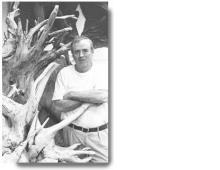
The hands are one of the first things that grab you about Walter Channing. They look like they've been chiseled, hammered, splintered, perhaps caught by a chainsaw once or twice - certainly not the hands of your typical venture capitalist. They're sculptor's hands.

Though he spends his weeks in New York putting up the capital to start innovative health-care companies, Mr. Channing has remained true to his chief passion over the years. The evidence is scattered across the expanse of his property off Scuttlehole Road: a small forest of trees impaled into the ground, roots up, in one clearing; a futuristic set of fiberglass spheres in another corner, and, nearby, an immense cherry tree suspended upside down in midair.

Inside his sawdusted studio, strange tangles of roots and trunks wind their way into feminine forms, and more polished pieces hang from the walls.

Grapes, Too

Mr. Channing seemed a world apart from the corporate realms of finance and investment during a recent visit.

"It's such a passion of mine I just can't let it go," he said of sculpting. In fact, he has been doing it for more than 25 years.

Add vintner to Mr. Channing's resume as well. The sculptor-investor has been growing more than 20 acres of grapes on his property since the early '80s. Though most of the grapes have been grown to sell to local wineries, Mr. Channing has produced some wines from the vineyard and plans to release his own label, Channing Daughters, in the near future.

The name is a nod to Mr. Channing's four daughters, who range in age from 11 weeks to 17 years ("estrogen central" Mr. Channing affectionately calls his household, shared also by his wife, Molly).

One Hundred Acres

Though sculpture has been a deep-rooted interest (so to speak), the idea of growing grapes sprouted only after Mr. Channing purchased more than 100 acres in 1977. He had visited the Hamptons since the late 1960s.

"It became my goal to get some land at some point," Mr. Channing said. He eventually stumbled upon the perfect piece and purchased the land with a neighbor and fellow artist, Jack Youngerman. Over the years, the property has evolved into a sprawling palette of sorts for Mr. Channing's creative pursuits. The sculptures that dot the property are visible from Butter Lane, as is the vineyard. The freshman vintner has even thought about building a small winery on the property.

Potatoes were the original crop. Shortly after purchasing the land, Mr. Channing began leasing portions to local farmers. "We had some good tenants and some bad tenants," he said. Eventually, "it got to be too much work," he added, and the idea arose of farming the property himself.

The First Merlots

He chose grapes. Starting with a new tractor and 100 vines he bought from a North Fork winery, he established a small vineyard. The result was a half-success. The cabernet sauvignon vines which made up half the vineyard developed crown gall and died. The chardonnay grapes flourished, however, and their harvest resulted in some 20 cases of wine.

"That was the experiment," said Mr. Channing. Subsequent efforts turned the vineyard into a working one, and Mr. Channing began to sell the grapes. He introduced the first merlot grapes on the South Fork, which were first harvested in 1991 and sold to Le Reve.

In 1993, he began to focus on producing wine from the vineyard, and he has since contracted with Lenz and SagPond vineyards to produce it. He is in the process of securing permits to market Channing Daughters as its own label.

Interests Merged

Though the whole family pitches in at harvest time, Mr. Channing relies on hired help for the day-to-day management of the vineyard. One full-time job is quite enough.

He has headed a venture capital investing business for the past 15 years, and worked as a health-care consultant for 12 years before that. The two interests have shaped an investment fund focused on health-care related ventures.

"It involves basically creating a company from scratch to go after a certain market or to develop a certain product," he explained.

The fund's most recent venture involved a company developing sophisticated computer software to provide health care professionals with accurate models of patient behavior.

"Consulting is not that much fun," said Mr. Channing. "You're just telling other people what to do. When you're in venture capital, you put your money where your mouth is."

Chainsaw Advantage

Mr. Channing has been involved in the science realm since he graduated from Harvard University's Business School and went to work with computers at the Honeywell Corporation. "It was the very early days of the computer age," he said.

The move from his native Massachusetts to New York City helped inspire an interest in sculpting, although growing up with a mother who painted and a father who worked with wood also helped.

"I always loved wood. Growing up, I had a tree surgery business," he said.

That summer job turned out to have an unexpected value. At his freshman admissions interview at Harvard, the nervous applicant was surprised to find his interviewer as interested in chainsaws as academics.

"In my day the interview was like a third of the admissions process. . .he looked and saw I had a tree surgery business and it turned out he wanted to buy a chainsaw. So we started talking about chainsaws for the rest of the interview."

It was shock, he said, to move to New York after living most of his life in a wooded area. No trees and chainsaws here.

"I had no idea what it was like to live in a dense city," he said. "There was this funny feeling of claustrophobia."

He began to tinker with woodworking to reclaim some feeling of the outdoors. The small Black and Decker arm saw he hooked up in his apartment helped, though his neighbors weren't so supportive.

Then an extraordinary opportunity came along. From his office on Rector Street in the financial district he noticed the city ripping up the old Pier 14. Thousands of pounds of well-preserved yellow pine was coming out of the water and being hauled off.

"I found out they were taking everything out to sea on barges and burning it," Mr. Channing recalled. "It made me crazy because it was good wood. That's when I started to hoard wood. People thought I was crazy."

Giant Pencils

With a basement full of timbers he salvaged from the piers, Mr. Channing bought a chainsaw and started carving. Early pieces included giant replicas of pencils, which he produced prolifically.

"Eventually I got the courage to take a couple of pieces down to a gallery in SoHo," he said. "I liked to bike around SoHo, so I saw what type of work was being shown."

His first show was at the O.K. Harris Gallery.

Mr. Channing has shown his work in numerous one-man and group shows since then, mostly in New York and on the East End, but also as far away as Switzerland.

Roots Exposed

His Bridgehampton property, though, still serves as his most welcoming gallery. Moving onto the property in 1977 was a wood hoarder's dream. Most of the trees cleared to make way for the house were saved, including the giant cherry tree.

"I collected an inventory of entire trees with roots and all the branches," Mr. Channing told his friend George Plimpton in an interview several years ago in The Paris Review, "and it was only a matter of a few minutes before I started thinking about hanging them upside down. It seems to me a very natural thing. I don't look at a tree as an object that necessarily has to be right side up. I'm just fascinated by them."

That fascination carries over into Mr. Channing's smaller, carved works. Much of the wood's natural form is left intact. Sometimes roots themselves make the piece - "roots are very provocative" - and other times they play a part, as in "Medusa Mask," a carved face with a system of roots sprouting forth and forming snakes.

Spheres In Pursuit

Another series depicts women's forms shrouded behind curtains that appear to blow against them. Lately, the sculptor has been interested in turning tree trunks into anthropomorphic columns. Last year's "Dryad in Tree," for instance, uses the natural curve of the tree toward its roots as the capital. The tree is halved and a dryad is carved in relief inside.

The giant green spheres, which turn their corner of the property into something that might have come from the movie "Sleeper," were more of a fluke. Mr. Channing had initially wanted to make the spheres self-propelled.

"I had this plan to have them roll around the property. I envisioned them popping out of the woods following people around."

A Sucker For Stumps

Mr. Channing has no problem getting wood now. He has his own stump dump of sorts on site. But that doesn't stop him from being obsessive from time to time.

After a major storm in 1988, he remembers passing the remnants of a giant oak tree that had been blown over in Sag Harbor. Most of it had been carted away, although a massive, six-ton stump remained. Unable to pass it up, Mr. Channing hired the farmer Clifford Foster to haul it to his property.

A year later he turned it into a sculpture of an "octopus and a sphinx in consort," a vision he saw in the tangled roots and trunk.

A Tree That Talks

Mr. Channing said he would like to have more time to devote to his sculpture. "It's a complicated cycle. I don't know what to do about it," he said. "There are a lot of artists who hold it against people who don't hurl themselves into the fiery pits and suffer."

At present, Mr. Channing is caught up in the wine business. Channing Daughters' 1995 merlot garnered a favorable response two weeks ago at a major industry tasting of Long Island wines in New York. Some local restaurants are eager to carry the wine once the label becomes official.

The bottle label, which carries a photo of Mr. Channing's beloved upside-down cherry tree, gives the bottle a quirkiness and individuality that reflects the sculptor, vintner, and investor behind it.

Honors For 'Comeback Albee'

Honors For 'Comeback Albee'

Sheridan Sansegundo | December 5, 1996

Edward Albee, playwright and Montauk resident, will be honored this weekend by the Kennedy Center for the Performing Arts in Washington, D.C., at the center's annual awards ceremony.

Two years ago, Mr. Albee won his third Pulitzer Prize, for "Three Tall Women," satisfying not only those who love good theater, but also everyone who loves a good comeback story - the playwright having been feted by the critics in the 1960s and early '70s, then dismissed and ignored in the 1980s.

He won a Pulitzer for "A Delicate Balance" in 1967 and for "Seascape" in 1975. No playwright, apart from Eugene O'Neill, has won more Pulitzers. But then, while Mr. Albee himself maintained a steady course, critical winds shifted.

No Time For Critics

Toward "The Man Who Had Three Arms" in 1983, Frank Rich cast some memorable barbs: "The craftsmanship is rudimentary . . . virulent and gratuitous misogyny . . . narcissistic arrogance and bile."

Small wonder that Mr. Albee, who did not attempt a New York City staging for 10 years thereafter, has been quoted as saying of critics that "the world would be a better place without them."

What is perhaps even more surprising than the playwright's ability to rebound from outer darkness to the lights of the big-time marquee is to look back and see that Mr. Albee's most famous play, "Who's Afraid of Virginia Woolf," did not win a Pulitzer.

The Barn At Montauk

The Pulitzer jury voted "Virginia Woolf" the prize, but the Pulitzer board, which has the last word, got cold feet because of the play's language and bitter candor and overturned the decision, preferring to give no drama award at all that year (1961).

The play, a terrifying revelation of a battling, angry marriage, is considered a classic of the American theater and is seldom out of production.

After its enormous success, Mr. Albee renovated an old barn in Montauk and started a foundation for younger artists, and for older ones who had been forgotten, in both visual and written arts. Every year six artists spend a working summer in Montauk at the Barn.

The foundation also ran the Playwrights Unit in Manhattan in the 1960s and early '70s and produced over 110 plays by new playwrights, including Sam Shepard, Lanford Wilson, Terrence McNally, Adrienne Kennedy, and John Guare.

It is surely for these - and other projects that Mr. Albee has under taken to keep live theater going and to help new talent - as much as for his solid return to the spotlight that the Kennedy Center will honor the playwright on Sunday.

The honors recipients are recognized for their lifetime contribution to American culture through the performing arts. In addition to Mr. Albee, the honorees this year are Benny Carter, Johnny Cash, Jack Lemmon, and Maria Tallchief.

They will be saluted at a gala performance in the Kennedy Center's Opera House, to be attended by President and Mrs. Clinton. It will be recorded for broadcast as a two-hour special on CBS television, to be shown on Dec. 26.

The Apparition

The Apparition

December 5, 1996

In the driving rain on the interstate on Sunday, a jaunty little red station wagon in the right lane sidles into the peripheral vision of a passenger in the left lane.

The wagon's driver, it turns out, is a round man in a red and white cap with a sweet and wizened-looking woman in wire glasses at his side. Both are dressed from head to toe in red.

"Whoa! Hurry up! Check this out!" the passenger tells the driver and child in the left car before the white-bearded apparition can disappear into post-Thanksgiving traffic. Catching on, he slows the little red wagon down a little, gives a meaningful wink and a wag of his finger, and then hits the gas.

As the little wagon forges ahead, its rear license plate comes into view. "ST NICK," it says. Well no fooling.

Motley Canvas

Motley Canvas

December 5, 1996
By
Editorial

A long trailer laden with Christmas trees rolled into town last week. They were trussed tightly into cones, "milled" into tight evergreen packages by a whoosh through machines that bind graceful, just-living entities into easy-to-move consumer items. The trees were destined no doubt to be cut free from their nylon bindings in a little forest encampment where freezing families eventually slog through half-frozen mud to tug on needles and gauge shape and size.

It was the day before Thanksgiving - yellow squash, harvested greens, red apples, golden wheat, and "Alice's Restaurant" on the radio. Yellow leaves still clung to an occasional tree, and pumpkins slid into rot on porches and in yards.

Where the seasons once seemed to turn slowly and seamlessly, we now see dry leaves piled against fences draped with wreaths, bright cosmos translucent with frost, chocolate turkeys next to candy canes on shop counters.

Couldn't we keep the Christmas decorations in the closet a little longer to savor the crisp sun-warmed days and to watch the colors do a slow fade into a neutral landscape of brown and gray, and, finally, snow white - the proper canvas for red and green?

Black Ice

Black Ice

December 5, 1996
By
Editorial

Anyone who was on the roads in Southampton on Thanksgiving night, and who arrived home in one piece with nothing worse than a bad scare, has much to be thankful for.

Not long after twilight, snow unexpectedly began falling along a narrow corridor from Montauk Highway in Wainscott west to the Sunrise Highway and Flanders Road. It continued for perhaps two hours, long enough to turn a 15-mile stretch of fields white, but not long enough to accumulate on the roadway.

Instead, the dusting on the road melted, and then, propelled by a drop in temperature and a sharp freeze as night came on, it turned to a thin coat of black ice. The road glistened with what looked like rain; that was the only warning of what lay ahead.

Motorists on the Sunrise, perhaps not yet attuned to the mischievousness of winter weather, encountered the slick so suddenly that skidding was unavoidable. And yet they were lucky. Had the roads been more congested there might well have been a real tragedy.

As it was, traffic skidded and slithered to a crawl past a sports car that had crumpled against a guard rail near Flanders Road. The scene sobered a lot of drivers. Farther on, near the Texaco station, there was an overturned car on the shoulder. Fifty yards to the east there was another serious accident, this time involving two westbound cars, and there was to be yet a third that night in Water Mill, a three-car pileup that badly injured a 5-month-old.

There is not much drivers can do about black ice other than be on guard. Many assume four-wheel drive will keep them safe, but they are wrong: Sports utility vehicles, like other cars, have no traction on ice. Snow, yes, but not ice.

One driver we know puts the two right wheels of the car on the shoulder in icy conditions, reasoning that the shoulder is higher than the roadbed and will provide a measure of safety. That sounds worth trying. The best advice is to stay alert and to slow down. Caution is the watchword.