
I was around 20 years old when I raised my right hand and joined the military. I went in as military police — and at the time, for a woman, there was no harder job you could choose. Combat roles weren’t open to us yet. Military police was as close to the edge as the Army would let a woman get. So that’s exactly where I went.
Training started at Fort Leonard Wood in Missouri. I didn’t know it then, but that was just the warmup. From there, I was shipped off to South Korea, halfway around the world from everything and everyone I knew, with no idea what I was walking into.
When I landed at Yongsan, the base was still alive — it’s closed now, but back then it was full of hope, adventure, and promise. And, if you knew where to look, full of danger, too. Just miles away sat the DMZ, and no one knew which day might be the one everything changed. So I trained like a soldier headed for combat, and worked like a police officer keeping the peace, both at once, every day.
Somewhere in that first year, something in me started to separate from everyone else around me. I can’t fully explain it — upbringing, instinct, something I hadn’t discovered about myself yet. But it showed up clearest during arrests. I’d sit across from someone who had just been detained, and I didn’t see a criminal. I saw a person my age who had made one decision, then another, until they woke up one day thousands of miles from home, in handcuffs, wondering how they got there.
None of us saw that coming — not them, not me. So instead of interrogating people like they were already guilty, already a case to close, I asked. I listened. I tried to understand the road that led them to that room. My arrests held up. My findings were clean. My supervisors started watching me a little closer, trying to figure out how I kept getting the results I was getting. I never understood the alternative, honestly. How do you sit across from another human being and not want to understand them?
One person noticed it more than anyone: my supervisor at the time, who I’ll call Sergeant A out of respect for his privacy. Interviews that needed to be handled delicately, processing that had to move fast without cutting a corner — he’d put me on it, and it would get done right. Eventually, he recommended me to the Army’s Criminal Investigation Division, the C.I.D. — the military’s version of the C.I.A. or F.B.I. That recommendation changed the entire trajectory of my life.
With the C.I.D. came a promotion to investigator. But to become a full federal agent, I needed a top-secret background investigation, one so deep it reached into corners of my life I never expected it to touch. That’s when I learned my parents’ immigration status could affect my own career. At the time, they were still working toward citizenship, and the military doesn’t hand out the kind of clearance that gets you into the room with the missiles to just anyone with a question mark over their family background.
By all accounts, that should have been a wall I couldn’t get past. But there was a loophole, and it was almost beautiful in how it worked. Under my job title, operating under direct supervision, I was allowed to do the work anyway — to witness it, live it, fight it — before I technically had the clearance the work required. And because of that loophole, I got to see things most people only see in movies: active, live missiles, right there in front of me. I remember standing there thinking, this is really my life right now.
From there, I moved into the drug unit task force — fast, intense, and if I’m honest, a fun ride. Then, in the middle of that chapter, I was asked to move again, this time to the sexual assault department. Let’s just say some doors are better left closed. I won’t pretend that chapter was easy, because it wasn’t. But in every interview, every case, I brought the same thing I’d always brought to the room: I tried to connect, through nothing but my willingness to actually talk to people and listen before I judged.
My career, in the end, was short-lived. But I got out exactly when I needed to.
What followed wasn’t a clean landing. For the first couple of years, I quietly struggled in ways I didn’t fully understand at the time — the kind of aftermath that doesn’t show up all at once, but slowly, where you least expect it. It took time, and a lot of honesty with myself, to even recognize what I was carrying.
The one thing that saved me, day in and day out, was my fitness regime. I didn’t know it yet, but I had found a new kind of church — I just called it the gym. There were times fitness saved me, more than once. And somewhere in the middle of all that healing, I started meeting some of the most extraordinary people, local and not, here in the Hamptons.
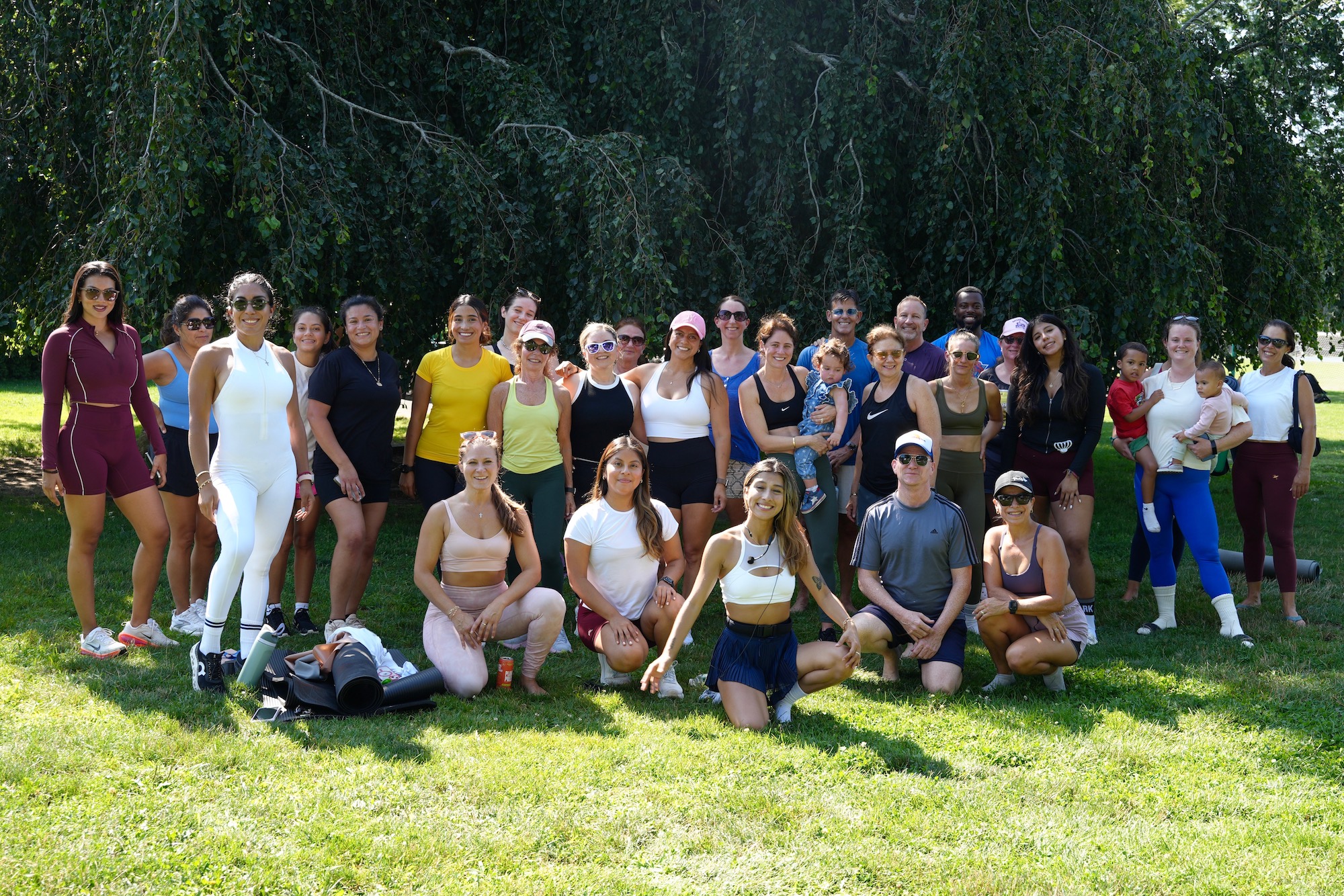
That’s how I ended up opening my own fitness studio, formerly known as 937 Fitness, during the pandemic. It’s grown since then, and today it’s known as 11937 Fitness. Along the way, I found coaches with that same fire I remembered having, and I invested in their certifications and training. I remembered how much I wished someone had done that for me, so I did it for them.
Now, six years into running this gym, I’m realizing that just being a trainer isn’t enough for me anymore. I want to be clear about one thing: Privacy is my top priority with every client I’ve ever worked with, so I won’t share specifics. But I will say this — this journey has led me toward wanting to pioneer something new. Something that supports people mentally, physically, and emotionally, session after session.
I keep calling it “training therapy,” even though I’m not sure that’s the perfect name for it yet. The idea, at its core, is simple: Movement and mental health don’t have to live in separate rooms. Traditional treatment — therapy, medication, all of it — plays a real and important role, and I’d never suggest otherwise. What I’m interested in is what happens when you add another layer alongside it, the kind of healing that happens through consistent, guided physical movement, done with real attention to the person doing it. I’ve seen it firsthand, in my own life and in the people I train. Sometimes the body can open a door the mind isn’t ready to walk through on its own yet.
That’s part of why I’m back in school now, working through an undergraduate psychology program online. Because I keep coming back to the same question: Why can’t you practice tennis and therapy? Horseback riding and therapy? Strength training and therapy? I don’t have all the answers yet — that’s exactly why I’m studying. But I’ve seen enough, in myself and in the people who’ve trusted me with their own healing, to believe this idea is worth building.
I didn’t know, stepping off that plane in Yongsan at 20 years old, where any of this was leading. But I know now that every version of me — the soldier, the investigator, the trainer, the student — was building toward the same thing. Understanding people. And I’m not done yet.
Jennifer Rosas lives in Springs.