A long-contaminated tract of land behind the business district in Sag Harbor could become the site of new mixed-use development, but the plan is facing pushback from residents who fear the project could not only change the character of the village itself but disturb contaminants and threaten public health.
“It’s like building a ghetto in the middle of Sag Harbor,” Julie Moses, a village resident, said of the affordable housing component of Adam Potter’s Bridge Street development at a state-led public hearing last week on the cleanup of the site, which is contaminated with forever chemicals and other dangerous pollutants.
Mr. Potter’s three-story building would have 28 units that would be sold at market rates and 28 affordable units, along with ground-floor commercial space.
“This is an inappropriate and dangerous project,” Ruby Jackson, a village resident said. “Who thinks Sag Harbor needs more development?” she asked the standing-room-only crowd.
For his part, Mr. Potter said these issues — rather than the environmental constraints on the property — are at the heart of the opposition to his project.
He said opponents’ attitude seems to be, “We definitely need this . . . but don’t put it there,” and believes his project wouldn’t be facing the same pushback if it were “high-end luxury” instead of a mix of affordable and market-rate units.
But the New York State Department of Environmental Conservation is less concerned with the development of the lots and more concerned with the cleanup of the properties, which have been contaminated with coal tar.
The cleanup proposal created by Mr. Potter and his team was the impetus behind last Thursday’s public hearing. State authorities asked members of the public to bring their ideas and input, which would be reviewed and included in the plan.
Contaminated soil would have to be dug out, dewatered, and removed, a process that could take months.
If the D.E.C. approves Mr. Potter’s proposal, cleanup can begin. Development on the site could not start until the village planning and zoning boards approve variances and special permits requested by Mr. Potter, Sag Harbor Village Deputy Mayor Jeanne Kane said at the meeting.
Regardless, Mr. Potter said by phone over the weekend, “we’re putting a shovel in the ground to remediate this year.” He said once the state approves the plan, the village cannot stop the cleanup process.
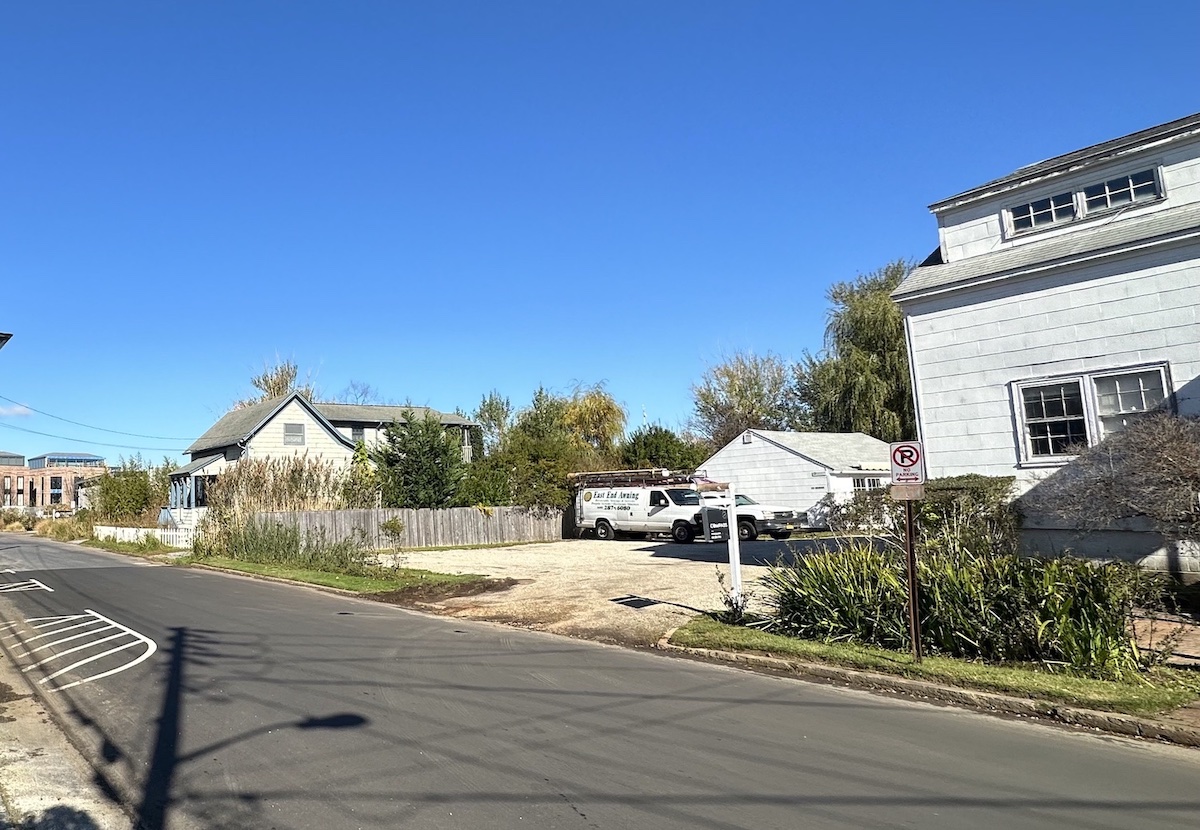
Mr. Potter, the owner of the lots at 5, 7, and 11 Bridge Street, is planning to tear down the existing buildings on the lots to make way for an 81,000-square-foot building at 7 and 11 Bridge Street, with around 50,000 square feet devoted to housing. On the first floor, 8,500 square feet would be set aside for service-use commercial space. Forty-four parking spaces at 7 and 11 Bridge Street have also been proposed.
Five Bridge Street, known as the gas ball lot because of the large structure that occupied it many years ago, is also part of the proposed redevelopment. Mr. Potter leases the gas ball lot from National Grid in a 99-year deal.
The buildings at 7 and 11 Bridge Street would have to be torn down to clean up the property. Those buildings, according to D.E.C. officials, hindered the initial cleanup of the property and “impacted groundwater remains under the building” according to Matthew Ayers, who is reviewing the project for the D.E.C.
Also wading into the debate are state and county officials including Suffolk County Executive Ed Romaine and Assemblyman Tommy John Schiavoni, who wrote letters and appeared in person last week at the hearing. The front row of the meeting room was occupied by village board members, who hired Karen Mintzer, a Manhattan environmental lawyer, to review the project.
Ms. Mintzer and the village expressed concerns about several of the plan’s details and asked the state to consider leaving the record open for another month — until Oct. 5 — for additional public comments. On Tuesday, the D.E.C. said it would be announcing an extension of the comment period tomorrow.
While Mr. Romaine did not discuss the nature of the proposed development, his letter called for “immediate mitigation” of the pollution on the site. He firmly requested that National Grid, which is accused of polluting the properties with a manufactured gas plant consisting of three holding tanks, pay entirely for the site cleanup.
“Is this a de facto demolition permit?” Mr. Schiavoni asked the state and county officials. They said that a permit to tear down the buildings would have to be issued by the village’s Building Department without any input from county or state officials.
Tearing down the buildings there has faced some scrutiny, with some residents asserting they may be historic. But according to Mr. Potter, while a consultant did an initial study on the buildings, they are not and have not been included in the historic district nor have they been determined to contribute to other historical buildings or districts.
“It is not contributing and it’s not historic, and it’s not in the historic district,” he said. If any of those conditions did exist, the Building Department would be barred from issuing a demolition permit for the buildings.
While residents say “not in my backyard,” Mr. Potter is saying there is a desperate need for affordable housing on the East End, and he plans to make a dent in it.
But Mr. Potter said many residents used the platform that night to decry the development itself rather than the cleanup, which he says are two separate matters.
Mr. Potter said that the pollution, which he calls “ Erin Brockovich chemicals” is known to exist on the gas ball lot (it is a recognized Superfund site) but that pollution has spread to the other two lots. A D.E.C. analysis recognized the spread of the chemicals, which along with PFAS include lead, mercury, and cyanide.
However, the D.E.C. notes that National Grid’s own cleanup of the gas ball lot as well as 11 Bridge Street included an environmental easement and other safeguards to protect from further contamination.
The state says that tearing down the existing buildings would trigger the need for new controls to be put in place.
According to a D.E.C.-issued document, “the site does not pose a significant threat to public health or the environment” because of those controls.
“We live within that plan now,” Richard O’Brien, a Bridge Street resident, said, but worried that disturbances on the lot for what he called an “irresponsible development” could put that in jeopardy.
“Right now, it’s safe,” said Randolph Croxton, an architect and preservationist who serves on the board of the civic group Save Sag Harbor, and when the project is done, it would presumably be safe, but “what happens in the interim?” he asked.
Jeffrey Bragman, an attorney hired by Save Sag Harbor, said the protections in place may not have been enough. He said that if the contamination did indeed spread onto neighboring properties, it did so under the state’s watch. He wondered “how thorough an investigation was made?” during the initial cleanup of the site in 2009.
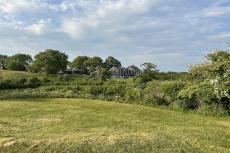
It’s the flooding in the area that concerned many of the residents who spoke at the meeting. Mr. Croxton said the area used to be called James Meadow, a low-lying swamp. He said the land has “continuously tried” to get back to that natural state. Flooding there is “unpredictable,” he said.
April Gornik, who works with the Sag Harbor Partnership, spoke about rising water levels. “It’s typical, common. It’s not aberrant anymore,” she said of chronic flooding in the area.
She asked the state to “stand with us” in opposition to the project.