“Good news,” Alex Kriegsman, a Sag Harbor attorney, told the village planning board last week. “This is the easiest application you will ever have to review.”
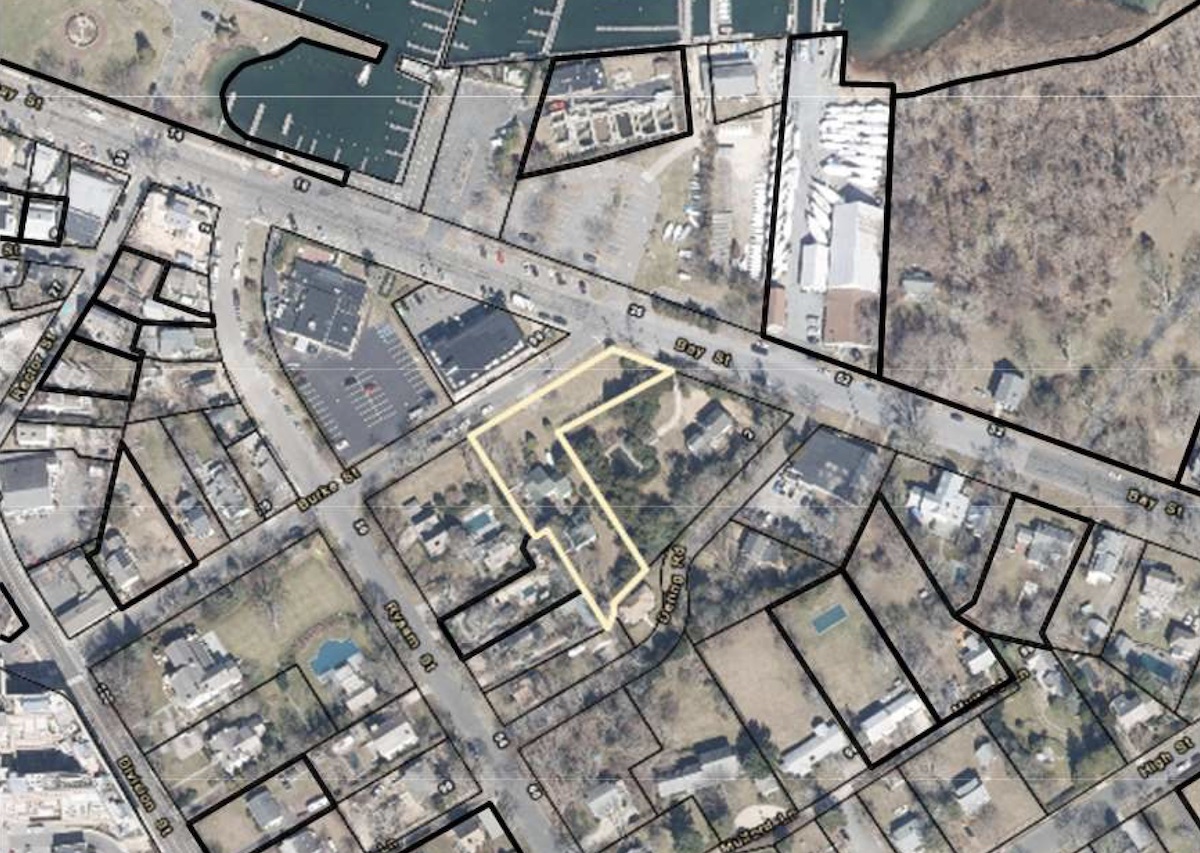
He was speaking of the application of the so-called Maycroft Club, an offshoot of the Sag Harbor Yacht Club seeking to convert an existing house into a facility to be used in conjunction with the yacht club for meetings and offices.
A pool has been proposed, and the plan involves bedrooms for staff and a small kitchen. A parking area is planned. The proposed club sits across Bay Street from the yacht club and is zoned residentially.
“What they are asking you to do is illegal,” Mr. Kriegsman said, going on to call the proposal outside the jurisdiction of the planning board. He was hired by Frank Coniglio, a neighbor of the property.
At issue are the existing buildings, one of which has been called a contributing historic structure.
While Mr. Kriegsman said of one of them that it is “undisputed that this is a contributing [historical] structure,” it seemed to be up for debate as to whether another on the site is. A barn to the rear of the property is reported to have been built in 1983, according to Robert Camerino, the secretary of the yacht club.
“The barn is not historic,” Mr. Camerino said, adding that it is a pole barn built by George Butts, a former village mayor.
Drew Harvey, a member of the planning board, told members of the club that they should be prepared for the village’s architectural review board to tell them the house at the site must remain standing. He suggested preparing plans that would incorporate it into the development.
Work-force housing there could be complicated, Mr. Harvey said, adding that once the legalities are sorted out, he would not object to the units.
At a previous meeting on the Maycroft Club in July, Jeffrey Bragman, who was representing Mr. Coniglio, objected to the staff housing, saying that as a matter of law the club could provide living space for only one owner.
John Shaka, the planning board’s chairman, said he was not expressly against the staff housing, but added that it seemed ironic to him that the club is proposing to tear down a building that could provide housing only to ask the board to approve housing.
The village building inspector would ultimately make a determination on whether the work-force housing is a permitted use. That decision is in the works, according to Tiffany Scarlato, the yacht club’s attorney.
A neighbor on Rysam Street, Alex Matthiessen, said the yacht club has been a good neighbor to him, but he worried that unforeseen issues could arise in the future, even with the “good faith” of the club’s board. He shares a property line with the proposed club.
“It’s quite nice right now,” he said. “I’m hoping it stays that way.” But he admitted that the proposal “feels a little too commercial” and urged the yacht club to “really sit down with us,” the neighbors.
Despite several objections, some in attendance at the Aug. 25 meeting spoke in favor of the application, including several neighbors.
“I would certainly have a reason to be against it. I am not,” said John Evans, a member of the yacht club who lives on Bay Street, two doors down from the proposed club. He told the planning board the yacht club is committed to stewardship in the village and at their new facility. “One hundred years of stewardship,” he said, that has involved community fireworks, a scholarship fund, and waterfront protections.
That stewardship goes even deeper, Richard Hand, another club member, told the board. The owner of an excavating company in the village, he called the club “the heart and soul of Sag Harbor that’s been lost over the years little by little.”
For now, the planning board said the review would be extended further into September. Ms. Scarlato said she would submit the application as a discussion item to the A.R.B.