Despite the upcoming Thanksgiving holiday, residents of Sag Harbor showed up en masse Tuesday for a final chance to comment on Adam Potter's plan to redevelop 5, 7, and 11 Bridge Street.
The village planning board allowed the public a final chance to speak on the plans that day, and after a work session scheduled for this coming Monday, the board will issue its findings and in turn decide whether to approve or deny the plan.
Save Sag Harbor, a civic organization, and Group for the East End, an environmental nonprofit, had rallied residents to show up on Tuesday to voice opposition to the project. Many say it is too ambitious an undertaking for properties that are known to be contaminated with forever chemicals linked to their historic use as a gas manufacturing plant.
It appears those messages reached their intended targets, as a standing-room-only crowd turned out to speak — some for and some against the project.
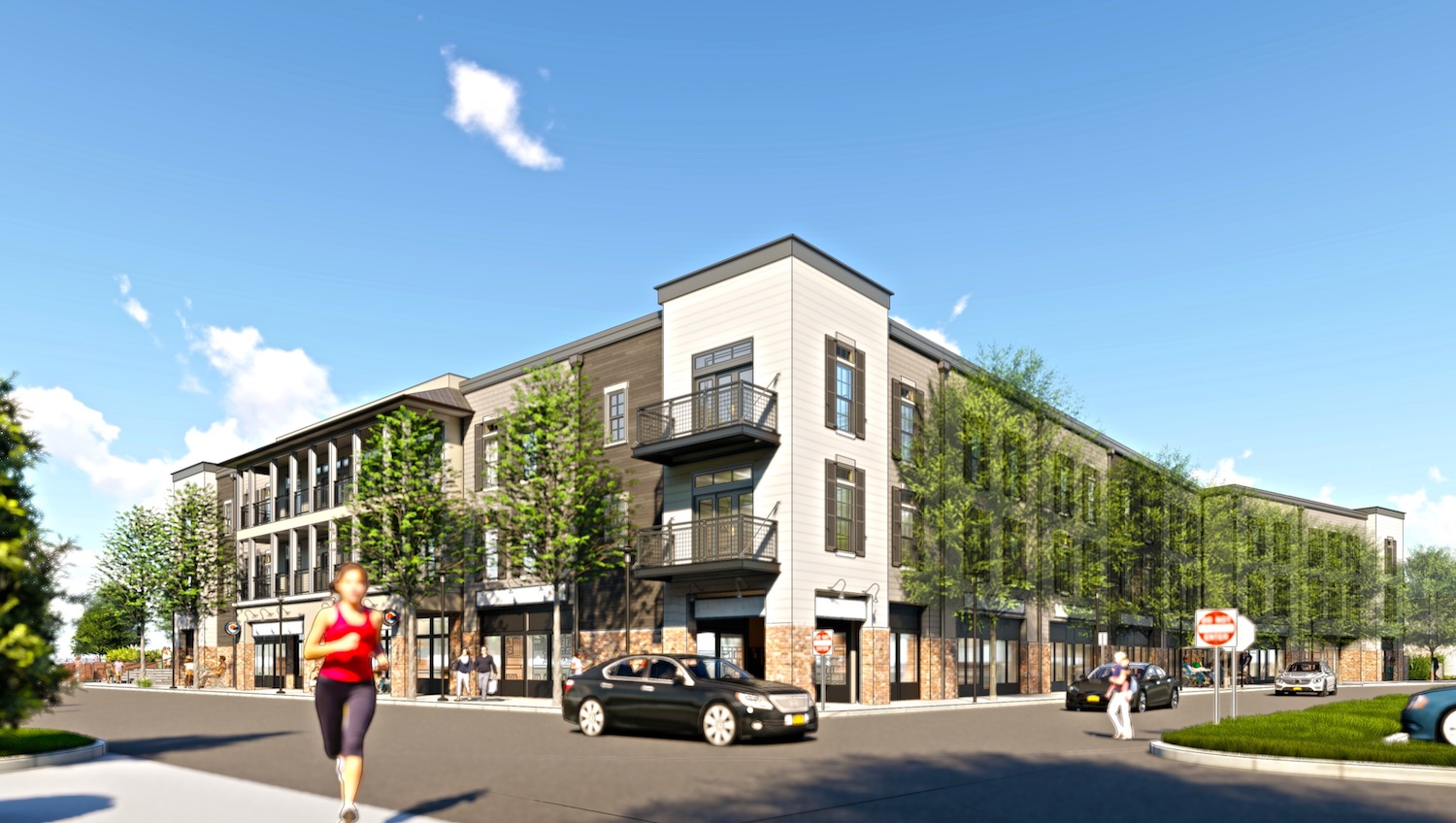
Mr. Potter is planning to tear down the existing buildings on the lots and build a three-story, 81,000-square-foot building at 7 and 11 Bridge Street, with around 50,000 square feet devoted to housing. Twenty-eight units would be offered at market rate and 20 would be affordable. On the first floor, 8,500 square feet would be set aside for service-use commercial space. Forty-four parking spaces for numbers 7 and 11 Bridge Street have also been proposed.
Mr. Potter cites the affordable housing proposed for the property as one of the most important aspects of the project. The village and towns often point to the lack of such housing, but "nothing has been done about it," he said.
But the addition of 20 affordable units may not be enough for some residents to give their nod of approval. Tim Culver, a former village board member, said Mr. Potter is attempting to "bribe the village with work-force housing." Likewise, Bob Weinstein, a director of Save Sag Harbor, called the affordable housing "a sort of icing to attract people." He suggested that Mr. Potter use two houses on the lot planned to be demolished as affordable housing instead.
However, two residents speaking in support said the units are much needed. Jack Pearson, who lives in Water Mill, said young families moving to the area need assistance. In order to accomplish that, "It is important to be open to change."
That change, according to Sean Deery, who also spoke in favor of the project, is necessary. He recalled a time when Sag Harbor was a functioning whaling town with waterfront factories and industry. He accused Save Sag Harbor of protecting an "elite shopping destination."
Jerome Toy, a former planning board chairman who presided over the redevelopment of the Bulova watchcase property, where no affordable housing was included, agreed that affordable housing is needed. "It's a horrible situation," he said, but added that he thinks Mr. Potter's proposal would not make a dent in the problem. "It's all profit."
Number 5 Bridge Street has been colloquially referred to as the "gas ball" lot as it is the site of the last remaining vestige of the gas plant, a large sphere that was torn down in 2008. Mr. Potter holds a 99-year lease with National Grid, the owners of the property, after outbidding the village for the lot several years ago. Since then, he has sublet the property to the village for use as paid public parking.
In no uncertain terms that night, Mr. Potter told the board and the public that after his lease with the village expires in April "it will not be renewed," regardless of the outcome of the project, taking nearly 100 much-needed public parking spaces out of the mix.
Those comments angered some in crowd that night.
Mr. Culver said Mr. Potter is "trying to intimidate the village" by rescinding that lease and suing members of several of the village boards reviewing the project, including John Shaka, the chairman of the planning board, and John Ellsworth, the engineering consultant hired by the village to review the plans.
Janis Donnaud agreed with Mr. Culver, saying Mr. Potter is "trying to hold the village over a barrel." She further accused Mr. Potter of "attacking this village." Another resident who lives on Bridge Street reminded the crowd, "Mr. Potter doesn't live in this town."
"How dare he do this to Sag Harbor Village?" Dawn Smith said after commenting that the three-story building would "dwarf" two waterfront condos she said were themselves a mistake.
One resident, Michael Duke, drew laughter from the crowd when he compared Mr. Potter to the fictional character Henry Potter from the movie "It's a Wonderful Life," in which Mr. Potter is a coldblooded villain and wealthy banker.
The planning board has been tasked with reviewing a special use permit to allow the building in a zone where 3,500 square feet is the maximum allowable. The village's zoning board of appeals is also reviewing the application but is in a holding pattern while waiting for the planning board to render a decision. The application has been winding its way through the review process since 2024.
The size of the building also came under fire, with Peter Ginna of Save Sag Harbor saying "it's going to loom." He brought in several renderings of the building in context with the neighborhood in which it appeared to be much larger than surrounding buildings. Richard O'Brien, who lives on Bridge Street, said, "The word 'impact' jumps right off the page to me."
In addition to the size of the building, concerns arose over the environmental impact of the development. Jennifer Hartnagel, the director of conservation advocacy for the Group for the East End, said that while Mr. Potter has offered mitigation, it "simply cannot be mitigated" due to its size and impact. "It really boils down to it's a square peg, round hole situation," she said.
But to Mr. Potter, leaving the chemicals in the ground is not an option. "It's very similar to leaving a landmine," he said.
At the end of October, board members accepted a 152-page final environmental impact statement, starting the clock on the 30 days they have by law to make a determination on the project.
In the meantime, Mr. Potter is waiting for the state's Department of Environmental Conservation to approve what is known as a brownfields cleanup plan for numbers 7 and 11 Bridge Street, where chemicals have spread to the soil.
The D.E.C. and the county Health Department held a public hearing at the end of August to receive input on the plan, in which contaminated soil would have to be dug out, dewatered, and removed in a process that could take months. At that time, Mr. Potter told The Star that he was confident the state would approve his plan and he would begin remediation before the end of the year.
As of this week, there has been no decision rendered by the state. The board will meet again for a special session on Monday at 5 p.m.