
Want Deeper Picture of Historic Farm

Want Deeper Picture of Historic Farm
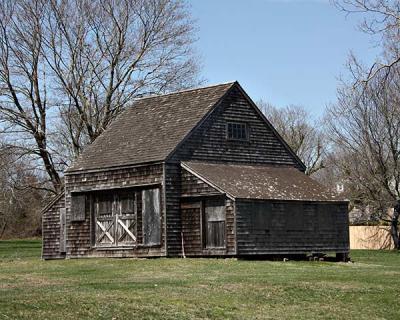
Durell Godfrey
By
Joanne Pilgrim

An archeological survey of close to three acres at the corner of East Hampton’s North Main and Cedar Streets could reveal the locations of wind-powered sawmills once on the site, which was a town common from about 1700 to the mid-19th century, and could turn up other artifacts and information about what once took place there.

The property was purchased in 2005 by East Hampton Town with the community preservation fund. Through the efforts of a committee of volunteers, a Revolutionary War-era house there has been set up as the East Hampton Historical Farm Museum, depicting the daily life of an East Hampton farm family in the early 1900s.

The land was once referred to as the “mill lot.” According to research by Robert Hefner, a historical consultant for East Hampton Village and Town, three wind-powered sawmills stood there, in succession, between approximately 1630 and 1860. Across the street was the residence of the Dominys, a family of skilled woodworkers — millwrights, cabinetmakers, and clockmakers — who used the mill lumber for boards, framing timbers, and the raw material needed for their finely crafted items.

There was also a blacksmith shop at the common, Mr. Hefner said this week, creating a sort of “industrial center.”

In a proposal under review by the East Hampton Town Board, Allison Manfra McGovern, an archeologist and professor, has suggested doing an archeological survey of the property that could pinpoint the sawmills’ locations, determine if the site might be eligible for inclusion on the National Register of Historic Places, and guide future decisions about management and use of the property.

Dr. McGovern’s inquiry, at an estimated cost of $5,670 for a first phase, would begin with archival research, a review of historical documents such as maps, histories, and photographs, to determine past land use in the area and define the locations of any already documented cemeteries, roads, buildings, and Native American settlements.

Then a series of test pits would be dug, by shovel, on an evenly spaced grid — 16 per acre in undisturbed sections of the site as well as more tightly spaced test holes around the house and barn, some 63 to 68 test holes in all, Ms. McGovern estimates in her proposal.

In addition to the shovel test pits, two or three larger squares would be excavated. After the soils are screened and, if deemed necessary, analyzed as to sediments, botanical remains, and faunal materials, the excavations will be refilled.

Any artifacts found will be cleaned, classified, and catalogued in the lab and then returned to the farm museum for display.

The archeologist says in the proposal that “if significant intact archeological deposits are encountered, or if the foundation remains of the mill are located, recommendations will be made for either preservation of the site or additional archeological investigations. . . .”

The first phase of the survey, she says, will take about six weeks, including preparation of a final report, barring rain, snow, or a freeze.

Grants are available for such projects, Ms. McGovern said in her proposal. Additional archeological investigations may be recommended if intact archeological features are found on the property.

The cost of that is difficult to determine, she said, and would depend on whether a paid crew is used or if students or other volunteers would be relied on, but she provided an estimate of just over $7,000 up to $11,550.

  While an 1865 survey depicted a small drawing of a windmill on the area of the site, the mill no longer existed at that time, Mr. Hefner said this week.

According to Mr. Hefner, the 1715 Dominy house, which stood at the southwest corner of North Main Street and Cedar Street, contained Nathaniel Dominy’s woodworking and clock shop. It was demolished in 1946.

Five of the six windmills built on Long Island by Nathaniel Dominy between 1795 and 1815 still survive, Mr. Hefner has said, including East Hampton’s Gardiner Mill and Hook Mill.

In the early 1870s, Selah Lester bought the mill lot from Sybel Dominy for $300. Around 1876 he had the house that still stands on the site, which was owned by Capt. Jonathan Barnes, moved by sled from Old Montauk Highway, Amagansett, to the site.

According to Ms. McGovern, Selah Lester found work aboard whaling ships that sailed from Sag Harbor. He also worked as a fisherman and a farm laborer, and farmed his own small lot.

When he died, his son Talmage Lester lived there. Other Lester descendants inherited the property.

Over the last several years, the town spent $200,000 from the community preservation fund to restore the house, and a restoration of the barn is planned.

At the turn of the 20th century, the Lester family was raising seven children in the two-bedroom Cape Cod-style house, which was built in the style of Miss Amelia’s Cottage in Amagansett.

It is now filled with artifacts hailing from a number of East Hampton’s old families, including numerous pieces of furniture and other items salvaged from the Tillinghast barn in East Hampton after that property was sold and before the buildings there were demolished.

The museum, which has seen 500 visitors since it opened last fall — with a winter hiatus in between — is open on Tuesdays from 1 to 3 p.m. and on Saturdays from 10 a.m. to 4 p.m.

Government Briefs 06.25.15

Government Briefs 06.25.15

By
Joanne Pilgrim

East Hampton Town

Coastal Resiliency Committee

A group of 10 coastal planning experts appointed last week to a Town of East Hampton Coastal Resiliency Project Advisory Committee will guide the town in its development of a Coastal Assessment Resiliency Plan, called CARP, over the next two years.

The plan will outline a long-range strategy for dealing with coastal issues so that the town will be better prepared and more resilient in the face of issues with erosion, sea level rise, and coastal flooding. It will be in keeping with East Hampton’s local waterfront revitalization plan, according to a recent press release.

The committee, comprising experts at the local, county, and state level, will help with the scientific analysis needed to underpin effective coastal management decisions.

The project, pursuant to the recent receipt of a $250,000 New York State grant, will involve the public in order to address current and future needs, and allow the town to partner with the Army Corps of Engineers as it shapes its Fire Island to Montauk Point coastal proposal, according to Town Councilman Peter Van Scoyoc, the liaison to the Natural Resources Department.


New Building Inspector

With a vote of the town board last Thursday, Ann Glennon was appointed as the town’s principal building inspector, and head of the Building Department, on a provisional basis, retroactive as of June 10.

Ms. Glennon will receive a $70,000 annual salary.

A Request at Ditch Plain

A Request at Ditch Plain

By
T.E. McMorrow

The East Hampton Town Zoning Board of Appeals, which recently turned down two applications to increase the size of oceanfront dwellings at the Montauk Shores Condominium at Ditch Plain, heard yet another application to replace one of the 27 oceanfront units there with a much larger one Tuesday night.

Mike Lucas, the applicant, wants to replace his small abode with one that is 769 square feet and to build 350 square feet of decking as well as a small shed. In addition to seeking a variance to increase the building’s size, he seeks a variance with regard to the setback from the crest of the bluff.

Britton Bistrian, representing the applicant, brought the board’s attention to what she sees as a discrepancy in the town code regarding the required setback from the bluffs. It appears, she said, that the code requires a 100-foot setback rather than 150 feet, which is the current standard of the town’s planning department. The matter was left open and Elizabeth Vail, a town attorney, will investigate the question.

Two of Mr. Lucas’s neighbors spoke. Richard Carvell, who lives across the narrow road behind the beachfront structures, told the board that allowing such expansions would create a fire hazard, as well as create the potential for additional debris in the event of a catastrophic storm.

He also criticized the seven-member board of managers of Montauk Shores, as did another neighbor, Richard Adler. Mr. Adler said the original prospectus for what was then a trailer park showed structures limited to 50-by-12 feet. It is obvious that has long since been ignored. “The process is flawed, and needs improvement,” Mr. Adler said. “There is no proof that a vote was taken.”

 However, John Whelan, the Z.B.A. chairman, wasn’t interested. “This board is not going to jump into your inner feud,” he said.

As with the previous applications, board members expressed concern about the condominium’s septic system. It apparently has been decades since its last upgrade.

In the end, the board agreed to keep the record open. The Z.B.A. wants documentation about the condition of the septic system from the condominium’s board and also wants documentation that the proposed structure is compliant with the Federal Emergency Management Act, among other issues.

Government Briefs 06.18.15

Government Briefs 06.18.15

By
Joanne Pilgrim

East Hampton Town

What’s Next for Boys Harbor Mess Hall?

East Hampton Town will ask the regional community preservation fund opinions bureau to weigh in on the future of the former Boys Harbor camp property in East Hampton, which was purchased by the county and the town using C.P.F. money.

A property management committee has discussed rehabilitation of the dining hall building in stages, according to Councilman Peter Van Scoyoc, a liaison to the group, and is seeking a town board decision. The building would be used for recreational activities.

Supervisor Larry Cantwell wondered whether buildings on C.P.F. properties can be used for recreation, and Mr. Van Scoyoc suggested seeking a written determination from the bureau, which helps municipalities to comply with the preservation fund program.

The councilman noted that the land was bought for the express purpose of recreation, along with the preservation of open space. While using money from the preservation fund to rehab the mess hall might not be allowed, he said, the recreational use should almost certainly be approved.


Wastewater Advisory Committee

Members are to be appointed tonight to an advisory committee that will help town officials assess the next steps in developing and implementing strategies to address wastewater, for which a comprehensive management plan is being developed.

A wastewater management project advisory committee will have representatives from the Montauk and Amagansett Chambers of Commerce, the East Hampton Business Alliance, the East Hampton Ladies Village Improvement Society, and the Nature Conservancy, along with the following individuals: Christine Ganitsch, Peter Wadsworth, Dan Gulizio, who is the Peconic Baykeeper, and Laura Tooman, representing New York State Assemblyman Fred W. Thiele Jr.

East Hampton Town is expected to split the cost, with East Hampton Village, of a water quality improvement study of the Hook Pond watershed, which straddles the town and village jurisdictions. Lombardo Associates, a consulting firm that has been working on the town’s comprehensive wastewater management plan, will be hired to survey the pond’s sediments and to determine potential remediation efforts. The total cost will be $14,788. J.P.


Southampton Town

Two Endorsements

Two Southampton Town councilwomen seeking higher elected office have received endorsements this week.

EMILY’S List, a nationwide organization that supports pro-choice candidates, has endorsed Supervisor Anna Throne-Holst to represent New York’s First Congressional District, a seat held by Lee Zeldin, who is serving his first term. The organization has criticized Mr. Zeldin for what it called an “anti-woman, anti-family record.”

In a statement, Stephanie Schriock, president of EMILY’s List, called Ms. Throne-Holst, who was elected to the town board in 2007, “a committed public servant who is about getting things done for Long Island women and families to have a fair shot.” The election will happen in November 2016

The Patrolmen’s Benevolent Association of Southampton Town has endorsed Bridget Fleming, a five-year town councilwoman seeking to represent the South Fork and Shelter Island in the Suffolk County Legislature. In a letter to Ms. Fleming from the P.B.A., which represents patrolmen in the largest police force in the legislative district, the organization said, “your immediate approach to community needs and willingness to give of yourself sets you apart from any other candidate.” Election Day is Nov. 3.

New York State

Sea-Level Rise Meetings

The New York State Department of Environmental Conservation has until Jan. 1 to adopt a regulation establishing the state’s official sea-level rise projections, and the D.E.C. will hold a series of meetings to hear public comments on those projections over the coming week. 

The closest will be at Wertheim National Wildlife Refuge in Shirley on Tuesday starting at 1 p.m. D.E.C. staff will describe the requirements of the 2014 Community Risk and Resiliency Act and scientific information it is using to set up its sea-level rise program. The D.E.C. has said that these official sea-level rise projections will serve as the basis for far-reaching policy decisions and will be available to local governments concerned with coastal flooding and other threats.

Additional meetings will be at 7 p.m. Tuesday at Operation Splash in Freeport, Wednesday at Hunter College in Manhattan, and next Thursday in Albany at the D.E.C. headquarters. Those intending to be present for the Albany session have been asked to register in advance at [email protected]. That meeting will also be available for online participation via WebEx and to those who would like to join by phone. Details are at dec.ny.gov.


Help With Affordable Housing

State legislation that would authorize all five East End towns to establish funds for the benefit of residents seeking affordable housing has passed the Senate, according to the bill’s sponsor, Senator Kenneth P. LaValle. It is now to be considered by the Assembly.

If passed, the townships could establish a dedicated fund that would be used to increase “work force” housing in various ways, such as the provision of low-interest loans to first-time homebuyers, the construction of community housing, and the establishment of partnerships with the private sector to provide housing.

“The availability of affordable opportunities for moderate-income and working-class residents is in critically short supply across Long Island and especially on the East End,” Mr. LaValle said in a press release. The shortage, he said, results in a brain drain of young people from the area; difficulty for employers finding and retaining employees, a lack of volunteers for local emergency services, traffic congestion caused by workers who commute into the area, and residents living in substandard or illegal conditions, or in motels intended for tourism.

Housing plans established pursuant to the legislation, should it become law, would have to adhere to “smart growth” principles, which require proper sewage infrastructure, conservation measures, and the availability of transportation. Towns would have to allow voters to weigh in on the adoption of the housing plan and the creation of a housing fund, which would be financed by both state and local money.


Veterans Exemptions Increased

State legislation co-sponsored by Assemblyman Fred W. Thiele Jr. and Senator LaValle, which would allow local municipalities to increase the exemptions from property tax offered to veterans, has been approved.

The state legislators said in a release that increases would have a particular impact in towns such as those on the East End, where assessed values are higher than those in other parts of the state, and would help veterans maintain ownership of their homes.

New York has some of the highest property taxes in the nation, Mr. Thiele noted in the release, resulting in a number of veterans being forced to relocate to states where both property taxes and the cost of living is lower.

About Funds for Farmers

About Funds for Farmers

By
Britta Lokting

Farmers and agriculturalists looking for additional capital to jump-start or stimulate their operations will want to know about a free workshop happening on Tuesday at Suffolk Community College.

The event, from 9 a.m. to 1:30 p.m. with breakfast and lunch included, will offer advice about both traditional and alternative sources of capital. Speakers will give tips for success, discuss how to expand, outline different types of loans, and discuss financing based on individual needs.

Afterward, there will be an opportunity for one-on-one meetings with the organizations sponsoring the workshop, which include the Federal Reserve Bank of New York, Empire State Development, the New York State Department of Agriculture and Markets, and the Long Island Development Corporation.

In other news of interest to agriculture or aquaculture companies, applications are now available for a cost-sharing program introduced last month by the Peconic Land Trust, which was the recipient of a $1 million state grant. Farmers or not-for-profit organizations in Nassau or Suffolk Counties that have a minimum of $2,500 in equipment and infrastructure costs are eligible to apply. Successful applicants can seek reimbursement for up to 20 percent of the purchase of new or used capital equipment and infrastructure.

Applications will be accepted on a rolling basis until May 28, 2018, or until the Land Trust’s grant is exhausted. Luke McKay or Thomas Hobson at 283-3195 or AgGrant@PeconicLand­Trust .org can provide application forms.

Question Sticker Use for East Hampton Contractors

Question Sticker Use for East Hampton Contractors

By
Joanne Pilgrim

A proposal to drop a requirement that home improvement contractors attach stickers to their cars attesting that they hold East Hampton Town licenses did not get a stamp of approval this week from Betsy Bambrick, who heads the town’s Ordinance Enforcement Department. The stickers are a “valuable resource to code enforcement,” she said.

The proposed changes include an increased requirement for continuing education — from five to ten hours in the year a new applicant seeks a license — and a change to the period of validity for licenses, from one year to two.

Contractors must have a copy of their town license at job sites, and the law has required that each vehicle “associated” with the business — as in, driven by employees to the site — have a town-issued sticker.

Revisions to the town code on home-improvement contractor licensing had been developed by Michael Sendlen­ski, an assistant town attorney, and discussed by the town board at the suggestion of the town-appointed licensing review board. They were designed, Mr. Sendlenski said at a June 9 town board meeting, to make the law simpler and to increase its enforceability.

 The requirement that stickers be affixed to workers’ vehicles can be a problem, Roy Dalene and Britton Bistrian, members of the review board, told the town board during a discussion on Tuesday. They said contracting businesses’ employees and subcontractors change often. Thus, Mr. Dalene said, a worker may have a sticker on his or her vehicle that was issued by a former employer, and it may not indicate whether the main contractor has a valid license.

“We didn’t find that the sticker added any value in terms of enforcement,” he said.

But Ms. Bambrick disagreed. Contractors and members of the public who have seen workers at job sites whose vehicles lack the stickers have notified her department, she said, providing a “jumping-off point” for investigations into whether the workers have the necessary town licenses.

So far this year, Ms. Bambrick said, her department has had 83 cases concerning contractor licensing to look into, and 43 citations have been issued. In April of 2014, the department mounted an initiative to check contractor licenses, and opened 51 cases. Six tickets for violations were issued, and, Ms. Bambrick said, “We were able to get dozens of unlicensed contractors into the clerk’s office to get their licenses.

Motel Bars, Taxi Fines on Tonight’s Agenda

Motel Bars, Taxi Fines on Tonight’s Agenda

Taxis dropped a group at Cyril's on Napeague Saturday afternoon.
Morgan McGivern
By
Joanne Pilgrim

A proposed law that would keep some motels and resorts from adding a new bar or restaurant to their facilities will be the subject of a hearing Thursday night before the East Hampton Town Board.

In order to “protect the surrounding neighborhoods,” the legislation would prohibit motels in residential areas from adding new “accessory” restaurants or bars, though existing ones would be allowed to keep operating.

In other zoning districts, motels that wish to add a bar or restaurant would be required to undergo town planning board review to obtain a special permit and would have to meet a set of specific standards outlined in the new law.

These standards would limit the area to be used and require that outdoor seating areas be set back twice as far from rear or side yard property lines as is currently required under the code when the neighboring lot is residential. Screening would be required.

Only resorts or motels with at least 25 rooms would be allowed to add a restaurant or bar, and the new facility could only be sited in the business’s main building, not in a freestanding space.

According to the proposed legislation, restaurants and bars at motels have traditionally been viewed as amenities for motel guests. But, it says, they have “caused negative effects to the character of the community, quality of life of the neighbors, and created public health, welfare, and safety concerns by becoming less accessory and growing into a second principal use” at motel properties. Those in residential districts, the town has asserted, are “especially detrimental to the quality of life of the surrounding neighborhood,” causing an increase in traffic, noise, and parking problems.

Also tonight, a hearing will be held on a proposed increase in fines for violations of the town’s taxi licensing laws, which require taxicab company owners to obtain licenses for their businesses and for individual cabs. A business address in the Town of East Hampton is required, as is registration of the cars to the licensed business. A third requirement of the town law, which was revised over a year ago — that taxi drivers be individually licensed after undergoing fingerprinting and a background check — has yet to be implemented. Town officials have said that they expected Suffolk County would implement the procedure under its own taxi licensing law, but that has not occurred.

The town requirements for taxi business licensing are what led to the announcement by Uber, the smartphone app-driven ride service, that it was pulling out of East Hampton. Almost two dozen Uber drivers were cited over Memorial Day weekend for failing to meet the town requirements and will be answering the charges in court next month.

The penalties for misdemeanor violations of the taxi law would be set at a minimum of $500 and maximum of $2,500 for a first violation, increasing to fines of $1,000 to $5,000 for a second conviction, and from $2,500 to $7,500 for a third, according to the proposal that is the subject of tonight’s hearing. Penalties in each case could include imprisonment of up to a year.

Fines for failures to comply with the taxi law that are deemed violations would be at least $250 for a first violation and up to $2,500 for a third and/or up to 15 days in jail.

Additional hearings will be held tonight on the designation of nine town-owned properties as nature preserves and on updates to the list of town lands on which hunting is permitted, removing some properties from the list and adding others. The hearings begin at 6:30 p.m.

Keeshan Out, Turner In

Keeshan Out, Turner In

By
Christopher Walsh

A week after the East Hampton Republican Committee announced that Len Czajka had dropped out of the East Hampton Town Board race, the party’s other candidate for town board, Nancy Keeshan, announced her withdrawal from the race, as well.

Margaret Turner, the executive director of the East Hampton Business Alliance, was selected to replace Ms. Keeshan at a meeting of the Republican Committee on June 10.

“I have withdrawn, really for personal reasons,” Ms. Keeshan, who has been a town planning board member for five years, said on Friday. Ms. Keeshan is a real estate agent and partner at Keeshan Real Estate in Montauk, a firm founded by her father, John Keeshan, in 1977. “The market is heating up out here, and I’m not going to be able to put in the time. It’s a family business,” she said of Keeshan Real Estate. “It requires a lot of time.” Mr. Czajka had likewise cited prior commitments in his decision to withdraw from the race.

Ms. Turner, who also owns a pet-care company, did not return calls for comment. She joins Lisa Mulhern-Larsen, a Montauk native who is a real estate agent and runs a family security and property management business in East Hampton. Her husband is Gerard Larsen, East Hampton Village’s chief of police.

Tom Knobel, the party’s chairman and a former member of the town board and town trustees, remains the G.O.P.’s candidate for supervisor. He will run against Supervisor Larry Cantwell, a Democrat who has received the endorsement of the East Hampton Independence Party. Ms. Turner and Ms. Mulhern-Larsen will be running against the Democratic incumbents Sylvia Overby and Peter Van Scoyoc.

Town Commissions Audit of LTV Books

Town Commissions Audit of LTV Books

By
Joanne Pilgrim

An acrimonious rift among members of the board of directors of LTV, the Wainscott organization that provides two public access television channels in East Hampton under contract with the town, has prompted town officials to commission an audit of the nonprofit’s finances. The decision was announced during an annual town board hearing last Thursday to solicit public comment on LTV’s services.

Nawrocki Smith, an outside auditing firm that also checks on the town’s financial practices, will begin working next week with LTV’s accountant, according to Len Bernard, the town budget officer.

The town provides the lion’s share of LTV’s budget, using money the town receives as a franchise fee from Cablevision and a separate fee for public access TV equipment. By law, at least a portion of the fee Cablevision pays the town for its transmission lines must be used to provide public access TV.

According to a four-year contract with LTV running through 2016 (which has a three-year renewal option), the town provides LTV $637,480 annually, plus $40,000 as the equipment fee. In return, LTV films and broadcasts school events and governmental meetings on Channel 22 and also provides town residents with the opportunity to create and air original programs on Channel 20.

The issue among LTV board members apparently turns on a potential consulting contract with Seth Redlus, LTV’s former executive director, who stepped down in March and now lives in Texas.

Robert Strada, the chairman of LTV’s board of directors, told the East Hampton Town Board last Thursday that members of the LTV board had, at an April meeting, introduced what he called “a sweetheart severance and consulting package” for Mr. Redlus without previous board discussion.

“I objected then, and I object now to its content and its clandestine procedure,” he said. Mr. Strada, who has been chairman of the board for almost a decade, said he was then asked by a group of board members to resign.

Mr. Strada said he had “serious questions about the organization’s financial activities” and asked the town board for the financial audit. An audit had already been scheduled, Town Supervisor Larry Cantwell told him. An audit of LTV’s books commissioned by the town in 2012 resulted in several recommendations for better record keeping, but found nothing seriously amiss.

Jim Shelley, the treasurer of LTV and the board vice chairman, who is at odds with Mr. Strada, apologized to town officials for the “current board kerfuffle,” calling it “unseemly.” He pledged to cooperate with the audit of LTV’s books, even offering to pay for the audit personally.

Because of internal disagreements, the LTV board has been unable to gather a quorum, making it impossible to meet and conduct routine business, or, as some board members have reportedly planned, to vote to dismiss Mr. Strada and his wife, Michelle Murphy Strada, from the board.

“LTV functions beautifully, and will continue to function beautifully,” Mr. Strada said. But, he went on, “there are disagreements within the LTV board that have to be resolved. The disagreement is about money and transparency. It’s about fiduciary responsibility.”

Morgan Vaughn, who has been serving as LTV’s interim executive director since March, provided an overview of the station’s offerings. She said that allowing Mr. Redlus to provide “off-site technical direction” was key, as his expertise was unmatched by anyone else at the facility, but that the terms of an agreement with him have not been finalized. “In my opinion it is worth it,” she said. Mr. Redlus, an East Hampton native, is reported to have had an annual salary of $90,000. The fee he was to be paid to provide technical assistance could not be confirmed.

A number of speakers at the hearing told the town board that LTV is doing a good job at offering an invaluable service.

    The Rev. Dr. Katrina Foster, an Amagansett pastor who produces a show on LTV, said the service is “a voice of democracy in our community” that has “had an amazing reach. . . . LTV is one of the best public access facilities in the country,” she said.

“I applaud LTV for the job they do with the amount of money they get,” said Bruce Nalepinski, an East Hampton resident who runs Southampton Town’s public access station, SEA-TV. “I don’t believe their budget is overblown,” he said.

The town board will “ensure that our performance review is thorough and comprehensive, especially under the circumstances we have here today,” Mr. Cantwell told the LTV representatives last week. “I understand that there’s a rift on the board. It’s not the town board’s responsibility to heal that. I’m appealing to the LTV board tonight to heal that rift — find a way to move forward.” LTV “is such an asset to the community,” he said. This week, the supervisor added that the board will rely on the auditors’ recommendations as to how far inquiries into LTV’s financial matters should go, in order “to assure the town that the finances of LTV are appropriate.”

That may or may not include examining the terms of a potential consulting contract with Mr. Redlus. But, the supervisor said, “I don’t want to get ahead of where the issues are.”

Town Councilman Peter Van Scoyoc, who is the board’s liaison to LTV, said Tuesday that he hoped the strife would soon abate, but that it was largely a matter for the organization itself to resolve. “I think we’re getting our money’s worth,” the councilman said. But, he said, if the LTV board disagreement “affects LTV’s ability to provide services,” the situation will be of concern to the town. “Absolutely,” he said.


Town May Seek Parking From Fire District

Town May Seek Parking From Fire District

The committee’s new chairwoman is Vicki Littman
By
Irene Silverman

It would be hard to say who was happier or more surprised when Monday night’s meeting of the Amagansett Citizens Advisory Committee ended almost before it began — the 20 or so members and onlookers in attendance, the new chairwoman at the front of the room, who wasn’t even a member of the committee two weeks ago, the East Hampton Town Board’s liaison to the group, Supervisor Larry Cantwell, whose busy schedule affords few such open windows, or a visitor who arrived at 7, thinking she’d made it right on the dot for the Pledge of Allegiance, only to discover that the meeting time had been changed to 6:30.

The committee’s new chairwoman, taking over from the three-term chairman, Kieran Brew, is Vicki Littman, who is well known not only as the owner of the Vicki’s Veggies farm stand in the hamlet but as chairwoman of the East Hampton Food Pantry and vice president of the Amagansett School PTA.  With her youngest child graduating from the school any day now, Ms. Littman, whose family lives on the same property that her Dellapolla grandfather bought in 1904, said she was ready to take on a new challenge.

The first half-hour of the brief meeting was reportedly devoted to a discussion of the town parking lot behind Amagansett’s Main Street, which gets predictably mobbed in season. At the group’s May meeting, Mr. Cantwell promised that a door-to-door survey would be made to determine how many spaces might be taken up by employees of the nearby businesses. There are 160 spaces in the lot, and it turns out that there are 110 employees at peak times.

Even assuming that not all of them have cars, the number is thought-provoking, a longstanding problem in search of a solution. It was agreed that Carl Hamilton, a committee member and an Amagansett Fire District commissioner, will ask his colleagues whether the town might lease part of the big empty lot next to the firehouse for five years for overflow parking. That lot was formerly part of the Pacific East restaurant property; the Fire District acquired it several years ago after a public referendum.

Also at the meeting, Jim McMullen was elected vice chairman of the committee, Susan Bratton and Rona Klopman were elected co-secretaries, and members welcomed a new member, Francine Lane, who works at the Amagansett Library.

When, at 7:10 p.m., the room fell quiet, Ms. Littman asked, tentatively at first and then with assurance, for a motion to adjourn. It was made and quickly seconded. Everyone applauded, congratulated her, and headed happily home.