New From Star Contributors

New From Star Contributors

Short-story collections
By
Star Staff

Fifteen short stories by Al Burrelli, a frequent contributor to The Star who died in 2014, have been collected in “Nuggets: Short Story Treasures.” The volume was self-published by his wife, Louise Burrelli, who wrote a foreword to the book.

A retired public school teacher who turned to writing during the last five years of his life, Mr. Burrelli was awarded a literary prize for his first short story, “The Bride Wore Red,” and had a number of stories published by The Star over several years.

“Death by Pastrami,” a short-story collection by Leonard S. Bernstein, another contributor to The Star, who lives part time in Amagansett, received a positive review in a piece on the NPR radio program “Fresh Air” on Dec. 31. Maureen Corrigan called Mr. Bernstein’s stories, which mostly center on life in New York City’s garment district, “both quaint and timeless,” and said the author has “a flair for crafting parables about the comic futility of life.”

The book is a University of New Orleans Press reissue of Mr. Bernstein’s “The Man Who Wanted to Buy a Heart,” from 2012, with the addition of a new story, “Kessler and the Grand Scheme,” which appeared in these pages in November.
The Art of Life

The Art of Life

Ram Dass
Ram Dass
Kathleen Murphy
"The essential work of developing a spiritual consciousness is quieting the mind and opening the heart"
By
Christopher Walsh

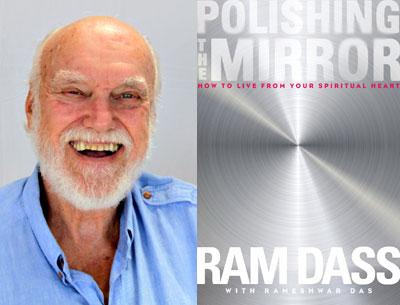
“Polishing the Mirror”

Ram Dass and Rameshwar Das

Sounds True, $16.95

I well remember thinking it curious that, having traveled 7,000 miles to Leh, the Himalayan capital city of Ladakh in India’s Jammu and Kashmir state, the instructors in both the meditation and yoga classes at the Mahabodhi International Meditation Center were not tiny, white-bearded Indian gurus but young Englishmen. Nonetheless, they were learned and eminently qualified, and led strenuous and bracing workouts for mind and body. Perhaps it was their Western-ness that made them adept in conveying Eastern wisdom to foreigners like me.

Decades earlier, Richard Alpert, a privileged Harvard professor, had glimpsed an expansion of consciousness and alternate reality through the use of psychedelics. Along with a colleague, Timothy Leary, Mr. Alpert was dismissed from Harvard. He traveled to India in 1966 and became a disciple of Neem Karoli Baba, a Hindu guru also known as Maharaj-ji who gave Mr. Alpert the spiritual name Ram Dass. He returned to the United States the following year, where he began to share what he had learned.

Mr. Dass’s 1971 book, “Be Here Now,” quickly became a sort of spiritual guidebook for Westerners in which he shared the guru’s teachings on attaining God consciousness and identification with one’s soul through meditation, yoga, and renunciation. Subsequent books included “Paths to God: Living the Bhagavad Gita,” “The Only Dance There Is,” “How Can I Help?” and “Be Love Now: The Path of the Heart,” the latter written with Rameshwar Das, a writer and photographer who lives in Springs.

“Polishing the Mirror: How to Live From Your Spiritual Heart” is another collaboration of Mr. Dass and Mr. Das. In it, they recount many teachings and experiences with Maharaj-ji, many of them deceptively simple statements that offer an alternate way of looking at life and its purpose. Many other historical figures, from Jesus and Buddha to Albert Einstein and Mohandas Gandhi, are referenced, and experiences both ordinary and extraordinary are recounted.

“The essential work of developing a spiritual consciousness is quieting the mind and opening the heart,” the authors write. The key is to awaken from ego consciousness, “your limited self,” to “the Self, the universal spirit present in each of us, the God consciousness.” Many pathways are laid out, particularly in the final chapter, in which methods of creating a daily spiritual practice — polishing the mirror — are detailed. Meditation, not surprisingly, along with recitation of a mantra, reflection, chanting, and silence, are recommended and described.

Mr. Dass, who suffered a severe hemorrhagic stroke in 1997, a life-threatening infection in 2004, and a broken hip in 2009, encourages readers to embrace change, including aging and death. He describes extensive experience sitting with terminally ill people in the West and observation of suffering in India that may be impossible for Westerners to imagine, let alone comprehend. He and Mr. Das also offer meditations and other techniques for opening the heart to unconditional love, serving selflessly, accepting fear and suffering, and realizing that you are neither your body nor your ego, but your ever-present soul.

The art of life, the authors write, “is to stay wide open and be vulnerable, yet at the same time to sit with the mystery and the awe and the unbearable pain — to just be with it all.” Mr. Dass has been “growing into that wonderful catchphrase, ‘be here now,’ for the last forty years. Here and now has within it a great richness that is just enough.”

The notions of “I” and “me,” the meditation instructor at the Mahabodhi center used to tell us, inevitably give rise to the notions of “you” and “yours.” This, Mr. Dass and Mr. Das write, is maya, the illusion of subject and objects, of separateness. In a discourse on bhakti, or religious devotion, they explain that “Love has a built-in power to carry us beyond the limitations of our separate being, our ego, to the atman, our higher being,” or soul. “Our personal emotional love gets absorbed into the all-encompassing unconditional love of the One.”

Turn to any page of “Polishing the Mirror” and receive wisdom through the easy-to-comprehend sensibility of Westerners who found it at its source. To our great fortune, they returned to share it freely.

“Polishing the Mirror” is now out in paperback.


Book Markers: 01.29.15

Book Markers: 01.29.15

Local book news
By
Star Staff

BookHampton Fights Back

BookHampton, the independent bookstore with shops on Main Street in East Hampton and Hampton Road in Southampton, is fighting the encroachment of online retailers like Amazon and a slow winter with a new service — free home delivery of books from Montauk to Hampton Bays.

“The winter months have been jarringly empty,” according to a release from the store, so Kim Lombardini, a bookseller, came up with the delivery idea. “We’re fighting with everything we’ve got,” she said. An experienced winter traveler who hails from Detroit, “she’ll bring books to your door, if that’s what it takes to keep BookHampton’s doors open.”

Not long ago the store had to close its Mattituck location. Inquiries can be sent by email to [email protected].

Montauk Writers, Lookie Here

Celine Keating, a writer and editor, and Ed Johann, a writer who leads the Montauk Writers Group, have put out a call for fiction, poetry, and nonfiction “that reflect Montauk’s landscape, nature, people, work, recreation, history, or spirit of place,” they said in a release.

“In the same way that the East End inspires artists, so too does Montauk serve as a muse for writers. We are excited to play a role in gathering some of that creativity together,” said Ms. Keating, who has a new novel, “Play for Me,” coming out in April. “We want to explore all facets of this unique place.”

“I’m especially hoping for stories about colorful Montauk characters and remembrances from old-timers,” Mr. Johann said. “We hope that by generating interest in the anthology, we’ll uncover work from unexpected sources.”

The deadline for submissions is March 30, with selections to be made by May. Bill Akin will assist in choosing poems. Publication is planned for 2016, with profits going to the Third House Nature Center and the Concerned Citizens of Montauk.

“Contributors will receive glory, two copies, and a chance to participate in a reading,” the release said. The contact email addresses are [email protected] and [email protected].

Tales From the Gridiron

Tales From the Gridiron

John Schulian
John Schulian
John Schulian gives us substantial introductions to each of the 44 pieces he’s selected
By
Baylis Greene

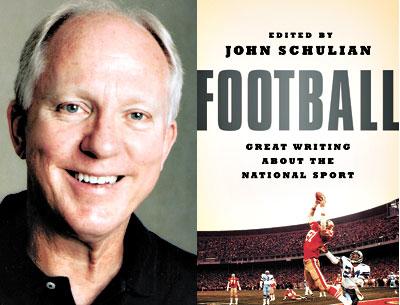
“Football”

Edited by John Schulian

Library of America, $30

Now here’s an editor at work. John Schulian, in his anthology “Football: Great Writing About the National Sport,” sheds the patched-elbow tweed, loses the horn-rims, rolls up his sleeves, and steps out of the back office to give us substantial introductions to each of the 44 pieces he’s selected, from a dominant figure of the Roaring Twenties, Grantland Rice, revisiting the Fighting Irish in an excerpt from his 1954 memoir up to the latter-day rise of sports websites like, yes, Grantland.

They’re full of context, background, and comment on the profession, and are often as absorbing as the stories that follow them. Mr. Schulian’s long paragraph on Dan Jenkins, for instance, one of the funniest and most influential sportswriters of the second half of the 20th century, describes his ascension from The Dallas Times Herald one day in 1962 when, as Mr. Jenkins put it, “The Yankees just called,” meaning Sports Illustrated, which “turned him loose on golf and college football and gave him an expense account that made him the toast of every saloon he walked into.”

His story, “An Upside-Down Game,” takes apart a “game of the century” (one of several, no?), when in 1966 Notre Dame outrageously played for a tie in a national championship contest with Michigan State. No matter how skillful the account, though, there remains the problem of reading news across the decades.

It matters more if you were there, even by way of a television aglow in your living room, as was the case with the millions who witnessed Doug Flutie’s last-second Hail Mary touchdown pass to Gerard Phelan in the 1984 Orange Bowl, described here in a Boston Globe column by Leigh Montville. For many readers it will make for a fun return to their youth, or at least some version of the good old days, perhaps shaded by thoughts of too much time in front of the boob tube.

Football is hypnotically suited to the small screen, of course, and while they can’t exactly be called time well spent, such televised games provided an awful lot of happy memories, particularly for young men still not fully formed, as it were.

Take Rick Reilly and what for many of us remains the most exciting professional football game ever played, the 1982 Chargers-Dolphins playoff in sweltering Miami. He and his brother “watched every glorious, grueling second of it on TV at home in Denver,” Mr. Schulian writes, “tackling each other out of sheer joy between commercial breaks. . . .”

It, and specifically the heroics of the Chargers’ Kellen Winslow, who had to be helped off the field after overtime with a body temperature of 105 and having lost 13 pounds, made such an impression on him that he felt moved to write about it in Sports Illustrated almost 18 years later. “A Matter of Life and Sudden Death” ends with the revelation that the former tight end has a shoebox full of pictures of children named after him — 129 of them. Mr. Reilly’s firstborn made it 130.

And across the land the groans of wives can be heard. . . .

But there’s far more than that at work in this anthology, for instance a welcome excerpt from “A Fan’s Notes,” Frederick Exley’s masterwork of misfit lit, in which he finds a measure of fraternity in the Polo Grounds stands as he winces with every tackle of his obsession, the Giants’ Golden Boy, Frank Gifford.

Or there’s a winning un-profile by Rick Telander, who left Sports Illustrated to become a columnist for The Chicago Sun-Times. In “Atkins a Study in Pride and Pain,” from 2007, he travels to Knoxville, Tenn., to visit Doug Atkins, a physically wrecked defensive end for the Bears, only to repeatedly drive past his small brick house without stopping to knock.

In a tidy thousand words that recall Frank Bascombe’s failure of an interview in Richard Ford’s “The Sportswriter,” Mr. Telander gets at much, not only “the N.F.L.’s stingy pension plan for old-timers” but also the self-loathing that can be the parasitical journalist’s lot. “Damn it, why do you all keep bothering me?” the 76-year-old Hall of Famer shouts as he hangs up on Mr. Telander.

When it comes to South Fork writers, Mr. Schulian has come up with a perfectly odd couple in the patrician George Plimpton and a 29-year-old Richard Price — the novelist, long-haired, with an earring and a Bronx accent, was provocatively sent to interview the immortal Paul (Bear) Bryant, the coach of Alabama’s Crimson Tide, for Playboy.

The 1979 “Bear Bryant’s Miracles” is nothing if not topical: Mr. Price has moved beyond his own stereotypes of rednecks, “moonshine, speed-trap towns and death” to a view of the “New South” with “Atlanta as cosmopolitan as New York. I’ve heard that, despite the headline horrors, Southerners get along racially better than Northerners. And that foreign blacks prefer the upfrontness of the South to the hypocritical liberal bullshit of the North.”

Sure, but about Bear Bryant? He can barely understand a drawling word out of the great man’s mouth.

The Plimpton excerpt from “Paper Lion,” his 1966 best seller, is one of the great studies in large-scale public humiliation. His famously inept set of downs with Detroit may be familiar, but revisiting them, in excruciating but stylish blow-by-blow, is a reminder of what we’ve lost and likely won’t see again in sportswriting: The crouched offensive linemen before him as he prepares to take a snap seem “a portcullis down”; his fellow Lions are “prognathous with the helmet bars protruding toward me. . . .”

Later, after he returns to the bench and keeps his helmet securely on and his number 0 back to the crowd, before he hears that people thought it a brilliant act by a comic, he sees in the stands a pretty girl in a mohair sweater “the color of spun pink sugar.”

“I looked at her out of my helmet. Then,” in a gesture that has echoed down through literature, “I lifted a hand, just tentatively.”

John Schulian has been a sports columnist for The Chicago Sun-Times and The Philadelphia Daily News. He co-edited the collection “At the Fights,” also from the Library of America.

Lit and Lies in the Cold War

Lit and Lies in the Cold War

Ellen Feldman
Ellen Feldman
Laura Mozes
By Laura Wells

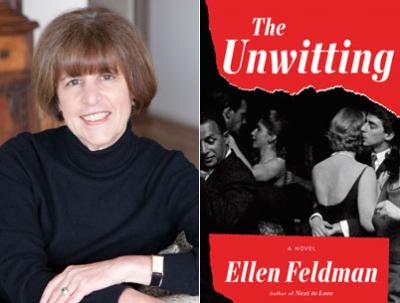
“The Unwitting”

Ellen Feldman

Spiegel & Grau, $26

When the writer and naturalist Peter Matthiessen died last April, one of the most surprising aspects of his obituaries for many was the reminder of his involvement with the C.I.A. and the money the agency poured into The Paris Review during its early days. Just why would spies care about an artsy journal read by the literati?

In the magazine’s inaugural issue William Styron wrote: “I think The Paris Review should welcome . . . the good writers and good poets, the non-drumbeaters and non-axe-grinders. So long as they’re good.” Doesn’t sound like much of a manifesto for overthrowing totalitarian regimes, does it? But for decades the agency deemed the work of a left-wing journal crucial in its fight against communism.

In her novel “The Unwitting” Ellen Feldman takes us back to the ’50s and ’60s, to Cold War insanity and McCarthy red scares. Through the prism of one loving marriage we see more clearly why and how people made the choices they did. Her analysis of that evolution is fascinating.

Here is a précis of “The Unwitting” — in C.I.A. parlance a “witting” is one of the handful of people who know whence the money is being funneled. Nell, the narrator, falls madly in love with Charlie. They marry. Nell, a bit of a rabble-rouser, becomes an investigative reporter. Charlie is named editor of a literary magazine, Compass, and begins earning a decent wage. (Yes! The red flags began waving for this reader at that very moment!) Nonetheless, the two dote on their daughter, Abby, they revel in their ideological discussions, they lead earnest, fulfilling lives. Then on the day John F. Kennedy is assassinated, Charlie is murdered in Central Park. Nell goes about unraveling the mystery of who her husband actually was.

One of the themes Ms. Feldman has explored soul-searchingly in this and some of her other novels is marriage, its extraordinary complications, and the myriad fears of infidelity, as well as the devastating repercussions when there is — are? — one or more affairs in a marriage. She has plumbed those depths in her extraordinarily evocative and extremely well-researched novel “Lucy,” the behind-the-scenes story of Lucy Mercer Rutherford, Eleanor Roosevelt’s secretary, and her affair with Franklin Delano Roosevelt.

In “The Unwitting” Nell does wonder about whether or not her husband is straying. But the truth is that she is the one who ends up cheating when fate puts her on a trip to Soviet Russia along with her pre-husband boyfriend with whom she had a pregnancy scare just before she met Charlie. “What kind of a girl starts the day in love with one man and ends it inside the coat of another?” (Ms. Feldman also skillfully interweaves ’50s and ’60s black-white complications. Woody, her former boyfriend, now an N.A.A.C.P. lawyer, is black. Nell is white.)

Ironically Charlie’s infidelity is not with another woman but with his becoming a Witting and leaving her out of a major part of his life. “Trust isn’t a cup of sugar you can borrow from a neighbor when the household supply runs out,” Nell thinks. Throughout the novel she fights with the concepts of reliability and honesty. In rereading a letter Charlie wrote to her, she is taken aback as she analyzes his hedging of his bets: “You are my love. And my conscience. And my touchstone. You keep me honest, or as honest as I can be.”

Ruefully she remembers another moment. “ ‘You know as much as I do.’ He held up his right hand. ‘Scout’s honor.’ Odd that I didn’t believe him when he was telling the truth but that I fell for his lies. No, not lies, evasions and omissions.”

In a discussion of Executive Order 10450 Ms. Feldman gives us yet another insight into the craziness of the time. Eisenhower had signed into law demonstrations that the rationale behind disloyalty included negative views of one’s “character, morality, and behavior.”

“In other words, the government could destroy your life and put you in prison for drinking, gossiping, and screwing around, favorite pastimes of just about everyone we knew.”

Charlie is hauled to Washington to be interviewed by a pair of close-cropped Kafkaesque goons. Again the theme is about trust within the marriage. Ms. Feldman reminds us of so much that happened during the Cold War that has faded from public knowledge, including that which happened to a number of literary, journalistic, and artistic figures. She mentions Mary McCarthy, and East Enders such as Robert Lowell and Sydney Gruson, an important New York Times executive whose career in Central America has been manipulated by the C.I.A.

“Nell was right,” Charlie wrote in his diary, one given to Nell long after his death. “It was no accident that Sydney Gruson was pulled off the Guatemala story. Someone at the CIA was spreading rumors around the Times that Gruson was a dangerous radical with communist connections and therefore not the correspondent to cover the overthrow of a left-leaning president.”

Nell pays a horrifying visit to Soviet Russia during the course of the novel, accompanying a road company of “Porgy and Bess.” There she sees the extraordinary suffering repression and human rights abuses can cause. She goes on to discuss the C.I.A. and its desire to present other versions of the up-and-coming arts scene to the Soviets in the form of — astonishingly enough — Jackson Pollock!

“Gossip said the CIA, with the help of Modern Art and certain critics, had made popular the new school of painting, which they saw as the opposite of dull, prescribed Soviet realism. Here was the spirit of American individualism, vibrating in living color on larger-than-life canvases. The Agency’s darling was said to be Jackson Pollock. Instead of an effete European-influenced artist, our national painter was a hard-drinking, hard-driving, all-American who wore cowboy boots and painted from the hip.”

One evening, three and a half years after her husband’s unsolved murder, Nell catches a Mike Wallace special on television: “This is a report on a fantastic web of CIA entanglements, an almost comical intelligence debacle that reached into every corner of American life — academia, student organizations, labor unions, magazines, newspapers, and more.” Nell is handed the coup de grâce: Her husband is named. “March 13, 1967: the night I grew up. . . . In this world, naïveté is irresponsible, but willful naïveté is criminal.”

There are occasional lapses in the book. Characters seemingly contradict themselves, which, admittedly, is part of human nature. Nell is a slightly argumentative, often contradictory figure. In a very few instances the language she uses exceeds the grasp of one telling her own story, as evidenced when she calls her own nose “retroussé.”

Yet in “The Unwitting” Ms. Feldman tackles astonishingly complicated topics. She has carefully, delicately unraveled so many networks without pointing fingers. She writes about secrets and secret keepers, those who hoist the dissemination of misinformation to an art form. Her narrator asks serious questions throughout. Her husband, the literary fellow who wanted to do right by his country by publishing and not publishing materials according to certain C.I.A. dictates, is a complex, often distant figure.

Ms. Feldman negotiates these complexities so expertly that the reader is never confused. She has done her homework well, even enlisting experts such as Stacy Schiff, the Pulitzer Prize-winning biographer, to be the reader of her drafts. Ms. Feldman is a novelist who cares about the facts, ma’am. Who knows that using real, somewhat obfuscated stories can create the most compelling of fictions.

At one point Elliot, who becomes Nell’s lover, then fiancé after Charlie’s death, and who is head of the foundation that poured money into Charlie’s literary magazine, tells her: “It didn’t take much to persuade [Charlie] that what we needed was a good left-wing anti-Soviet magazine.” In some ways the C.I.A. was far more generous in its support of the nation’s arts and cultural entities than the federal government’s arts and humanities arms designated for that very purpose. Ms. Feldman’s characters relish such ironies.

Laura Wells is a regular contributor of book reviews to The Star. She lives in Sag Harbor.

Ellen Feldman lives in New York and East Hampton.


The Power of Games

The Power of Games

By Sally Susman

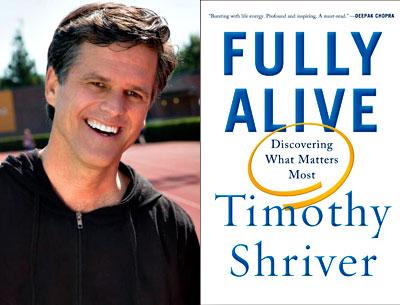
“Fully Alive”

Timothy Shriver

Sarah Crichton Books, $27

Books are a central part of my holiday ritual — perusing the year-end “best of” lists, choosing just the right volume to give to each special person in my life, and then curling up on the sofa with those I’ve picked for me.

This season my heart was moved by “Fully Alive: Discovering What Matters Most” by Timothy Shriver. In the interest of full disclosure, I know Mr. Shriver, but through his new book I feel I’ve come to know him on a deeper level . . . and my admiration for him has only grown as a result.

“Fully Alive” is hard to categorize. It’s an engrossing history of the disability rights movement and the creation of the Special Olympics. It’s a love story. It’s a profound meditation on meaning. It’s a memoir. But what ties all these disparate threads together is Mr. Shriver’s rare ability to talk about love, belief, and destiny without being trite or preachy.

The book opens as Mr. Shriver remembers holding “boat races” with his mother, Eunice, in the stream behind their home when he was just 5 years old. Their boats were made of small sticks, and the twiggy craft that could navigate the current and float downstream first won. “In those days of boat races, I believed. I believed in things I couldn’t see and in the secret power I had to change the world into a place of love and mystery and eternity,” Mr. Shriver writes.

The simple, intimate scene foreshadows themes of his life: the importance of imagination, the power of games, and the primacy of family.

Indeed, family sets the stage in “Fully Alive” but not in the usual way — and certainly not with the clichéd stereotypes of glamour and prestige to which so many books about the Kennedys cling. Mr. Shriver recalls, for example, how his grandmother Rose Fitzgerald Kennedy used to paraphrase Luke 12:48 — “Of those to whom much is given, much is expected.”

As a political enthusiast with no strong religious affiliation, I never recognized that famous phrase as a biblical reference. Wrongly, I always credited the line to one of President Kennedy’s speechwriters. Knowing that this bold pronouncement about what the privileged owe society was a message born in faith and ingrained in secular family values is to understand a great deal more not only about the 35th president, but also about Tim and Eunice Shriver.

The story at the heart of the book is that of Rosemary Kennedy, daughter of Rose Fitzgerald Kennedy and sister to President Kennedy, Robert Kennedy, and Eunice Shriver. The book puts a spotlight on Rosemary’s intellectual disability and its “heartbreaking” impact on the family. Despite Rosemary’s condition, which culminated in a lobotomy that left her permanently debilitated at the age of 23 — or maybe because of it — the family grew stronger, closer, and more committed to working for the truly vulnerable members of society.

The book also reveals how Eunice Shriver coped with the devastation of having one renowned doctor after another tell the family there was “nothing that can be done” for Rosemary. Rather than curse the darkness, Mrs. Shriver lit a candle and started Camp Shriver. In the very same backyard where she and Tim had raced their boats made of sticks, she created a retreat for disabled children. She used her family’s power, including that of the president, to advance the needs of people with disabilities — people like Rosemary.

In 1961 President Kennedy announced the establishment of the historic President’s Panel on Mental Retardation. He’s quoted in the book as saying, “This is a matter which I think should be brought out into the sunlight. . . . It is high time that the country give its time and attention to this.” The report stands today as a landmark in public policy in providing recommendations, treatments, social services, and much more for millions of families with a member with intellectual disabilities.

Ultimately, Mrs. Shriver started the Special Olympics — the very organization Mr. Shriver chairs today. As the reader learns about the beginning and then expansion of the games, it is the athletes who are the stars. We meet several, including Marty Sheets, a young man who in the first Special Olympics won a gold medal for bravery, and Loretta Claiborne, a runner turned global spokeswoman for the cause. Today, the Special Olympics provides training and competitions to more than 4 million people annually in over 170 countries.

Mr. Shriver chronicles his personal quest to make his mark. It’s not an easy road. He teaches high-risk, underprivileged children but fails to connect. He seeks meaning through religion but finds something less than total satisfaction. Along the way, he questions everything and everyone — including the pope and Nelson Mandela. His self-described quest to “be Tim” could have easily fallen into self-serving, navel-gazing psychobabble, but his well-told stories, clear-eyed self-deprecation, and excellent writing make the story an endearing one.

He is lucky to have traveled in the slipstream of history. Like African-Americans during the civil rights movement, women who instigated and continue to propel the modern feminist movement, or gays who’ve made remarkable progress toward equality, Mr. Shriver and the athletes are swept up in a larger unfolding drama. In their case it was the movement to receive intellectually disadvantaged people as complete, valuable members of society, instead of marginalizing them.

“Light is always breaking through from within us and all around us. Once in a while, we have the mind and heart to welcome it. And sometimes, more rarely, we experience the joy of welcoming it together with others. That is what happened the morning of July 20, 1968,” Mr. Shriver writes. That summer morning the first-ever sports event called the Special Olympics took place on Chicago’s Soldier Field.

In “Fully Alive,” Mr. Shriver discovers a lifetime of mornings like that day in 1968, becomes a crucial player in the disability rights cause, and answers in his own terms what it means when “much is expected.”

At this time of year, in addition to trying to make a dent in the pile of books on my nightstand, I also make resolutions — ones that usually fade by February. “Fully Alive” may encourage readers — as it has inspired me — to make real and lasting commitments to discovering and acting upon that which matters most.

In fact, in the final paragraphs, Mr. Shriver encourages his children with a phrase from Ms. Claiborne, the Special Olympian turned spokeswoman, to “Storm the castle.” Mr. Shriver explains, “If you are who you are meant to be, if you know deep in your bones that your one precious life is lovely and worth living — then you’ll storm the castles of your life and set the world ablaze.”

Timothy Shriver has been a regular visitor to his Kennedy relatives’ houses on the South Fork over the years.

Sally Susman lives in Manhattan and Sag Harbor.

Is Billy Joel Cool?

Is Billy Joel Cool?

Fred Schruers
Fred Schruers
Mark Hanauer
By Christopher John Campion

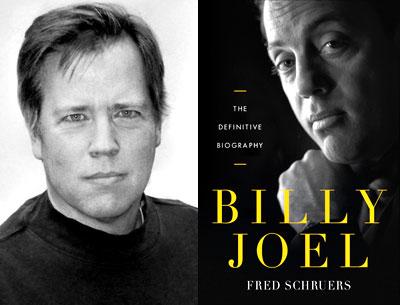
“Billy Joel”

Fred Schruers

Crown Archetype, $29

Well, is he? Ask yourself. We know he’s brilliant, his contribution to the great American pop songbook formidable, but that’s not what I’m asking. Is he cool? In 1980 the 14-year-old me attending Finley Junior High School in Huntington decided, rather rashly, that he wasn’t. I mean, right next to a Stones tongue and the Who boastfully displayed in Magic Marker on your blue canvas Mead notebook, did you have Billy Joel represented anywhere? My guess is you didn’t.

I chose Lou Reed for my regional rock ’n’ roll hero. The finalists were Lou and Blue Oyster Cult. I’m gonna go ahead and give Eddie Money an honorable mention here too. He had a certain cockeyed Bell’s palsy charm, but, truthfully, he was never in the running.

Lou was the guy who gave me “Island pride” as it pertained to rock ’n’ roll. After all, he was from not too far away in Freeport, had moved into the city and conquered the downtown avant-garde music/art scene, Warhol and all, and had gone global from there in uncompromising fashion, never once pandering to a pop audience. That is the definition of cool.

Both solo and with the Velvet Underground, Lou’s songs were a deft surveillance of fringe characters and rhapsodic odes to a life beyond picket fences on the “wild side,” which is where I wanted to be. The edgiest Billy Joel ever got was an FM radio tune called “Captain Jack,” a lyric that spoke to suburban teen boredom and referenced smoking weed and wanking — a startlingly irreverent turn within the verse, admittedly, but a little too close to my actual reality at the time.

As it is for a lot of people, rock ’n’ roll has always been an escapist game for me. I wanted my music served up by demigods like Ziggy Stardust, not some guy I might bump into while he’s buying a case of Bud Light at the deli. So I rejected Billy Joel and his music with no intention of ever seriously revisiting the idea of either of them.

But as the years wore on, and the cowardice of teen peer pressure and its resultant trappings wore off, my view of Billy Joel slowly changed. I’d find myself lingering under a supermarket speaker with a loaf of bread dangling from my hand listening to the rest of “Just the Way You Are,” or pegging the car radio when “You May Be Right” came on.

So without ever really being conscious of it I became somewhat of a Billy Joel appreciator, but still not fervent enough to buy an album or call myself a fan. Then came this assignment to read and review the new Fred Schruers book, “Billy Joel: The Definitive Biography,” and the damnedest thing happened. I realized I am a fan.

The book is culled from over a hundred hours’ worth of interviews with Billy himself and members of his inner circle, both past and present, among them his ex-wives’ club led by Christie Brinkley, band members such as Liberty DeVitto, the estranged drummer, roadies, close friends, bigwig record execs, producers, etc.

Interspersing these accounts into the story, Mr. Schruers takes the reader on a blow-by-blow of Billy’s extraordinary life, starting with his humble working-class origin in Hicks­ville/Levittown, Long Island (a hotly disputed border question as to which town he’s actually from), through his struggles and various screwings by way of the dirty game that was the 1970s music business, into his turbo-touring schedule and meteoric rise to rock stardom and subsequent stadium stages, in and out of his various marriages and relationships (some more lasting and potent than others, including a tryst with a 19-year-old Elle Macpherson), then more music business treachery in the early ’90s (this time orchestrated by his two-faced shyster manager, costing him millions), and finally touching down at the present moment of Billy’s doing his monthly residency at Madison Square Garden.

As an effective device within this, Mr. Schruers uses the lyrics to many of Mr. Joel’s popular songs as tent poles through his life and career, spilling them onto the page in verse form and providing back story as to what spawned them — ultimately deferring to Billy to explain his inspiration and process for writing and recording them. If you’re a Billy Joel fan, you’ll be slurping all that up with a spork, and if you’re not it still makes for nice seasoning to his story.

It became plainly obvious to me early on that Fred Schruers and Billy Joel are friends and that he’s a big fan of Mr. Joel’s work. My Spidey senses also tell me that’s why he got the gig in the first place. Billy obviously trusted that he wouldn’t stick a shiv in his back or dish on him in any way that might not be flattering, and he doesn’t.

In return for that loyalty he got his full authorization and participation in the book. He also provides Mr. Joel with a rebuttal platform for all his newsworthy mishaps, such as his questionable driving record, his reputed drinking exploits, his well-publicized contentiousness with his fellow ivory tickler and arena co-headliner Sir Elton John, and so on and so forth. For those who like salacious stories about celebrities and don’t really care if there’s any truth to them, this isn’t the book for you, but for my money I like getting the straight dope, and that’s what you get here.

The way this book reads, you get to hang out with Billy Joel for 350-plus pages as he recounts his life and times. He and his cohorts have plenty of authentic tales to tell to keep the balloon from hitting the ground (including one about doing “SNL” back in ’78 that I won’t give away here but just loved).

The way Mr. Schruers sets it up, it feels as if Billy’s talking right to you on the next barstool, and he makes for good company. He’s a really funny fuck, as it turns out, very self-deprecating, and not at all impressed with himself (and let’s face it, he easily could be). There are prime examples of this throughout the book, but one of my favorites is, when asked if “Only the Good Die Young” was anti-Catholic, he replied, “No, it’s pro-lust.”

Another quip of his I liked: He was giving an inspirational speech to an auditorium full of UConn students in 2012 and imparted to them, very simply, that there was no magic bullet for success and that it was merely the end product of hard work. He then tagged it by saying, “Look at me, do I look like a rock star? No, I look like a guy who makes pizza.”

The first thought I had when I finished “Billy Joel: The Definitive Biography” was that I gotta grab the missus and get our asses over to the Garden, pronto, while he’s still doing that gig. I think in the years to come it’ll be important that we all took in one of those shows. The way I see it, he’s the Piano Man, and there’s only one! We might not get another.

So I’ll return to the original question: Is Billy Joel cool? Shit, yeah, he’s cool. So is the book.

Christopher John Campion is the author of “Escape From Bellevue: A Dive Bar Odyssey,” published by Penguin-Gotham.

Billy Joel lives in Sag Harbor.

Year’s 10 Best: Our Man in Letters Picks ’Em

Year’s 10 Best: Our Man in Letters Picks ’Em

By Kurt Wenzel

“Chance” by Kem Nunn

A strange and unique San Francisco noir that is by turns dark, thoughtful, and oddly funny. Kem Nunn, who is best known for his “surfer noir” trilogy, has broadened his palette here to include subtle satire. His hero, Eldon Chance, is a self-absorbed neuropsychiatrist, and the author puts him through the ringer. When a divorce forces the doctor to sell off a precious antique desk, he finds himself in the midst of a series of unhinged and violent characters.

It is a mystery with touches of “Vertigo,” though the real puzzle is how Mr. Nunn keeps you asking, “Should I be laughing at this?” even as he submits Chance to greater and greater humiliations. (Scribner, $26)

“The Bone Clocks” by David Mitchell

Apparently David Mitchell can do anything. In novels like “Cloud Atlas” and “Ghostwritten,” he wrote with equal skill about the past, the present, and the future, in the male or female voice, from anywhere on the globe and at any epoch. His stories are told simultaneously, side by side in the same novel, then usually conclude with a slam-bang ending that neatly ties all the dissonant threads together.

"The Bone Clocks" begins simply enough, with the daughter of an English pub owner, Holly Sykes, who seems to have psychic powers. Mr. Mitchell then takes us through six different places and timescapes, finally culminating in Ireland in 2043. Once again he displays his astonishing toolbox, which this time includes elements of pulp, science fiction, and classic 19th-century novels. Another startling performance that will satisfy brainiacs and pop-fiction lovers alike. (Random House, $30)

“Tennessee Williams:

Mad Pilgrimage of the Flesh” by John Lahr

An exploration of one of the greatest writers of the 20th century. John Lahr, theater critic for The New Yorker, doesn’t get dragged down into the slog of standardized biographies — born here, went to school there, etc. — but concentrates on the plays themselves: their heroes and heroines and their relationship to their creator. Consequently he has produced a book that seems to get closer to the real Tennessee than any of the mountain of previous biographical works.

Yes, you’ll find the pills, the boys, Marlon Brando gossip, and the tragic creative slide in these pages, but also the genius and great humanity of the giant of the American theater. (W.W. Norton, $39.95)

“Bad Paper: Chasing Debt From Wall Street to the

Underworld” by Jake Halpern

Just when you thought there was nothing sleazier than banks that trap helpless borrowers with predatory loans, enter the people who collect on that debt. Jake Halpern’s nonfiction expose about rogue debt collectors is so riveting you’ll find yourself wondering, “Can this really be true?” But it is. The story is centered on a former banking executive, Aaron Siegel, who buys $14 million in debt accounts worth $1.5 billion.

When part of the portfolio is stolen, Mr. Siegel partners with an armed robber, Brandon Wilson. To recover some of the accounts, this charming (and oddly sympathetic) character supplements his physical threats by showing scars from his various gunshot and knife wounds. And they haven’t even started collecting yet! This will include screaming, intimidation, and the targeting of the elderly. The story is by turns infuriating, sad, and exhilarating. Kinda like, well, the free market. (Farrar, Straus and Giroux, $25)

“Lila” by Marilynne Robinson

Marilynne Robinson returns to the fictional town of Gilead for another moving meditation on love and religion. Lila is an orphaned girl who at age 4 turns up half-dead on a porch. She is rescued by Doll, a cagey drifter who takes Lila on a harrowing journey through Depression-era America. Years later, when Lila embarks on a romance with a local minister, she is forced to reconcile her hardscrabble youth with a new life within the folds of the church.

The miracle of the novel is watching the flawed Lila bring grace to the sheltered minister, who knows little of what he preaches. With “Lila,” Ms. Robinson secures her post as one of America’s best and most important novelists. (Farrar, Straus and Giroux, $26)

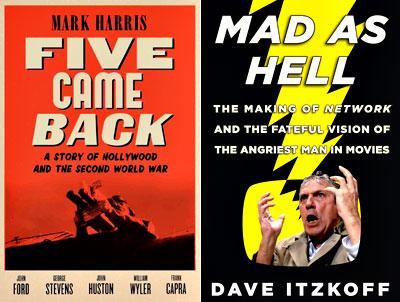
“Five Came Back”

By Mark Harris

It’s the story of five Hollywood directors who participated in World War II and how the war changed them. John Ford, William Wyler, Frank Capra, George Stevens, and John Huston all volunteered for active duty after Pearl Harbor (Ford just prior) and all shot footage for Uncle Sam. There’s some good gossip here, as when the irascible Ford chides John Wayne for playing war heroes on screen instead of volunteering, and Capra’s technical problems in capturing the wide panorama of D-Day. But there is great gravitas as well, including Stevens, who was with the first Allied unit to enter the Dachau concentration camp (it took him years to recover).

As for the films that followed the war, Mark Harris composes a fascinating juxtaposition of two — Capra’s “It’s a Wonderful Life” and Wyler’s towering “The Best Years of Our Lives” — reminding us that Capra’s movie was a flop at the time, while Wyler’s darker film may have hinted at the director’s own difficulties in adjusting to civilian life. (Penguin, $29.95)

“Zone of Interest”

By Martin Amis

Say what you will about Martin Amis (who remains a perpetually divisive figure), but you have to admit he has guts. Ever the provocateur, the author here has concocted no less than a black comedy set in a concentration camp. The novel is told from the Germans’ point of view, where Nazi underlings find themselves in bureaucratic hell, trying to deliver on the ever-increasing “demands” of the Chancellery.

It you think Mr. Amis is disrespecting the Holocaust, forget it. The author’s virtuoso talents account for some of the most unflinching horror in modern fiction, and the “comedy,” such as it is, is really just a device to provide another entrance point toward loss. The author gives it to you straight, then makes you swallow the rest as humor. “We are the saddest men in the Lager,” comments one soldier. “We are in fact the saddest men in the history of the world.” Amen. (Knopf, $26.95)

“This Changes Everything”

By Naomi Klein

Finally, a solution to climate change: Dim the rays of the sun with sulfate-spraying helium balloons, thereby mimicking the cooling effect of volcanic eruptions — or so suggests one madcap scientist cited in Naomi Klein’s new work. The author makes a withering counterargument to climate deniers and those who think it is a problem to be solved by “the market” or scientific Hail Marys.

The only thing that will save us, she argues, is a new relationship with the planet. Stop buying things, stop making things, shrink G.D.P.s, live simpler. Her vision can at times lean heavy on the good guys versus bad guys theme, but there’s no denying this is an important work about mankind’s most urgent challenge. (Simon and Schuster, $30)

“Mad as Hell: The Making of ‘Network’ and the Fateful

Vision of the Angriest Man in Movies” by David Itzkoff

Put unhinged people on television in an attempt to drive up ratings but muzzle them if they say anything that compromises the multinational corporations that own the networks themselves. . . . Paddy Chayefsky’s landmark 1976 screen­play was deemed “paranoid” at the time, but now seems prescient (and perhaps didn’t go far enough). In a series of interviews with cast and crew of the Oscar-winning film, David Itzkoff tracks the many battles the writer fought to bring his singular vision to the screen.

“I’m as mad as hell, and I’m not going to take this anymore.” This is the famous lament of “Network’s” manic newscaster, Howard Beale, but it just as easily could be Chayefsky’s battle cry for the Hollywood establishment who tried to tame him. (Times Books/Henry Holt, $27)

“Capital in the Twenty-First Century” by Thomas Piketty

Strange how this blockbuster number-one best seller is on so few of this year’s top-10 book lists — or is it? Thomas Piketty’s book takes a hard look at income inequality and also provides the phrase of the year with “drift toward oligarchy.” Tracking 20 countries going back to the 18th century, the author debunks spurious conservative talking points such as trickle down, austerity, and lower tax rates for the wealthy.

But wait, the rich just work harder than you and I, right? Not according to Mr. Piketty’s data, which identify capital as increasing far faster than economic growth, which means that inheritance is the most significant factor in determining personal wealth. What does all this inequality mean for the future? Increased poverty, war, and the end of democracy. Okay, not the funniest book of the year, but by far the most important. (Belknap, $39.95)


Kurt Wenzel is the author of the novels “Lit Life,” “Gotham Tragic,” and “Exposure.” He lives in Springs.

Combat Cartoonist

Combat Cartoonist

Ted Rall
Ted Rall
It is at turns audacious, confounding, mesmerizing, infuriating, and disorienting
By
Russell Drumm

“After We Kill You, We Will Welcome You Back as Honored Guests”
Ted Rall
Hill and Wang, $26

“After We Kill You, We Will Welcome You Back as Honored Guests: Unembedded in Afghanistan” by Ted Rall is the biggest small book I’ve come across in some time. It is at turns audacious, confounding, mesmerizing, infuriating, and disorienting.

This latter sense of being on shaky ground does not stem from its author’s courageous journalism, writing style, or cartoons (more on them later). Nor does it come from the boilerplate history of our war — our longest — in Afghan­istan, whose disturbing antecedents the author lays out as clearly as can be expected given the bloody tangle of alliances, faux alliances, misread histories, misrepresentations, and corrupt petro politics — in short, the grand illusion we have come to accept, if not believe.

No, the sense of being at sixes and sevens is the author’s own, hard-won during extremely dangerous, self-imposed assignments, and passed on to the reader intentionally because at the heart of his two visits to Afghanistan, one at the start of the war immediately following the 9/11 attacks, the other about 10 years later, lies this question:

How did a mostly illiterate, constantly warring, multitribal society living, in Mr. Rall’s opinion, a 14th-century life­style come to control the foreign policy of the world’s most powerful nation at the cost of billions of dollars and thousands of lives?

Mr. Rall takes a crack at it. He tells how our involvement had virtually nothing to do with the Taliban having orchestrated the 9/11 attacks, because they didn’t. It had nothing to do with Osama bin Laden hiding in Afghan­istan, because — as history has shown — he probably wasn’t. And, he tells about the pre-9/11 efforts among the highest ranking officials, U.S. oil companies, and the Taliban to construct a pipeline to bring oil from Kazakhstan across Afghanistan to a deep-water port in Pakistan.

He explains how our confusion has a lot to do with the fact that billions in U.S. aid to Pakistan have gone to the Taliban, the group the U.S. military is fighting, via Pakistan’s intelligence agency.

We find ourselves in 14th-century darkness with a trail of receding lights so convoluted it’s nearly impossible to tell how we got here, except for one, blazing, all-but-ignored truth that the author returns to again and again: “Since the beginning of the twentieth century, no nation-state has successfully invaded another — i.e., settled into an unopposed occupation or one that did not continue until the invading nation was forced to withdraw.”

You will have noticed that since the author’s last visit in 2010, the U.S. has “withdrawn” from Afghanistan, but given the extreme fundamentalism of ISIS in Iraq and Syria, we see how the miscalculations, questionable goals, and a misreading of history, and especially of people, are alive and well.

This history is not popular, but neither is it unknown, of course. The revelations found in “After We Kill You” are the kind that only a grunt reporter finds, the kind of fearless (or insane) freelancer who refuses the relative comfort and protection that come with being embedded with the military.

I confess there were times when I wondered, especially in light of recent kidnappings and beheadings, whether Ted Rall might have been more than delusional regarding his safety and that of his fellow cartooning journalists. Cartooning journalists?

I loved this part. On one hand, you have the reporters of big news organizations, some of them top-notch and yet burdened by assets including gobs of cash to grease the palms of handlers, translators, and drivers. Mr. Rall cobbled together the funds for his perilous ventures from an L.A. radio station for which he did a political talk show, and from The Village Voice, for which he drew cartoons and wrote feature stories.

His wacky idea was to convey what was happening in country via text and cartoons, which he did using equipment with dying batteries, intermittent satellite phone connections, and, as he needed to inform a transcriber at The Voice, without a Staples in sight. Mr. Rall’s cartoons are included in this book, and they work successfully as a kind of crib to clarify and enlarge upon his insights.

The road less traveled put him, along with his wife and his agent on the first trip, and with two cartooning colleagues on the second, in dangerous (and a few blackly humorous) situations, but it also put him with the people. These were not the people found in Kabul or Kandahar, but the folks living in poverty, fear, and a dogged (stubborn) determination to live by rules that died centuries ago in most parts of the world.

I found refreshing Mr. Rall’s less than romantic view of the Afghan people. He made friends, a few he trusted with his life. You sense a kind of respect, but it’s a wary respect for a people who seemed destined by their ways — a duplicitous trait gives the book its title — to serve as pawns in a game beyond their understanding.

Of course, as Mr. Rall points out, we don’t understand it either, but neither are we forced to live it, except for the televised pain of lost lives and treasure. It’s a pain once removed thanks to our diet of anemic journalism. “After We Kill You” is anything but.

This little book of brave reporting, excellent writing, and informative panels of well-drawn cartoons lets the reader taste the dust, feel the cold, and smell the banality of violence. A great read.


Ted Rall’s previous books include “The Book of Obama” and “The Anti-American Manifesto.” He lives in East Hampton.

Movin’ On Up

Movin’ On Up

Jazz Johnson and Dirk Wittenborn
Charles Ruger
“Our present-day culture’s final taboo”
By
Baylis Greene

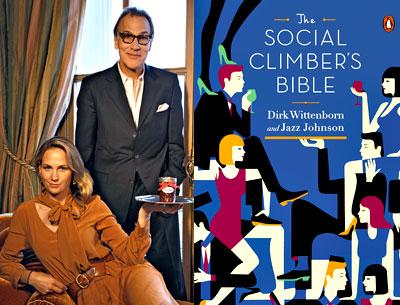
“The Social Climber’s Bible”

Dirk Wittenborn and Jazz Johnson

Penguin, $20

John Updike insisted on writing his own jacket copy. A curious fact that can pop up when you least expect it. If you happen to be reading jacket copy.

The authors of “The Social Climber’s Bible,” Dirk Wittenborn and Jazz Johnson, use their new book’s back flap to set the tone for what’s inside: Ms. Johnson “is a graduate of Barnard College, manages her family estate,” yes, she’s of the Johnson & Johnson Johnsons, “serves as Master of Fox Hounds, and raises heritage turkeys.”

Furthermore, she “hopes that collaborating with her uncle, Dirk” — who reports inches above on the flap that he “summers on the wrong side of the tracks in East Hampton” — “does not get her kicked out of any of the clubs she belongs to.”

On the contrary, they’re here to help you get in. Sure, this is comedy that exposes what the authors call “our present-day culture’s final taboo,” but it’s also exhaustive, if arch, quasi-social science, almost 300 pages of it in a 5-by-7-inch format perfect for the top of the porcelain tank. There’s even a Wittenborn-Johnson Psychological Aptitude Test for Social Climbers. (Mr. Wittenborn’s father invented the Wittenborn psychiatric rating scale and was a noted expert and researcher in pharmacology, all explored in his son’s often satirical 2008 novel, “Pharmakon.”)

Of the 19 chapters, “How to Get More Out of a Cocktail Party Than a Hangover” is exemplary, offering tips separated out in shaded boxes for quick perusal: “Never walk directly to the bar,” or, “Never underestimate the value of kissing your hosts on all four of their cheeks.” Speaking of hosts, Mr. Wittenborn and Ms. Johnson point out, “never, never say, ‘It’s a pleasure to meet you.’ The graceful social climber always greets a stranger with: ‘So nice to see you again. . . .’ ”

“By giving the illusion that you have met before, you will be that much closer to actually having a genuine friendship.”

Each chapter is peppered with Empowering Thoughts, one elucidating “The Three Questions You Never Want to Ask at a Cocktail Party,” the third being “What do you do?” which, the authors point out, “really translates into ‘How much do you make?’ [and] is more tactfully handled by making a supposition: ‘Aren’t you in finance?’ ”

And like that.

If you’re of a certain age, “The Social Climber’s Bible” may well put you in mind of Stephen Potter’s midcentury “One-Upmanship,” a classic of the guide genre, with its driest of dry British wit.

Here, Mr. Wittenborn and Ms. Johnson employ no shortage of verbal feints, saying what they don’t mean, laying on amusing qualifiers: “We mention this,” they write of Ralph Lauren’s promotion of the WASP aesthetic, “not in any way to imply Ralph was obsessed with or fetishized the glamour of snobbery,” or, “If we were being mean we might . . . suggest corporate raider Ron Perelman was the inspiration for SpongeBob’s snobby neighbor, Squidward.”

Just one more. On the Middletons, “Did Kate and Pippa stop climbing when they were nicknamed the Wisteria Sisters in honor of that clingy, climbing, flowering vine? Of course not; they climbed faster.”

Good, catty fun.