
Tour Private Pools For A Public Pool

Tour Private Pools For A Public Pool

June 19, 1997
By
Star Staff

The Southampton Town Aquatic and Recreation Project has organized a beautiful-pools tour on Saturday, apparently the first of its kind. It includes several swimming pools said to be among the most spectacular in the Hamptons.

The proceeds from the tour will go to help build a public pool and aquatic center in Southampton.

The 10 pools to be visited are in Bridgehampton, Sag Harbor, South ampton, Water Mill, and Hampton Bays. Maps and tickets, at $20 apiece, will be available at two main check-in points, Alan Ornstein's Green Hedges on Halsey Neck Lane, which is set in handsome gardens and has an adjoining pool house, and Martin Richards's By the Sea on Gin Lane, both in Southampton.

Mr. Richards's pool is highlighted by sculptures and an antique fountain. According to a release, it is the longest saltwater pool on the East End.

Three of the pools have won international design awards. Dr. Bilha Fish's pool on Bridge Lane, Bridgehampton, won a gold medal in the 1996 National Spa and Pool Institute design competition. It contains an elevated spa with a 25-foot cascading stone water wall down to the pool.

Richard Bungarz's pool and spa on North Side Drive in Sag Harbor is set on a hilltop. A 28-foot custom-designed free-form installation, it won the Pool Institute's gold medal in 1995. Tony and Terri Toscano's pool and spa on Hill Street in Southampton, surrounded by Arizona sandstone, won a bronze medal last year.

Philip and Lisa Bennett's pool on Hedges Lane, Southampton, sits in a traditional English garden and features bluestone coping with custom brick terraces. The free-form pool of Jay Salsburg, on Bettina Court in Hampton Bays, has a natural pond-like setting and large rocks for diving.

Choice Of Terrace

Thomas Nitti and Gail O'Brien's pool on Noyac Road in Sag Harbor is also free-form in shape, but its design seems to suggest a mountain setting. It has two sunning terraces, one for mornings and the other for afternoons.

Carlos and Wendy Routh's house on Little Noyac Path in Water Mill has a panoramic view of the pool from a secluded veranda.

Just down the road on Little Noyac Path in Water Mill, is John Segreti's pool, which features specially designed "fountain seats" in the middle of the water.

Finally, John and Kathleen Figlioni's bluestone-enclosed pool on Pheasant Close West in Southampton has an open cabana with a wet bar.

The tour runs from 10 a.m. to 4 p.m., and refreshments will be served. It will be followed Saturday evening by a cocktail party at the Ox Pasture Road residence of Carol and Steven Antler, including a fashion show, silent auction, and raffle. The grand prize is, appropriately, a gunite pool worth $30,000.

Tickets to the party, at $75, include the daytime pool tour.

The Southampton Town Board's pool advisory committee has recommended building a public aquatic center on the grounds of Southampton College in conjunction with Southampton Hospital, although the Town Board has not yet approved the suggestion. The cost is estimated at $7.5 million.
 

Art's Not Just For Galleries Anymore

Art's Not Just For Galleries Anymore

June 19, 1997
By
Joanne Pilgrim

Art is sneaking out of studios and galleries and into the view of shoppers, strollers, and diners.

There is a plethora of places besides galleries that display artists' work, and, for the "curators" there, no dearth of artists clamoring to be seen.

Artists seeking to catch the eye of gallery owners or a prospective collector or two are providing restaurant, shop, and cafe owners with changing, original displays. Most spaces are provided for free, though in some cases the business owner earns a small commission on any sales.

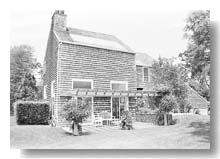
In East Hampton, the Coach Store on Main Street has for the past six years dedicated an entire back room - a former bank vault - for use as a gallery by local artists. The space is booked almost a year in advance, said Lynn Dale, a manager at the store, which throws an opening party at the inception of each show.

Good Testing Ground

On display through the end of June are wood carvings by Harry Honorowski. In July, Darby McHugh, a veteran of alternative art spaces who has shown her work at outdoor shows, Ashawagh Hall in Springs, and Estia restaurant in Amagansett, will mount a display of her hand-colored photographs.

"It's an artist-friendly way of getting the work out there - a good testing ground," said Ms. McHugh of the "alternative" spaces. Making a few sales "builds confidence" to approach galleries, she said.

The Coach Store does not exact commissions on sales, but deducts 10 percent of the sale price for donation to a charity of the artist's choice.

The Bridgehampton Cafe changes the paintings that decorate its walls every four to six weeks or so, throwing a cocktail reception to introduce the new works and artist.

"It's worked out really well," said Don Evans, the restaurant's owner.

Booked Months In Advance

Renovations completed prior to the restaurant's opening in April 1996 created "wonderful wall space," he said, large enough for pieces up to four feet square.

"I couldn't afford wonderful art . . . . I was tired of looking at posters," he said of his decision to showcase artists' works.

The word is out, said Mr. Evans. Artists' interest in showing at the cafe has "increased exponentially," he said. Artists are now bringing him slides to consider, and the wall space is booked up to four months in advance. The room "dramatically changes" according to the art displayed, Mr. Evans said. "It is never static."

Mr. Evans shows things he likes, though his favorites may not be everyone's. "Our severest critics are our waiters," he said.

Helping Artists

Once or twice, he has heard complaints, with a few taking offense to a particular piece, but over all he receives "continual positive comments" from diners, he said. "Sensitive stuff goes in the bathrooms," he laughed.

Colin Ambrose has been showcasing artwork at his restaurant, Estia, in Amagansett, for the past six years. The enterprise began with a desire to have a "continually changing display in the room," he said, as many of his customers return to eat there often. The shows change every six to eight weeks, he said.

After initially having galleries curate his shows, Mr. Ambrose has become personally involved, with a growing interest in helping artists to "establish themselves in the art world."

Nude Was Removed

Many artists who excel in the creative realm do not do so in the business world, he noted. "I've been a salesman all my life . . . . I'm happy to get out there for these guys," he said. "We give artists an opportunity to tell the gallery owners to 'go have lunch, and look at my stuff.'"

Mr. Ambrose looks for "dramatic, colorful paintings that are going to warm the room," he said, especially those with a local focus. "I am inclined to show people I know," he said. Estia's walls are spoken for through December.

As for content, Mr. Ambrose imposes few restrictions and has even exhibited a "relatively abstract" nude, which, however, he took down after parents of young diners complained.

"If they want to make a social comment, that's fine," he said, "but they can't be vulgar or use nudity - it has to be intellectual."

Busier Than Galleries

Mr. Ambrose retains the services of a public relations outfit to promote the shows and throws an opening reception, too. He retains a small commission for brokering on-the-spot sales, which number maybe four a year, though Nick Weber, this month's featured artist, sold three works at Sunday's opening reception.

"I think art is best experienced in life, rather than just in a gallery space," said Ann Harper, who curated the Estia shows for several years. Ms. Harper's Amagansett gallery will be run this year by Yaari, who is pursuing alternate venues to hang the work of gallery artists.

Mr. Evans of the Bridgehampton Cafe noted that his restaurant is "busier than the most successful gallery out there" and provides artists with wide exposure. Artists are realizing, he said, that "the demographics are that the people who frequent the Cafe are the people who may buy their art."

It's In The Bank

Banks, some of which have long decorated their walls with local art, are increasingly jumping on the bandwagon, too.

The wall space at the Bank of New York in East Hampton is reserved, in one-month periods, through most of 1998.

Never mind withdrawals or deposits. "We have people coming in just looking at the show," said Kay Coles, an employee of the bank who invites new artist-customers to display their work. Rivalyn Zweig's work is on display there now, with Leo Riva on deck for next month.

"There's a lot of good local talent out here that should be seen and aren't well-known enough to be seen in galleries," said David McHugh, the owner of the Hampton Photo Arts shop in Bridgehampton Commons. Like several other businesses that house exhibits, Hampton Photo Arts does not get involved in sales, instead just putting buyer and seller in touch.

Open To Anyone

Mr. McHugh allows artists who work in a variety of media to hang works in the shop's window for two weeks at a time. His only stipulation is no nudity - otherwise those who come in and ask are penciled in on his show calendar.

The work's quality varies, Mr. McHugh said. Some are "just starting out," and some of the artists are "really, really, good."

Sculpture has cropped up, too, with pieces for sale by Steve Loschen of Amagansett and other local artists displayed on the grounds of Gansett Green Manor in Amagansett, and Artscapes, a business that curates sculpture exhibits, installing pieces at various sites around town.

As the ranks of artists grow, so too do the alternative venues.

Among the other spots where art can be seen are the Golden Pear in East Hampton, Breadzilla in Wainscott, Spot's Cafe in Sag Harbor, and Gurney's Inn in Montauk.

Pottery At Duryea's

Displays range from a curated grouping of work to a casual painting or two with a business card stuck in the corner, or even furniture, as part of the decor.

Four potters will exhibit their wares at Duryea's Lobster Deck in Montauk this weekend, and Michelle Murphy, an Amagansett painter, has carried her work to New York City for display in the window of Brioni, a 57th Street clothing store, through the Fourth of July.

Ed Harris Plans Pollock Role

Ed Harris Plans Pollock Role

Julia C. Mead | June 19, 1997

Two of three films to be based on biographies of Jackson Pollock are no closer now to the big screen than they were two years ago. But the third, based on Steven Naifeh and Gregory White Smith's 1989 Pulitzer Prize-winning "Jackson Pollock: An American Saga," has a star committed to playing the lead and financial backing from a well-known South Fork resident.

Ed Harris, the Hollywood actor who is known for "Apollo 13," "Nixon," and "Glengarry Glen Ross" among other films, told The Star last week that, after years of seeing the project take tiny steps, Peter M. Brant, a founder of the Bridgehampton Polo Club and chairman of Interview magazine, had agreed to provide the financing. Mr. Harris said he was ready to play the pioneering Abstract Expressionist, to whom he bears a more than passing resemblance. He also noted that a new screenwriter, Susan Emschwiller, had begun work on the script.

"We have a very strong project here, and we're moving steadily ahead," said Mr. Harris.

Next Spring

Ms. Emschwiller is a daughter of Edward Emschwiller, a video artist and filmmaker. Mr. Brant, who has a house in Montauk, is a partner in Brant Allen Films, which backed the acclaimed film biography of the artist Jean-Michel Basquiat.

Mr. Brant, reached at his office in Connecticut, said the script was expected to be finished this summer and that production could begin by next spring. He said some filming would definitely take place in Springs, where Mr. Pollock spent several summers and then lived year-round for the last four years of his life.

Mr. Harris explained that he had taken a copy of the biography shortly after it was published to James Trezza, a New York City art dealer, and convinced him to option the book for a film. It would have been his first foray into the industry.

Recent Visit

Two years ago, Mr. Trezza said that Barbara Turner, who wrote the screenplay for "Georgia," had completed a script focusing on the last 15 years of Mr. Pollock's life, and that Jennifer Jason Leigh, who played leading roles in "Backdraft," "Dolores Claiborne," and "Georgia," would play Ruth Kligman, the only survivor of the 1956 car crash on Fireplace Road in Springs that killed Mr. Pollock and another woman passenger.

Mr. Pollock and his wife, Lee Krasner, lived nearby, part of a group of artists and writers who found the hamlet both congenial and inexpensive after World War II. The couple's house and studios overlooking Accabonac Harbor are preserved now as the Pollock-Krasner House and Study Center.

Ms. Emschwiller is rewriting Ms. Turner's treatment, said Mr. Brant. She visited the Pollock-Krasner House in April and Mr. Harris said he would visit here soon.

Whether or not Ms. Leigh will be in the film was uncertain this week. Mr. Brant said only the lead was definite so far, to be filled by Mr. Harris, and that casting would not start until after the summer.

Krasner Role

As to the part of Ms. Krasner, a renowned artist who failed to gain recognition until after her husband's death, Frances McDormand, who won an Oscar this year for her role in "Fargo," has been mentioned.

Mr. Harris confirmed he had been after the Pollock role for years, and said he was more optimistic than ever now that the project was nearing production.

"I'm not going to put a timetable on it because it takes years and years to make a film, but we are in real good shape," he said.

Legal Battle

Mr. Harris is most often cast as a good guy with a bad temper. Mr. Pollock's kindest acquaintances say he was "touching" when sober. Others, including the "American Saga" authors, describe the painter as a tormented person who turned nasty when drunk.

The dispute over just how complicated a personality Mr. Pollock was became a factor in a $1 million counter-suit brought by the biographers against Jeffrey Potter, the East Hampton-based author of "To a Violent Grave," after Mr. Potter sued them for alleged "misappropriation of material."

The suits were settled out of court.

A compilation of interviews with many friends, contemporaries, and foes of Mr. Pollock and his wife, Mr. Potter's book was criticized by Mr. Naifeh and Mr. Smith as romanticized. Mr. Potter, in turn, called theirs harsh and sensationalized, and said there was no truth to their implication that Mr. Pollock struggled with homosexuality.

Still Possible

Mr. Potter's book was optioned by Barbra Streisand's Barwood Films, which was to work with Columbia Pictures and Robert DeNiro's Tribeca Productions. That option expired last year.

Mr. Potter, who spends summers in Nova Scotia, said last week that Rocking Horse Productions now held the option. Gene Davis, brother of the late actor Brad Davis, and his wife, Penny Perry, a casting agent, are the principals of the company. They are said to be pursuing a production as well.

The third project, seemingly in last place in the race to put Jackson Pollock's life on film, would be based on Ruth Kligman's 1974 "Love Affair." Al Pacino, the most recent holder of the rights to her book, reportedly has allowed them to lapse.

Driving Force

Meanwhile, Mr. Brant said he agreed to back Mr. Harris's project after seeing the successful actor "was doing his own research and quarterbacking" - much like Julian Schnabel, an artist and friend of the late Jean-Michel Basquiat.

"Ed is spending a lot of time on this, his own time, and that's why we're so encouraged. That collaboration, with us on the business end and him as the driving force, is the formula that will make it work," said Mr. Brant.

A Silver Lining

A Silver Lining

June 19, 1997

It is the kind of good news that comes along very seldom, say once every 25 years. In fact it was exactly a quarter of a century ago that the Federal Government banned the pesticide DDT.

DDT, as many will remember, almost wiped out the osprey population in the years following World War II, causing the birds to lay thin-shelled eggs that did not survive incubation. By the time the connection was recognized, fewer than a dozen breeding pairs remained in New York State - all of them here on Long Island.

Celebrating the silver anniversary of the nationwide ban, which was bitterly opposed by the chemical and agricultural industries, environmentalists had some encouraging numbers to report this week. At last count, 305 breeding pairs of ospreys were counted in New York, not just on the Island but throughout the state. The nation's symbol, the bald eagle, has multiplied almost thirtyfold, as has another formerly imperiled bird of prey, the peregrine falcon.

Residents of the South Fork, who still live close to nature, will be delighted but probably not surprised to hear of the resurgence of the osprey. The statistics confirm what our eyes tell us: The fish hawk is back in our midst. If you doubt it, call the Cornell Cooperative Extension in Riverhead and make a reservation for one of its osprey-observation cruises around Gardiner's Island this week.

Back To Nature

Back To Nature

June 19, 1997
By
Editorial

We tend to think of development as an inexorable, irreversible force. The bulldozer, like an unstoppable Pac-Man (to use an antiquated metaphor), is set on gobbling up all the woods, farmlands, and dunes. A few parcels will escape that fate, thanks to public and private preservation efforts, and from time to time nature will reclaim land with houses built by folly too close to the sea. But basically development is a road of no return.

Or is it?

Consider a recent case on Chappaquiddick Island, off Martha's Vineyard. According to a story last week in The New York Times, the owners of a waterfront house agreed to sell the property to a land trust at a discounted price rather than on the open market. The trust then proceeded to raze or relocate the buildings on the land and to restore an unimpeded water view that the island's residents had previously enjoyed.

Perhaps we are being too fatalistic when we mourn the loss to private development of choice features of the natural landscape that once seemed public assets. Let's keep alive the hope that someday similarly enlightened owners of land we cherish here may see its value to the community as a whole and act selflessly.

Mother Nature isn't the only force that can reclaim our vistas and waterfronts. The better side of human nature can achieve the same end.

Don't Scuttle The Shuttle

Don't Scuttle The Shuttle

June 19, 1997
By
Editorial

The recently released transportation update to the Town Comprehensive Plan confirms what everyone in town suspected: The volume of summer traffic on the Montauk Highway has tripled in the past 15 years. On some back roads, the study found, there are four times as many cars and trucks trying to circumnavigate the congestion as there were 30 years ago.

The town must look to other means of weekend travel, especially buses and trains, if it is to manage the "overwhelming demands" on its roadways, the report concludes. Indeed, there seems to be little alternative. It is too late now, after decades of opposition and the loss of hundreds of acres to development, to build a new highway as a bypass of the village centers.

Some of the study's specific recommendations, still in draft form, involve long-term objectives that will require separate studies of their own. At least one of them, however, perhaps the most significant - municipal bus service - could be implemented on a small experimental scale almost immediately.

Indeed, the town had the wheels in motion for a pilot-project bus to be rolling by the July Fourth weekend, shuttling riders from the Town Hall parking lot (virtually empty on weekends) to Amagansett's protected ocean beaches as well as to shop in East Hampton Village. (East Hampton High School's lot, largely empty all summer, would make another good pick-up point, especially for Northwest and Sag Harbor residents, if this idea ever comes to fruition.)

Protests from the Amagansett Citizens Advisory Committee, which objected to buses lumbering along Indian Wells Highway and Atlantic Avenue as well as to increased crowds at the beaches, helped shoot down the proposal. And the East Hampton Village Board's reluctance to have village beaches included in the plan did not help.

In the end, the Town Board scuttled the shuttle. That is a shame. If we cannot agree on a trial run for even a single small bus, holding no more than 25 people and making a loop once every 50 minutes, how will we ever know whether there is enough demand to make alternative transportation work?

This project should get a second look before it is abandoned entirely. It was intelligently focused, and too well-thought-out to be discarded so easily. On rainy days, for example, the bus would have skipped the beaches and run only between the parking lot and East Hampton Village, where riders could shop as long as they wanted without worrying about parking spaces or two-hour time limits.

Based on a scale from A to F, the transportation study predicts that the Wainscott portion of Montauk Highway will warrant an F by 2002 if automobile traffic increases just 5 percent a year between now and then. It will take Amagansett a little longer, until 2004. For F, read G - gridlock.

East Hampton sometimes has been a model for other towns on environmental legislation. There is no reason why it cannot take the lead once again in finding a solution to the traffic dilemma.

Everybody hates congestion - but everybody seems to hate change just as much. Which do we hate less? The clock is ticking.

Design: A View From Every Level

Design: A View From Every Level

Marjorie Chester | June 19, 1997

When Leonard and Judi Ackerman first moved to East Hampton in 1973 with their two young daughters, they bought a small house on Egypt Lane. He practiced law from the kitchen table and she ran a children's clothing store around the corner on Pantigo Road.

But as business boomed and the family grew they decided to build. By 1976 they purchased four and one-half glorious sloping acres on Georgica Pond from one of Leonard's elderly clients, who was subdividing the larger 40-acre parcel and whom the Ackermans had befriended.

They interviewed several architects and chose Eugene Futterman, a prominent architect who lived and worked on the East End from 1964 to 1987, when he died at the age of 51.

Built Vertically

"We wanted a simple barn-style house, and we'd seen a dozen or so that Gene had done, including the Ron Lauder house," Mr. Ackerman said. Moreover, at that time Mr. Futterman was building as well as designing, and he could give the Ackermans a fixed price that would include everything and meet their budget.

"Gene came to the site and explained how he could take advantage of the topography and build us a multi-level house that we could grow into as a family living here year round," Mr. Ackerman said. Mr. Futterman said that by slicing into the land and building vertically they could have views of Georgica Pond in the back and the 20 acres in the front that were to be deeded to the Nature Conservancy and kept wild.

Multi-level indeed. Tightly wrapped around the central spine of the slope, the Ackerman house is a marvel of siting.

Three-Plus Levels

One comes up a long winding driveway and parks at the ground floor, level one. Here there is a two-car garage, swimming pool, and large brick terrace area that overlooks the pond, laundry, and workout equipment, plus a sub-basement for air conditioning and heating equipment as well as storage.

Fifteen steps up and you're at the main floor, level two, with a restaurant-quality kitchen (Mr. Futterman was a master chef), dining room, cozy wood-paneled library, screened-in porch. Seven steps down to the left, between these two levels, is a giant sunken living room with double-height ceilings and views in three directions. Back to the second level and up another 14 steps and you're at level three, the bedroom wing.

The stairs are steep. "I don't think Gene ever thought we'd live in the house this long," Mrs. Ackerman confided.

Two years of study with the Japanese landscape architect Sasaki helped Mr. Futterman learn site planning and Japanese landscape architecture. "Gene carved all the flower beds right into the terraces," Mrs. Ackerman said.

Originally planted by Eleanor Whitmore and Jane Lappin, the beds are immaculate and elegant. There are no gardens on the grounds, only four and one-half serene rolling acres of "crabgrass." Concerned about the health of the pond, Mrs. Ackerman only uses natural fertilization.

Ernest Schifferstein, a North Haven architect and former Futterman associate who worked on the Ackerman house, said that it was a classic example of Mr. Futterman's early work. "It's a cross between the barn vernacular out here and classic modernism: open floor plans, lots of glass and light-filled spaces, a strong relationship of indoor to outdoor," he said.

A dozen skylights flood the house with light - even an upstairs shower.

On A Napkin

"Futterman was a born teacher and a real problem solver," Mr. Schifferstein said. He recalled how the architect would stand on a site and "see the whole thing." He'd go home and sketch it all on a paper napkin, which he'd bring to the office the next day, and direct his staff to start making a model.

Eric Woodward, a Southampton architect who took over Mr. Futterman's practice when he died, said 1976 to 1978, when the Ackerman house was going up, proved a transitional time for the architect. Peter Tishman, a friend of the Ackermans, watched the progress and was so impressed that he hired Mr. Futterman to build his own house on the south side of Georgica Pond.

Pictured in "East Hampton's Heritage: An Illustrated Architectural Record" (by Clay Lancaster, Robert A.M. Stern, and Robert Heffner), the Peter Tishman House of 1980 became the first of Mr. Futterman's grand-scale, traditional houses of the Shingle Style which were to remain his signature until his death.

Enthusiasm Lives On

"Futterman's practice did not gain the recognition it deserved," said Mr. Woodward, who was his associate on the Brous and Adler houses of 1983, both of which are pictured in Paul Goldberger's book "Houses of the Hamptons." Mr. Goldberger, however, described Mr. Futterman's work as having ". . . a nervous active quality about it that gives his houses the air of shingled castles."

According to Mr. Woodward, Mr. Futterman always said that the architects who got highly published were all from Yale, which he called an old boys' network. Mr. Futterman went to Pratt Institute in Brooklyn.

"His whole enthusiasm lives on in so many people. He had six associates and we're all practicing architecture out here," Mr. Woodward said.

Interior Decor

In all, Mr. Futterman built or renovated nearly 100 private houses from Quogue to Montauk in the course of his career. The elaborate renovation of the 1926 oceanfront Lawrence Oakley House for Mort Zuckerman on Drew Lane and the renovation of Edith Beale's Grey Gardens at the corner of Apaquogue and Georgica for Ben Bradley and Sally Quinn are examples of his work.

Two decades later and with two daughters grown, little in the Ackermans' house has been changed. The furnishings, almost all bought locally, are straightforward: English country antiques, large upholstered pieces, cheerful floral chintzes.

Family pictures in old silver frames adorn tabletops and walls, and antique porcelain and glass smalls glitter everywhere. The Ackermans also bought the work of local artists. A large Ralph Carpentier painting graces the tiled fireplace in the living room, and there are two Ronnie Chalif sculptures.

A Little Warmer

"The only thing I've really changed was to rip out the built-in formica beds, Mrs. Ackerman said. "Gene's idea was to keep everything very abbreviated, but I've gone a little Ralph Lauren up here to warm things up." There are nine pillows on her bed.

Leonard Ackerman, a local attorney and investor, is known for some of the famous clients he has come to represent, including Calvin Klein and Martha Stewart. "A lot of my clients also live on the pond and feel I can represent their interests," he said.

Mr. Ackerman also owns two office buildings on Newtown Lane as well as the Revco building. And until this year he was the co-owner with Mickey Schulhof of WEHM, the local radio station which was recently sold to Frederic Seegal and has just merged with the Amagansett station WBEA.

Few Regrets

Mr. Ackerman has long been an aficionado of antique cars. Mr. Futterman built a freestanding barn for two additional cars when the attached two-car garage became inadequate. Mr. Ackerman confesses to storing four more golden oldies somewhere in Springs.

An avid sailor, Mr. Ackerman owns one of the two dozen 12.5-foot catboats (Beetle Cats) that have unofficially become the one-design class boat of Georgica Pond. But because "Jones Cove," the finger of the pond he's on, is shallow and hard to sail out of, he keeps it moored at Peter Tishman's, in the large belly of the pond.

Twenty years later do the Ackermans have any regrets?

"Oh, I wish Gene had built a circular driveway so we could enter on the second floor," Mr. Ackerman said with a big grin. And Mrs. Ackerman pines for the laundry chute that never got built.

"I kept saying, 'Gene, how do you expect me to get the clothes and bed linens from the third floor to the laundry room on the first floor?' " Mrs. Ackerman explained. "He kept saying, 'Don't worry, we're going to do a wonderful laundry chute.' When the house was almost finished I asked him again and he said, 'I think the laundry chute will have to end up on your front lawn!' "

"As you get older it gets harder carrying the groceries and cleaning up all the flights," Mrs. Ackerman lamented.

But she and her husband still love their house and land too much to leave. "And let's not forget that these stairs have kept Judi Ackerman, age 55, in good shape," she said.

Northwest: A Frontier No More

Northwest: A Frontier No More

Josh Lawrence | June 12, 1997

"Red hot" is how one broker described the current real estate market in East Hampton's Northwest Woods, in terms of prices, construction, and subdivision activity. East Hampton's last frontier is being quickly pioneered.

As prices south of the highway continue to soar and the availability of prime vacant land continues to dwindle, a new breed of home and land buyers are looking to the privacy and quiet of the woods. Land prices, higher than ever in Northwest, reflect that demand.

"More and more people want privacy, and they don't really mind going four or five miles out of town to get it," said Judy McMurdo, a broker with Cook/Pony Farm Real Estate in East Hampton.

The exclusive Grace Estate, at Northwest's northern perimeter, gives a good indication of the activity in the area. Only two lots now remain in the roughly 30-lot subdivision, after what Ms. McMurdo called a "scramble" to buy them up over the last two years.

"The Grace Estate has just boom ed in the past two years, absolutely boomed," she said.

One of the two remaining lots, a five-acre parcel, is listed at $275,000. That is considered relatively low, as is the price of the other parcel, 12 acres at $350,000. Brokers explained that few people were looking for quite that much privacy, and said a two-acre parcel would not cost that much less.

Three New Subdivisions

As that subdivision builds itself out, three more sizable subdivisions have have been approved within the past year, carving out more than 60 new house lots, mostly on two acres or more.

The roads are now being constructed into the recently approved, 34-acre Northwest Estates subdivision. Lots in the subdivision (being marketed as Van Scoy's East) are being offered for an average of $175,000.

That's not far from the price of new lots in the Cedar Woods subdivision off Hand's Creek Road, which are selling for between $160,000 and $225,000.

Vacant lots on Bull Path, averaging between 2.7 and 3.2 acres, are going for no less than $225,000.

House Sales

House prices are also generally strong in Northwest. A 4,000-square-foot, secluded house on Northwest Road near Old Northwest Road recently fetched $840,000, Ms. McMurdo noted.

Two other estate-style residences well south of that, and not on the water, are listed with brokers at $995,000 and $1.1 million.

"Five years ago, if someone said a house in Northwest would sell for more than a million, you would have said, 'You're out of your mind!' " said Frank Newbold of Sotheby's International Realty.

Building To Sell

Mr. Newbold traced the new boom in Northwest back to the original boom in the mid-1980s that essentially developed the area into a largely second-home community. Then as now, builders who put up houses on speculation helped drive the market.

"They really had this vision of creating consistently high-quality houses," said Mr. Newbold. "It was really developed as a second-home area."

When Wall Street sagged in the early '90s, the glut of houses created a flooded market, he said. Now, with those houses finally sold, a revived economy, and the infusion of new developable lots, contractors who build to sell are actively back in the market.

"You'll be seeing an enormous amount of construction," Mr. Newbold predicted.

Land Tax: Wide Support

Land Tax: Wide Support

June 12, 1997
By
Carissa Katz

This is the eighth article in a series examining various aspects of real estate on the South Fork.

A plan to impose a 2-percent tax on high-priced real estate sales in East Hampton Town, and use the money to buy open space and preserve farmland, is once again before the State Legislature in Albany.

This time, however, the bill made its trip with a broader base of local support, including members of the real estate and building industries, which have opposed it in the past.

The proposed real estate transfer tax, which would be paid by the buyer, could raise millions of dollars a year until it sunsets in 10 years. All the money would be placed in a designated land bank called the East Hampton Community Preservation Fund, to be used exclusively for the purchase of open space.

Builders Back Bill

"The hour is late," said Edwin M. (Buzz) Schwenk, a former opponent of the transfer tax, at a press conference held Monday to advance the cause of the legislation. "We don't have two years, five years, or 10 years. The East End is on fire, Southampton and East Hampton Town both."

Some Southampton lawmakers are said to favor a similar plan, but according to speakers at Monday's gathering they lack the across-the-board support found here.

During 1996, 768 building permits were issued in East Hampton, and 268 have been issued in the first four months of 1997. The numbers went down in the early '90s but have been rising since 1994.

Meanwhile, said Mr. Schwenk and other speakers, real estate brokers and those in the tourist industries have come to appreciate the importance of open space to the economy of the region. Environmentalists are no longer alone in their concern for preserving the open vistas.

Economy = Environment

"These are the critical years for East Hampton Town," said Supervisor Cathy Lester. "To maintain a healthy real estate market, an active construction industry, and a booming tourist trade, we have to protect the environment."

"Environment really is our economy," agreed Pat Trunzo 3d, an East Hamp ton builder and former Town Board member. Though dependent upon development himself, Mr. Trun zo believes it must strike a balance with the preservation of open space.

Frank Newbold, a managing partner of Sotheby's International Realty, likes the idea of the real estate tax. "I'll think you'll find most brokers do also," he said.

He does not believe buyers will be deterred by the proposed surcharge, which would apply to sales of improved real estate over $250,000 and vacant property over $100,000. "It can be presented as a thing that will enhance their investment, an insurance that their quality of life here will stay high," said Mr. Newbold.

Proponents

It is that kind of reasoning that won Mr. Schwenk over to the land bank bill and prompted him to resign last year as head of the Long Island Builders Institute.

Before then he had lobbied against the transfer tax. Now, as a member of a new environmental group called East End Forever and of the East End Land Bank Coalition, he is one of its most vocal proponents. The coalition is made up of conservation groups, real estate brokerages, and contractors.

The Builders Institute remains vehemently opposed to the transfer tax, but this time around the bill has garnered unanimous bipartisan support from the East Hampton Town Board.

Though East Hampton voters approved a $5 million bond for open space preservation in November, the money does not begin to cover the purchase of 3,500 acres of open space and farmland the town would like to preserve. The land is valued at over $55 million.

Nonprofits Exempt

Open space and farmland sold to nonprofit groups for preservation will not be subject to the 2-percent surcharge. Nor would sales of farmland for continued agricultural use.

"In reviewing this bill, I'm vastly impressed by how fairly it is done, how equitably it is done," said Town Councilman Tom Knobel, a Republican. "Two percent is a small price to pay."

State Assemblymen Fred W. Thiele Jr. and Thomas DiNapoli joined State Senator Kenneth LaValle in supporting the enabling legislation in Albany this week. They hope it will gain approval before the session ends in early July.

Narrower Focus

If they are successful, a townwide referendum on the transfer tax could be on the November ballot. East Hampton would become the first town in the state to have a community preservation fund, following the lead of Nantucket Island, which has had one since 1984.

"East Hampton usually leads the way in preservation efforts," Supervisor Lester told Monday's crowd. "I'm proud of the positive action taken by the board over the years to protect this place."

"Historically," she continued, "if you look at East Hampton since 1984, we have taken bold and innovative steps on environmental protection." For example, she noted, East Hampton was the first town to adopt cluster zoning at a time when realtors and builders both here and elsewhere were strongly opposed to it.

In its first appearance before the Legislature, the land bank bill proposed to create a transfer tax and preservation fund in all five East End Towns. Ms. Lester and its other backers believe that with a narrower focus it will have a better chance of acceptance.

Local legislators believe it has enough support in East Hampton now for a referendum to pass. "Twenty years from now we'll look back and know we had something to do with keeping this great place we live in beautiful," said Councilman Len Bernard.

Recorded Deeds 06.12.97

Recorded Deeds 06.12.97

Data provided by Long Island Profiles Publishing Co. Inc. of Babylon.
By
Star Staff

AMAGANSETT

McBride to Yorke Rhodes and Elizabeth McBride, Osprey Road, $250,000.

Solomon estate to Gary and Paulene Bencivenga, Montauk Highway, $1,440,000.

BRIDGEHAMPTON

Collins to Robert and Aldith Asselberg, Kellis Pond Lane, $435,000.

Shanholt to Crystal Lake Enterprises Ltd., Noyac Path, $950,000.

Mathew to Steven Raftopoulos, Butter Lane, $310,000.

EAST HAMPTON

Field to John James and Kimberly Hoppes, Dominy Court, $365,000.

McClure to Arthur Bradley, Blue Jay Way, $240,000.

Higgins to Michael Findlay, Two Holes of Water Road, $296,000.

Narvesen to Sam and Marilyn Linder, Blacksmith Path, $485,000.

Bushman to Peter Karl 3d, Three Mile Harbor Road, $170,000.

Nobles to Mary and Cecil Quillen 3d, Cedar Street, $312,500.

Blecher to to Larry and Maria-Luisa Loeb, Farm Lane, $349,000.

McCrone to Kenneth Clark, Rolling Woods Court, $406,000.

Flanner to Michael and Lynne Brown, McGuirk Street, $211,000.

MONTAUK

Badaloto to John Drobecker, South Federal Street, $229,000.

Marine Midland Bank to Harold Simon and Amy Coombs, Brisbane Road, $230,000.

Walsh to Thomas and Ann Connors, DeWitt Place, $208,000.

Bodek to Vito Costanza, Bryan Road, $285,000.

NORTHWEST

East Isle Custom Bldrs. Inc. to Michael and Sara Shaw, Hand's Creek to Ely Brook Road, $265,000.

Ryan (trustee) to Sean and Carole McCarthy, Swamp Road, $750,000.

Belas to Nancy Fedder, Hand's Creek Road, $215,000.

Lederman to Sharon Friedland, Landfall Road, $280,000.

Kellman to Thomas Brennan, Two Holes of Water Road, $605,000.

NOYAC

Murphy to Martin and Elizabeth Tener, Noyac Path, $184,000.

SAG HARBOR

O'Hear to Thomas Merrick, Island View Drive, $250,000.

Fedele to Frank and Denise Festa, Crescent Street, $425,000.

Davies 3d to Melanie Fleishman, Atlantic Avenue, $207,000.

Boone Jr. to C. Ray Langston 3d, Shaw Road, $800,000.

SAGAPONACK

Lustig to Zodiac Homes, Town Line Road, $155,000.

Zodiac Homes to Douglas Dodds and Jeffrey Mexicotte, Town Line Road, $503,000.

Vassel to Rectory Realty Assoc., Sagaponack Road, $575,000.

SPRINGS

Robertson to Hugo and Maria Pineda, Montauk Boulevard, $154,000.

WAINSCOTT

Scarlata to Adrian Leibowitz, Windsor Lane, $314,000.

WATER MILL

Borkoski to Torino Corp. Inc., Old Mill Road, $1,137,000.

Castro-Magana to Stephen and Fidelita Weis, Reed Pond Court, $250,000.