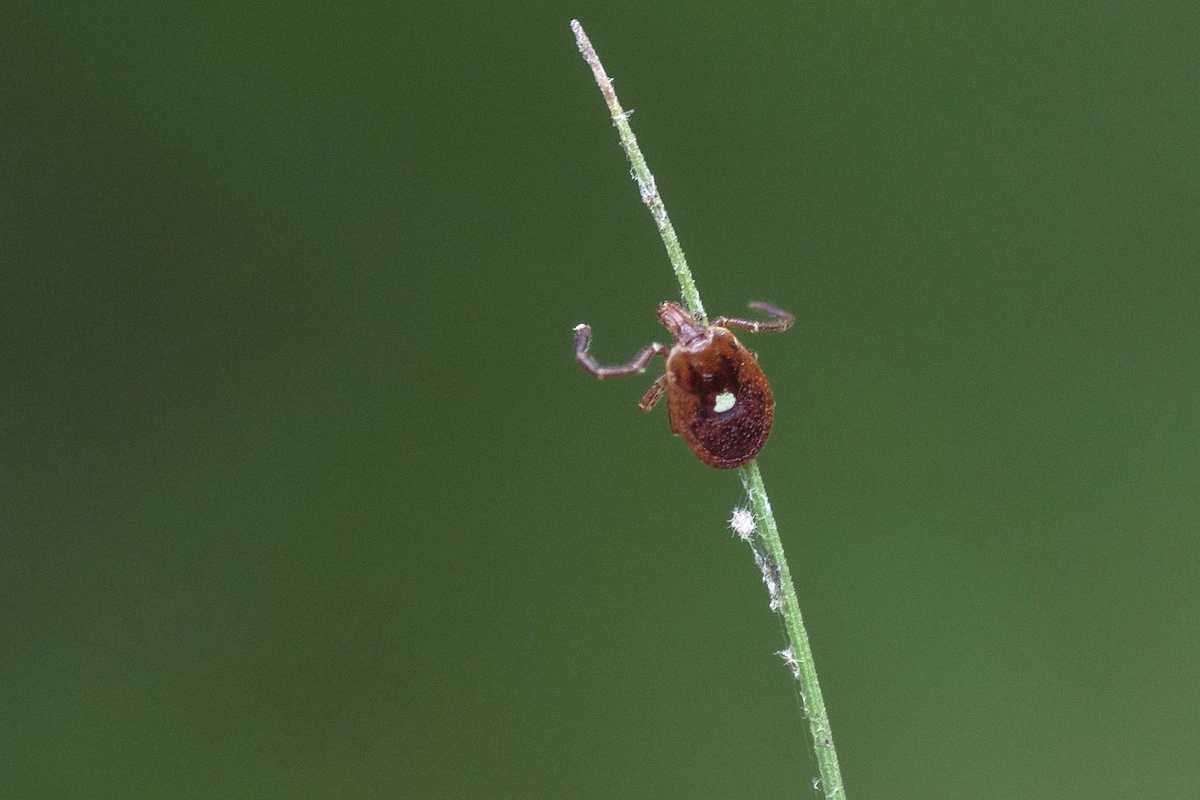
What’s the answer to the tick problem on the East End? Mountain lions? Genetically engineered mice? Deer-feeding stations? Deer-killing stations? Insecticides?
All solutions were discussed at a talk sponsored by the Perfect Earth Project titled “Ticknology” in mid-August at the Bridgehampton Community House.
“Every talk we held was devolving into a conversation about ticks,” said Edwina von Gal, founder of the Perfect Earth Project. “So we decided to dedicate one entirely to ticks.”
“We’re all just mystified,” she said as she introduced her panelists, Joshua Ginsberg, president of the Cary Institute of Ecosystem Studies, and Moses Cucura, who runs Suffolk County’s Tick Surveillance and Management Program. “And we’re not getting great answers from the industry that stands to make a great deal from selling us their products.”
In the end, wearing treated clothing when entering tick habitat and doing nightly tick checks, especially during the high seasons (mid-May through June and again from mid-August through late September) will do the most to protect you and your family from tick-borne illness.
“There is no solution except self-reliance and being good about tick checks and showers,” said Dr. Ginsberg. “Every night. Tick check. Tick check. It’s as, or more important than, brushing your teeth.”
Mr. Cucura agreed. He once had a lone star tick chase him across a hot 30-yard stretch of blacktop. Lone star ticks have become the most common tick on the East End and they’re aggressive and mobile. Even if blasting your property worked, they’d find you elsewhere.
The tick issue is complicated. There are different species of tick carrying a myriad of illnesses, some severe, and understanding each species’ life cycle is a necessary component of personal protection.
There’s also the question of desired outcomes. Are people seeking to rid the environment of all ticks, or are they just trying to prevent catching one of the illnesses ticks transmit?
“Spraying is not going to protect you from getting a tick-borne illness,” said Ms. von Gal.
People want simple answers, however, and many seem to believe spraying is a solution.
Mr. Cucura explained that so-called “organic” sprays (a misnomer, he said) have “taken the market by storm over the last decade,” but that there are no data to support their use.
“After seven years of testing natural oils, the maximum level of control was 60 percent,” he said. But even that questionable level of success comes at a big cost to beneficial insects. “You can have a 30 to 40 percent drop in millipedes just trying to control ticks.”
Meanwhile, permethrin, he said, can work if used correctly, but it’s currently being grossly overused. It’s most effective when ticks are questing in May and June, yet pesticide companies often apply it monthly. That’s not good for pollinators or anything that lives in the water.
“One of the favorite sales pitches of a spray salesperson is that pyrethroids are derived from the chrysanthemum and are therefore harmless,” said Ms. von Gal.
“They’re toxic to aquatic organisms,” said Mr. Cucura. This includes runoff. Unfortunately, spray companies are routinely seen spraying ahead of storms.
When temperatures cool, pesticides are even less effective, especially the oil-based natural sprays, which rely on warm weather to vaporize their oils.
Are there other ways to manage tick populations?
One complicated factor driving tick increases is declining levels of biodiversity. For this reason, Mr. Cucura said the county is embarking on a long-term plan to control invasive plants in its parklands. “That will open the understory and allow native plants to regrow.”
“If you are not doing these broadcast sprays, and you have native species, you get more insects back and you get more pollinators back,” said Dr. Ginsberg. “That brings in more birds. That brings in a different and more diverse set of mammals.”
With increased mammal abundance, the ticks would have more options for dinner. “Therefore, no matter how many ticks you have, each individual animal has fewer ticks. In a robust community, we are less likely to get bit,” he said.
The county is also contemplating investing in 4-poster systems, said Mr. Cucura. “These have been shown to work extremely well to control lone star tick levels on deer.”
Dr. Ginsberg’s studies focused more on deer ticks, which occur less regularly on the East End. Mice are the main concern for deer tick control since they are the main vector for Lyme disease and are usually a deer tick’s first meal.
Turns out mice populations are driven by acorn abundance. “If you have lots of acorns, the next year you have a lot of mice, then the next year, you have a lot of ticks,” said Dr. Ginsberg. “Then you have a lot of Lyme disease.”
Like the 4-poster for deer, there are now Tick Boxes that attract mice who get dosed with Frontline while inside, which Dr. Ginsberg said resulted in a 99-percent tick kill rate. Like the permethrin-laden deer, the mice act as an army of tick killers, instead of tick food.
(Ms. von Gal contrasted these with bait boxes, which use poisoned food to control mice populations and often end up killing owls, hawks, and dogs that later eat the poisoned mice.)
Dr. Ginsberg disregarded one audience member’s claim that building up one’s immune system could work to combat tick-borne illness.
“It’s unlikely that many of us have immune systems that can fight off tick-borne disease and I think it’s probably dangerous to think that they can,” he said.
Finally, if you do get bit? Jane Gill, an audience member and wildlife rescuer, recommended using liquid bandages. “I tried everything I could find to stop the itching and liquid band aid does it.”