
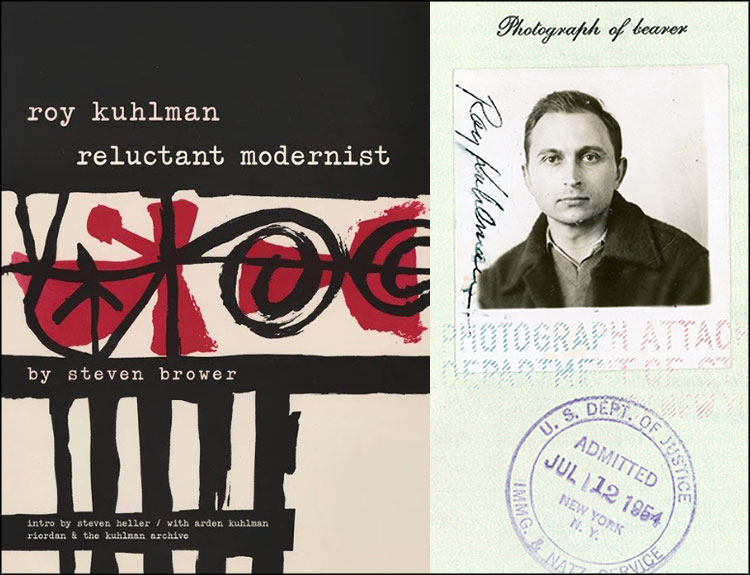
“Roy Kuhlman: Reluctant Modernist”
Steven Brower
Fantagraphics, $45
When I was asked to review the book “Roy Kuhlman: Reluctant Modernist,” I experienced a jolt of recognition looking at the image on its cover. The bold red-and-black design was familiar to me, as it originally served as the cover art for the Grove Press paperback “The Maids” by Jean Genet. “The Maids” is among the tattered and yellowed paperbacks my husband and I still possess, salvaged and carted with us through several moves since our college days.
Those who came of age reading Grove Press publications back in the day, as well as anyone interested in the evolution of graphic design, will find “Reluctant Modernist” an informative read and a visual feast. The book is large-scale and beautifully designed, with lavish reproductions. Written and thoughtfully curated by Steven Brower, who is also a graphic designer, it includes examples of over 300 iconic designs created by Kuhlman, the majority of which were cover art for legendary books published by Grove Press.
Several of the Grove Press covers represented here will be familiar to a certain audience, as they became emblems for the avant-garde, a match for the often revolutionary writings contained within the pages of the books. Grove Press had been the first to publish “Lady Chatterley’s Lover” and “Tropic of Cancer” in this country and challenged obscenity laws to do so. It went on to publish groundbreaking titles in modernist literature, as well as books on existential philosophy, Eastern religion, and radical politics. Samuel Beckett, Harold Pinter, Eugene Ionesco, Pablo Neruda, Simone de Beauvoir, Jack Kerouac, and Allen Ginsberg were among the writers it represented.
The covers Roy Kuhlman created for Grove publications held power in and of themselves. It is said he often didn’t even read the books, instead his distinctive style drew from a variety of sources, including children’s art, Dada, Russian Constructivism, and Minimalism. Franz Kline’s abstract paintings were a particular influence on him, as were Henri Matisse’s late cutouts.
In their fresh assertiveness, Kuhlman’s designs embody a postwar consciousness that embraced jazz, Abstract Expressionism, sexual freedom, and the emerging counterculture’s need to discover and define itself. Steven Heller, who wrote the introduction to “Reluctant Modernist,” describes Kuhlman’s work as “raw but elegant, messy yet sublime.” Heller, who also wrote Kuhlman’s obituary for The New York Times, places Kuhlman’s oeuvre within the epicenter of a midcentury modern aesthetic.
The story of how Kuhlman came to design all those covers began when he went for an interview with Barney Rosset, who had purchased Grove Press in 1951. Initially rejected, Kuhlman left the interview as two drawings fell from his portfolio, works he had not shown in his presentation. It was those works that convinced Rosset to give Kuhlman the job, and he went on to work for Rosset for the next two decades, designing over 700 book covers. These were the glory years for both Rosset and for Kuhlman, until Kuhlman was fired for working for a competitor. Later, faced with financial difficulties, Rosset sold Grove Press to a British publisher in 1985.

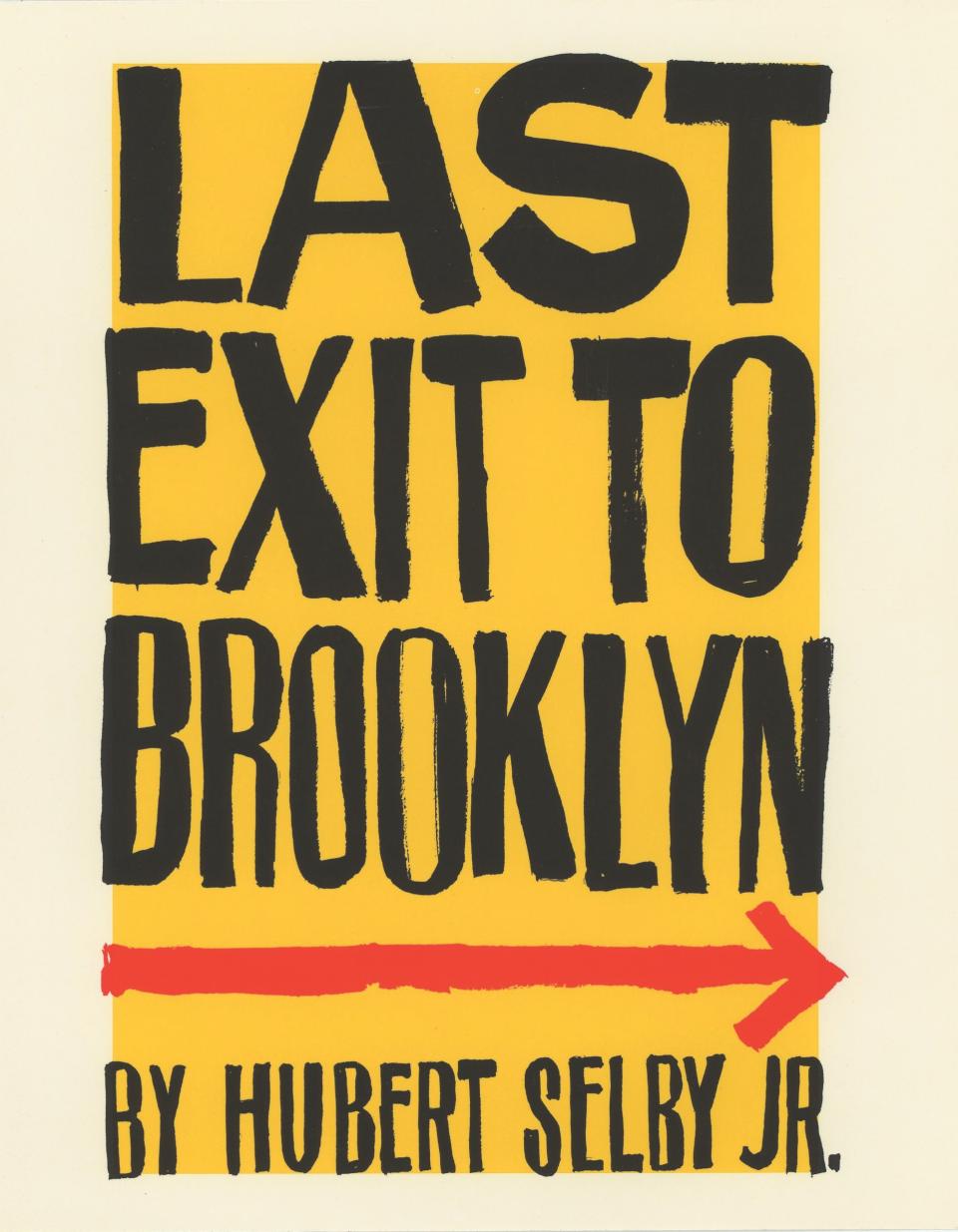
In addition to the Grove Press covers, this book includes Kuhlman’s album covers, advertisements for I.B.M., and book jackets for other publishers. Kuhlman’s signature style carries throughout the book, whether in his experiments with photographic effects, as in his cover for William Burroughs’s “Naked Lunch,” or his use of stand-alone stylized text, as seen in Hubert Selby’s “Last Exit to Brooklyn.” Kuhlman’s limited color choices, his use of typography as a visual element, and his edgy compositions are all components that comprised his formidable and original style.
The range and inventiveness of Kuhlman’s images carry the book, but we also get to learn about his life and times. He was a “blue baby,” born with a hole in his heart and saved from an early death by a new risky heart surgery in his 20s. He considered himself an anarchist, he married twice, and we learn he had a stubborn streak that caused difficulties in his dealings with others. He was also a follower of the debunked psychoanalyst Wilhelm Reich, who believed in orgone energy, supposedly all around us, and Kuhlman was known to spend time sitting in an orgone accumulator in his Catskills home.
The book includes reflections by contemporaries and fellow designers like Milton Glaser, as well as commentary from his second wife, Gilda, and his two children, Dan and Arden. Working freelance and in periodic short-lived jobs, Kuhlman never achieved financial stability, and he struggled toward the end of his life. Within the field of design, however, he was appreciated as an innovator and was inducted into the Art Directors Club Hall of Fame in 1995. He died in 2007 at the age of 83.
It is both thrilling and nostalgic to look through this book, as the images spark a familiar, cool vibe. For this viewer, at least, seeing all these dazzling book covers brings back a time when carrying around a Grove Press paperback made you feel somewhat subversive and “in the know.” “Reluctant Modernist” is a tribute to the creativity of a gifted midcentury designer who helped define an age, and the book can and should be a source of inspiration for future designers.
Jennifer Cross is a painter living in Springs.
Barney Rosset lived part time in East Hampton. Steven Brower died in July at the age of 74.